
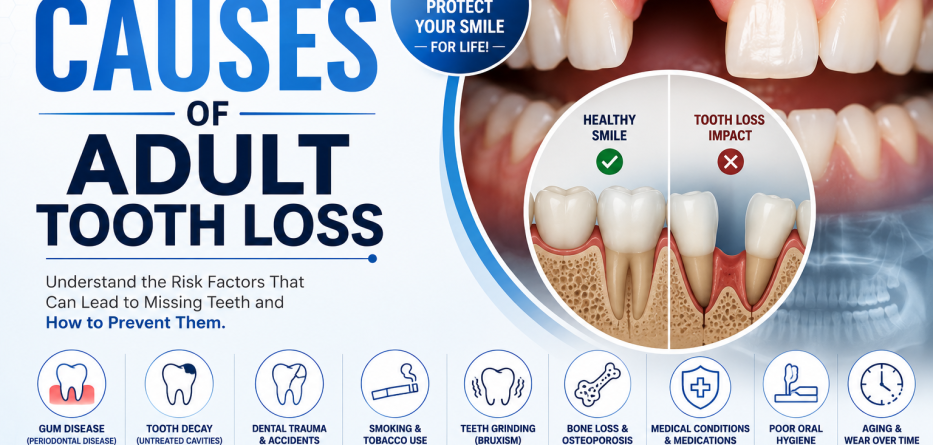
Losing a tooth as an adult is more common than many people realize. While accidents and injuries can lead to tooth loss, most adult tooth loss occurs gradually due to preventable oral health issues. Missing teeth can affect your appearance, confidence, ability to chew, speech, and overall oral health.
Understanding the common causes of adult tooth loss can help you take proactive steps to protect your smile and maintain healthy teeth for life.
In this guide, we’ll explore the leading reasons adults lose teeth, warning signs to watch for, and how you can reduce your risk.
What Is Adult Tooth Loss?
Adult tooth loss occurs when a permanent tooth falls out, becomes loose beyond repair, or must be extracted due to damage, disease, or trauma.
According to the Centers for Disease Control and Prevention (CDC), millions of adults in the United States have lost at least one permanent tooth due to oral health problems.
1. Gum Disease (Periodontal Disease)
The Leading Cause of Adult Tooth Loss
Gum disease is the most common cause of tooth loss among adults.
It begins as gingivitis, causing red, swollen, and bleeding gums. If left untreated, it can progress to periodontitis, where the infection damages the tissues and bone supporting the teeth.
Symptoms of Gum Disease
- Bleeding gums
- Persistent bad breath
- Swollen or tender gums
- Receding gums
- Loose teeth
- Pain when chewing
Why It Causes Tooth Loss
As gum disease advances, the jawbone deteriorates, weakening the support structure around teeth. Eventually, teeth become loose and may fall out or require extraction.
2. Tooth Decay (Cavities)
Untreated cavities can destroy tooth structure over time.
When decay reaches the inner pulp of the tooth, infection can develop, leading to severe pain and possible tooth loss.
Common Causes of Tooth Decay
- Poor oral hygiene
- Sugary foods and beverages
- Frequent snacking
- Dry mouth
- Lack of regular dental visits
Early treatment can often save the tooth and prevent extraction.
3. Dental Trauma and Accidents
Accidents can happen at any age.
Sports injuries, falls, car accidents, and workplace incidents can crack, fracture, or completely knock out a tooth.
Common Dental Injuries
- Chipped teeth
- Cracked teeth
- Root fractures
- Knocked-out teeth
Wearing a mouthguard during sports can significantly reduce the risk of dental trauma.
4. Smoking and Tobacco Use
Smoking is strongly linked to tooth loss.
Tobacco products reduce blood flow to the gums, increase plaque buildup, and make it harder for the body to fight infections.
How Smoking Affects Oral Health
- Increased risk of gum disease
- Delayed healing
- Higher risk of bone loss
- Greater likelihood of tooth loss
Studies consistently show that smokers lose more teeth than non-smokers.
5. Teeth Grinding (Bruxism)
Many adults grind or clench their teeth during sleep without realizing it.
Over time, excessive pressure can weaken teeth and damage supporting structures.
Signs of Bruxism
- Worn-down teeth
- Jaw pain
- Headaches
- Tooth sensitivity
- Cracked teeth
A custom night guard can help protect your teeth from grinding damage.
6. Osteoporosis and Bone Loss
Osteoporosis affects bone density throughout the body, including the jawbone.
When jawbone density decreases, teeth may lose essential support and become more susceptible to loosening and loss.
Risk Factors
- Aging
- Hormonal changes
- Calcium deficiency
- Certain medications
Regular dental examinations can help identify early signs of bone loss.
7. Poor Oral Hygiene
Failing to brush and floss regularly allows plaque and bacteria to accumulate.
This increases the risk of:
- Cavities
- Gum disease
- Tooth infections
- Bone loss
Good oral hygiene remains one of the most effective ways to prevent tooth loss.
Healthy Oral Hygiene Habits
- Brush twice daily
- Floss every day
- Use fluoride toothpaste
- Visit your dentist regularly
8. Medical Conditions
Certain health conditions can increase the risk of tooth loss.
Conditions Linked to Tooth Loss
- Diabetes
- Heart disease
- Autoimmune disorders
- Cancer treatments
- Dry mouth disorders
Managing overall health often contributes to better oral health outcomes.
9. Aging and Wear Over Time
As we age, years of chewing, grinding, and exposure to bacteria can take a toll on our teeth.
While aging itself does not cause tooth loss, age-related oral health issues can increase risk if not properly managed.
Regular preventive care becomes increasingly important with age.
Warning Signs You May Be at Risk for Tooth Loss
Contact your dentist if you notice:
- Loose teeth
- Bleeding gums
- Persistent bad breath
- Receding gums
- Tooth pain
- Difficulty chewing
- Increased tooth sensitivity
Early intervention can often prevent tooth loss.
How to Prevent Adult Tooth Loss
Follow These Simple Steps
- Brush twice daily.
- Floss every day.
- Schedule regular dental checkups.
- Quit smoking.
- Wear a sports mouthguard.
- Treat gum disease early.
- Manage chronic health conditions.
- Limit sugary foods and drinks.
Preventive care is significantly easier and less expensive than replacing missing teeth.
Treatment Options for Missing Teeth
If you have already lost one or more teeth, several effective replacement options are available.
Common Tooth Replacement Solutions
| Treatment | Benefits |
|---|---|
| Dental Implants | Permanent, natural-looking solution |
| Dental Bridges | Fixed replacement for one or more teeth |
| Dentures | Affordable option for multiple missing teeth |
Your dentist can recommend the best option based on your needs and oral health.
Conclusion
Adult tooth loss can result from several factors, including gum disease, tooth decay, smoking, dental trauma, and certain medical conditions. Fortunately, many of these causes are preventable with proper oral hygiene and regular dental care.
Understanding the common causes of adult tooth loss allows you to take proactive steps to protect your smile, preserve your oral health, and avoid costly restorative treatments in the future.
