

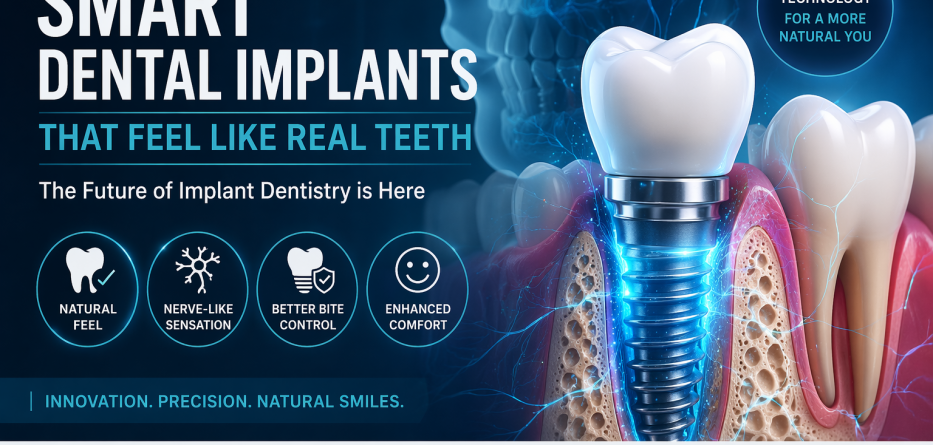
For a long time, people have thought that dental implants are one of the greatest ways to replace teeth that are missing. They make your teeth look better, help you chew better, and keep your mouth healthy. But there has always been one problem: they do not really feel like real teeth.
Researchers at Tufts University are now working on a startling new technology: smart dental implants that can feel like actual teeth. This new technology could totally change how patients feel about getting dental work done.
What Are Smart Dental Implants?
Smart dental implants are a next-generation innovation designed to go beyond traditional implants. While conventional implants replace the structure of a tooth, these advanced implants aim to restore both structure and sensation.
Natural teeth are connected to the jawbone through a network of nerves. These nerves allow you to:
- Feel pressure while chewing
- Detect temperature changes
- Maintain proper bite force
Traditional implants lack this sensory feedback. Smart implants, however, are being developed to replicate this nerve-like function, making them feel much closer to real teeth.
Key technologies involved include:
1. Bioactive Materials
These materials encourage the body to regenerate surrounding tissues, including nerve endings. This helps the implant integrate more naturally with the jaw.
2. Nerve Regeneration Techniques
Scientists are exploring ways to stimulate nerve growth around the implant. This could allow the brain to receive signals similar to those from natural teeth.
3. Enhanced Osseointegration
While traditional implants fuse with the bone (a process called Osseointegration), smart implants aim to go further by integrating with both bone and soft tissue systems, including nerves.
Benefits for Patients For Smart Dental Implants:
If successfully developed and widely adopted, smart dental implants could offer several major advantages:
Natural Feel
Patients may experience a realistic tooth sensation, making it easier to forget they even have an implant.
Better Bite Control
Improved sensory feedback can help regulate chewing pressure, reducing the risk of damage to the implant or surrounding teeth.
Increased Comfort
A more natural connection with the body could reduce discomfort often associated with traditional implants.
Improved Oral Function
Eating, speaking, and overall oral function could feel more natural and intuitive.
Why This Innovation Matters:
This development could mark a major turning point in implant dentistry. For years, the goal has been to not only replace missing teeth but to restore them as naturally as possible.
Smart implants bring us closer to that goal by:
- Bridging the gap between artificial and natural teeth
- Enhancing patient experience and satisfaction
- Reducing long-term complications
In simple terms, this technology could make dental implants feel less like replacements and more like real teeth.
The Future of Dental Implants “Smart Dental Implants:”
The future of dentistry is moving toward biological integration and smart solutions. With continued research and technological advancements, we may soon see:
- Fully sensory dental implants
- Faster healing and recovery times
- Personalized implant solutions based on patient biology
As innovation continues, patients can expect treatments that are not only functional but also deeply natural in feel and performance.
SmartDentalImplants, #DentalImplants, #FutureOfDentistry, #AdvancedDentistry, #DentalTechnology, #ImplantDentistry, #ModernDentistry, #DentalInnovation, #ToothImplants, #HealthySmile, #SmileTransformation, #DentalCare, #OralHealth, #TeethReplacement, #CosmeticDentistry, #DentalClinic, #DigitalDentistry, #DentalResearch, #NextGenDentistry, #DentalScience, #NaturalSmile, #SmileCare, #DentalExperts, #DentalAwareness, #ImplantTechnology

