

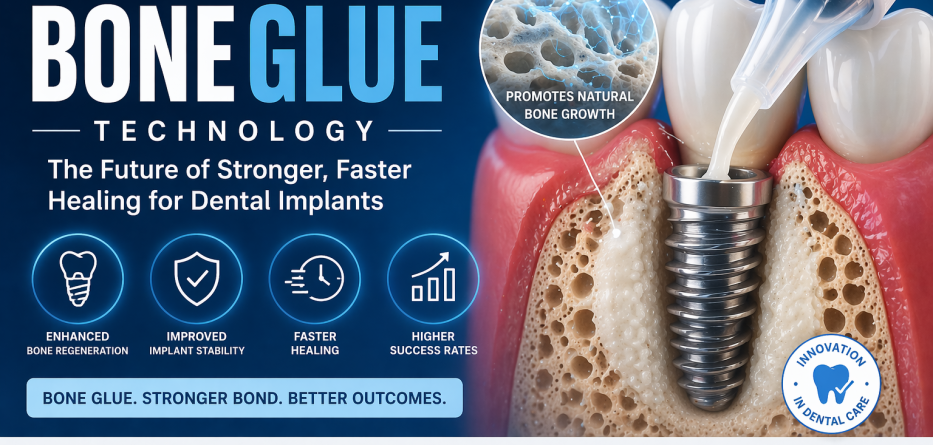
In a significant development for modern dentistry, the U.S. Food and Drug Administration has approved a new clinical trial for an innovative “bone glue” technology designed to enhance dental implant procedures. This advancement could dramatically improve how implants integrate with the jawbone, offering better outcomes for patients worldwide.
What Is Bone Glue Technology?
“Bone glue” is a cutting-edge biomaterial developed to support and accelerate bone regeneration during dental implant procedures. Unlike traditional bone grafting methods, which often require additional surgery and healing time, this new solution acts as a bio-adhesive that helps bind and stabilize bone structures.
The material is designed to:
- Promote natural bone growth
- Strengthen the implant’s foundation
- Reduce healing time after surgery
This innovation is especially useful in cases where patients have low bone density, a common challenge in implant dentistry.
FDA Approval for Clinical Trial For Bone Glue Technology:
The recent approval from the U.S. Food and Drug Administration allows researchers to begin human clinical trials to test the safety and effectiveness of this technology.
Clinical trials will focus on:
- How well the bone glue supports implant stability
- The speed of bone regeneration
- Reduction in implant failure rates
- Overall patient recovery experience
This step is crucial before the technology can be widely used in dental clinics.
“Bone Glue Technology” – How It Could Change Dental Implants
Dental implants rely on a process called “osseointegration,” where the implant fuses with the jawbone. Traditional methods can take several months and may require additional bone grafting procedures.
Bone glue technology aims to improve this process by:
- Providing immediate structural support
- Enhancing bone-to-implant bonding
- Minimizing the need for complex grafting surgeries
Bone Glue Technology – Benefits for Patients:
If proven successful, this innovation could bring several key benefits:
Faster Healing
Patients may experience significantly reduced recovery times after implant surgery.
Stronger Implant Stability
Improved bonding between bone and implant can increase long-term success rates.
Fewer Surgical Procedures
Bone glue could reduce or eliminate the need for traditional bone grafting.
Better Success Rates
Stronger integration means fewer implant failures and complications.
Why This Matters:
Dental implant procedures have become increasingly popular, but challenges like bone loss and slow healing still affect many patients. This new bone glue technology could:
- Make implants accessible to more patients
- Improve treatment outcomes
- Reduce overall treatment time
In simple terms, it has the potential to make dental implants faster, safer, and more reliable.
Bone Glue Technology – The Future of Implant Dentistry
With innovations like bone glue, the future of dentistry is shifting toward minimally invasive and biologically advanced solutions. As research progresses, patients can expect treatments that are not only more efficient but also more comfortable.
BoneGlue, #BoneGlueTechnology, #RegenerativeMedicine, #BoneRegeneration, #Biomaterials, #MedicalInnovation, #DentalInnovation, #ImplantTechnology, #DentalImplants, #FutureOfHealthcare, #TissueEngineering, #BioAdhesive, #AdvancedDentistry, #HealthcareInnovation, #ClinicalTrials, #FDATech, #MedicalBreakthrough, #NextGenMedicine, #OralSurgery, #DentalScience, #InnovationInMedicine, #HealingTechnology, #SmartHealthcare, #MedTech, #BiotechInnovation

