
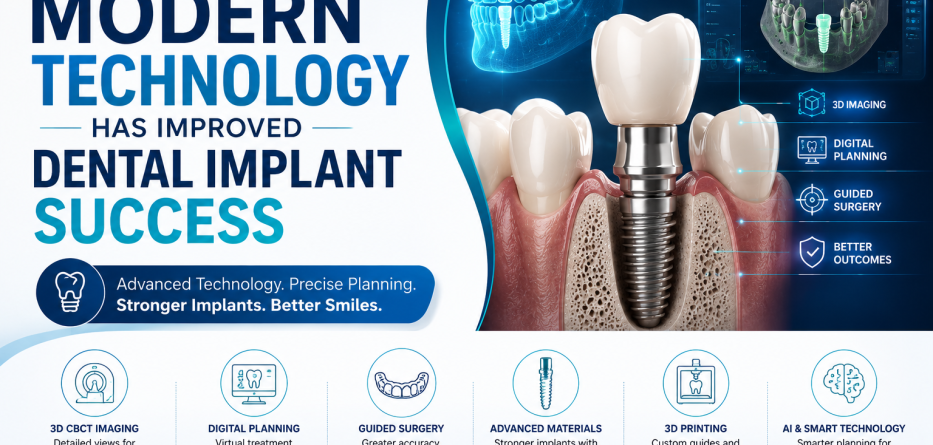
Dental implants have transformed the way dentists replace missing teeth. While implants have been used successfully for decades, modern technology has dramatically improved their precision, safety, comfort, and long-term success rates.
Today, advanced digital imaging, computer-guided surgery, 3D printing, and innovative implant materials allow dentists to plan and perform implant procedures with greater accuracy than ever before. As a result, patients benefit from shorter treatment times, faster healing, improved aesthetics, and highly predictable outcomes.
In fact, modern dental implant procedures now achieve success rates of over 95% in many cases, making them one of the most reliable solutions for tooth replacement.
What You’ll Learn
In this guide, we’ll explore:
- How technology has revolutionized dental implants
- Advances in digital implant planning
- The role of 3D imaging and CBCT scans
- Computer-guided implant surgery
- Modern implant materials and surface technologies
- The impact of AI and digital dentistry
- How technology improves patient outcomes and success rates
What Determines Dental Implant Success?
Dental implant success depends on several factors, including:
- Precise implant placement
- Healthy jawbone support
- Successful osseointegration
- Proper treatment planning
- Good oral hygiene
- Experienced dental professionals
Modern technology helps improve each of these factors, reducing risks and increasing predictability.
1. 3D Cone Beam CT (CBCT) Imaging Improves Precision
One of the biggest advancements in implant dentistry is Cone Beam Computed Tomography (CBCT).
Unlike traditional dental X-rays, CBCT scans provide a detailed three-dimensional view of:
- Jawbone structure
- Bone density
- Nerves and blood vessels
- Sinus cavities
- Surrounding teeth
Benefits of CBCT for Implant Success
- More accurate diagnosis
- Better implant positioning
- Reduced surgical complications
- Improved treatment planning
- Increased long-term stability
By understanding the patient’s anatomy in greater detail, dentists can place implants with exceptional accuracy.
2. Digital Treatment Planning Creates Predictable Outcomes
Before modern software became available, implant planning relied heavily on manual measurements and experience.
Today, digital implant planning software allows clinicians to virtually plan the entire procedure before surgery begins.
Advantages of Digital Planning
- Virtual implant placement
- Customized treatment plans
- Enhanced precision
- Improved communication between specialists
- Reduced treatment surprises
This technology helps ensure the implant is placed in the ideal position for both function and aesthetics.
3. Computer-Guided Implant Surgery Enhances Accuracy
Computer-guided surgery uses digital planning data to create custom surgical guides.
These guides help dentists place implants exactly where they were planned digitally.
Key Benefits
- Minimally invasive procedures
- Greater accuracy
- Reduced surgery time
- Less discomfort
- Faster healing
Research has shown that guided implant surgery significantly improves placement accuracy compared to traditional freehand methods.
4. Advanced Implant Materials Increase Longevity
The materials used in dental implants have evolved considerably.
Modern Implant Materials
Titanium Implants
Titanium remains the gold standard because it:
- Integrates naturally with bone
- Resists corrosion
- Offers excellent strength
- Has decades of clinical success
Zirconia Implants
Newer zirconia implants offer:
- Metal-free solutions
- Excellent aesthetics
- High biocompatibility
- Reduced plaque accumulation
These materials contribute to stronger, longer-lasting restorations.
5. Surface Technology Accelerates Healing
Modern implants feature specially engineered surfaces that promote faster bone attachment.
Benefits of Advanced Surface Treatments
- Faster osseointegration
- Improved implant stability
- Reduced healing periods
- Higher success rates
Patients can often receive their final restorations sooner than in the past.
6. 3D Printing Improves Customization
3D printing has become a powerful tool in modern implant dentistry.
Applications Include
- Surgical guides
- Implant models
- Temporary restorations
- Customized prosthetics
Benefits include:
- Greater accuracy
- Better fit
- Faster production
- Improved patient comfort
The result is a more personalized treatment experience.
7. Digital Impressions Eliminate Traditional Molds
Many patients dislike traditional dental impressions because they can be uncomfortable and messy.
Digital scanners now capture precise images of the mouth without impression materials.
Advantages
- Increased comfort
- Faster appointments
- Improved accuracy
- Better-fitting restorations
This technology enhances both patient experience and treatment quality.
8. Artificial Intelligence Is Shaping the Future of Implant Dentistry
Artificial Intelligence (AI) is becoming increasingly important in dental care.
AI-powered systems can help:
- Analyze scans
- Detect bone deficiencies
- Assist treatment planning
- Predict potential complications
As AI continues to evolve, implant procedures will become even more precise and personalized.
How Modern Technology Benefits Patients
Improved Success Rates
Modern technologies contribute to implant success rates exceeding 95% in many cases.
Faster Recovery
Minimally invasive techniques reduce trauma and support quicker healing.
Better Aesthetics
Digital design tools create restorations that closely mimic natural teeth.
Enhanced Comfort
Digital workflows reduce discomfort during planning and treatment.
Long-Term Reliability
Advanced materials and planning methods improve durability and longevity.
The Future of Dental Implant Technology
The next generation of implant dentistry may include:
- AI-driven treatment planning
- Robotic-assisted implant placement
- Bioengineered implant surfaces
- Regenerative bone technologies
- Fully digital same-day implant workflows
These innovations will continue to improve patient outcomes and redefine what’s possible in modern dentistry.
Conclusion
Modern technology has revolutionized dental implant treatment, making procedures safer, more accurate, and more successful than ever before. Through innovations such as CBCT imaging, digital treatment planning, computer-guided surgery, advanced implant materials, and artificial intelligence, dentists can deliver highly predictable results with greater comfort and efficiency.
For patients considering tooth replacement, today’s technology-driven dental implants offer a reliable, long-lasting solution that restores both oral function and confidence.
