
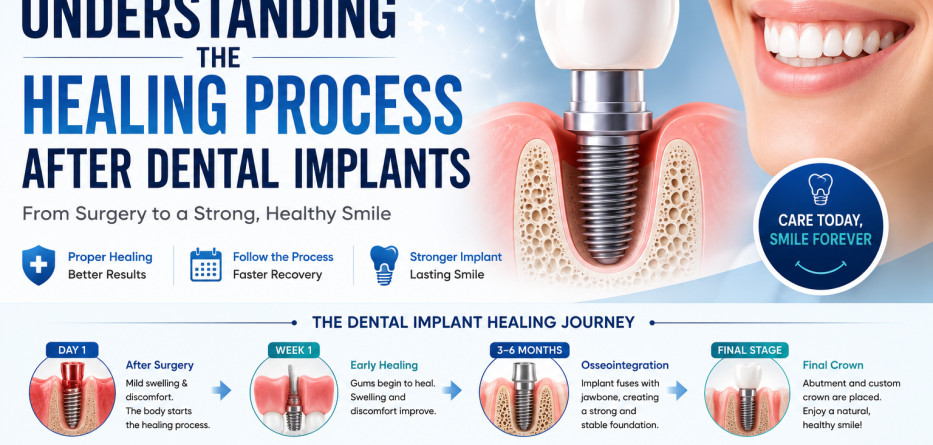
Dental implants are one of the most reliable and long-lasting solutions for replacing missing teeth. While the procedure itself is highly successful, many patients are curious about what happens after implant surgery. Understanding the healing process after dental implants can help you prepare for recovery, reduce anxiety, and achieve the best possible results.
The healing journey involves several stages, from initial recovery to the complete integration of the implant with your jawbone. Knowing what to expect at each stage can make the experience smoother and more comfortable.
What You’ll Learn
- The stages of dental implant healing
- What to expect during recovery
- How long implant healing takes
- Tips to speed up recovery
- Common symptoms and warning signs
- When to contact your dentist
What Happens Immediately After Dental Implant Surgery?
The first 24 to 48 hours are crucial for healing. During this period, your body begins repairing the surgical site and forming a protective blood clot around the implant.
Common Symptoms
- Mild swelling around the gums and face
- Minor bleeding or oozing
- Tenderness at the implant site
- Mild discomfort or soreness
These symptoms are completely normal and usually improve within a few days.
Recovery Tips
- Apply an ice pack for 15-20 minutes at a time
- Avoid strenuous activities
- Take prescribed medications as directed
- Stick to soft foods
- Avoid smoking and alcohol
Week 1: Early Healing Stage
During the first week, the gum tissue begins to heal around the implant.
What to Expect
- Swelling gradually decreases
- Gum tissues start closing around the implant
- Pain becomes minimal
- Bruising may fade
Recommended Foods
- Yogurt
- Smoothies
- Mashed potatoes
- Scrambled eggs
- Soup (lukewarm)
Avoid hard, crunchy, or spicy foods that may irritate the surgical area.
The Osseointegration Phase: The Most Important Stage
What Is Osseointegration?
Osseointegration is the process where the titanium implant fuses with the jawbone. This biological bonding creates a strong and stable foundation for the replacement tooth.
This stage is the primary reason dental implants have such high success rates.
How Long Does Osseointegration Take?
Typically:
- Lower jaw: 3-4 months
- Upper jaw: 4-6 months
Factors affecting healing include:
- Bone quality
- Overall health
- Smoking habits
- Oral hygiene
- Medical conditions
Month 2 to Month 6: Bone Integration and Strengthening
During this period, patients usually experience little to no discomfort.
The implant becomes increasingly secure as new bone cells grow around it.
Signs of Healthy Healing
- No pain during chewing
- Healthy pink gums
- No swelling
- Stable implant position
Regular follow-up appointments help ensure everything is progressing properly.
When Is the Final Crown Attached?
Once the implant is fully integrated with the jawbone, your dentist places an abutment and custom dental crown.
The crown is designed to:
- Match neighboring teeth
- Restore chewing ability
- Improve aesthetics
- Support normal speech
At this stage, the dental implant functions much like a natural tooth.
Factors That Influence Healing Time
Every patient heals differently.
Key Factors Include
Oral Hygiene
Keeping the implant site clean reduces infection risk and promotes healing.
Smoking
Smoking significantly slows healing and increases implant failure risk.
Bone Density
Patients with strong jawbone density often heal faster.
Overall Health
Conditions such as diabetes can impact healing speed.
Following Post-Operative Instructions
Patients who carefully follow their dentist’s advice often experience smoother recoveries.
Common Recovery Concerns
Is Swelling Normal?
Yes. Mild swelling usually peaks within 48-72 hours and then gradually subsides.
Is Minor Bleeding Expected?
Small amounts of bleeding during the first day are normal.
When Can I Return to Work?
Many patients return to work within 1-3 days, depending on the complexity of the procedure.
Can Dental Implants Fail During Healing?
While uncommon, implant failure can occur if osseointegration does not happen properly.
Warning Signs That Require Immediate Attention
Contact your dentist if you experience:
- Severe or worsening pain
- Persistent bleeding
- Excessive swelling after several days
- Fever
- Pus around the implant site
- Loose implant feeling
Early intervention can prevent complications.
How to Speed Up Dental Implant Recovery
Follow These Best Practices
- Maintain excellent oral hygiene.
- Avoid smoking and tobacco products.
- Eat a nutritious diet.
- Stay hydrated.
- Attend follow-up appointments.
- Avoid chewing directly on the implant site.
- Get adequate sleep.
These simple habits can significantly improve healing outcomes.
Long-Term Care After Healing
Once fully healed, dental implants require maintenance similar to natural teeth.
Daily Care Routine
- Brush twice daily
- Floss regularly
- Use an antibacterial mouthwash
- Schedule professional cleanings
With proper care, dental implants can last 20 years or longer.
Conclusion
Understanding the healing process after dental implants helps patients feel more confident and prepared throughout their recovery journey. While healing times vary, most patients experience a smooth recovery when they follow their dentist’s recommendations and maintain good oral hygiene.
From the initial healing phase to complete osseointegration, every stage plays an important role in ensuring the long-term success of your dental implant. By taking proper care during recovery, you can enjoy a healthy, functional, and natural-looking smile for many years to come.
