
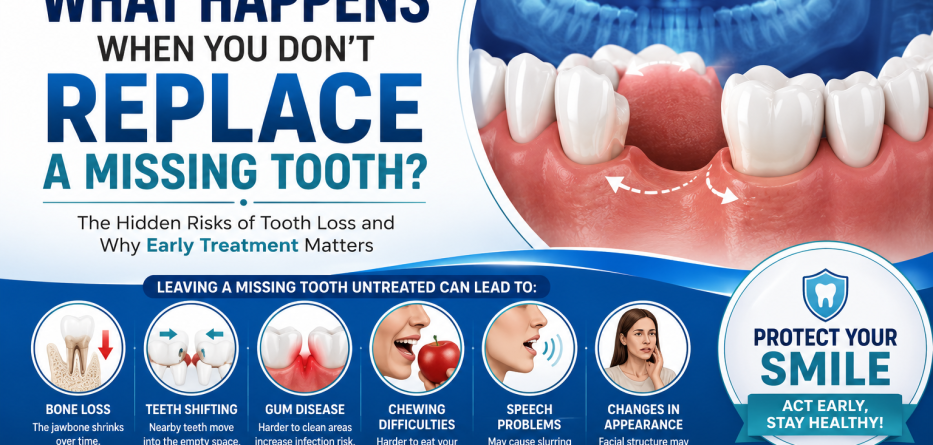
Many people assume that losing a tooth is simply a cosmetic issue—especially if the missing tooth isn’t visible when they smile. However, leaving a missing tooth untreated can lead to a chain reaction of oral health problems that affect your teeth, gums, jawbone, and even your overall well-being.
A single missing tooth may not seem like a big deal at first, but over time it can cause neighboring teeth to shift, increase your risk of gum disease, affect your bite, and contribute to jawbone deterioration. Understanding these risks can help you make informed decisions about restoring your smile and protecting your long-term oral health.
What You’ll Learn
In this guide, we’ll cover:
- What happens after a tooth is lost
- How missing teeth affect surrounding teeth
- The connection between tooth loss and bone loss
- Problems with chewing and speaking
- Long-term health consequences
- Tooth replacement options
- When to see a dentist
What Happens Immediately After Tooth Loss?
When a tooth is lost or extracted, the empty space left behind begins to trigger changes inside your mouth. The surrounding teeth, gums, and jawbone all depend on each other for support and stability.
Within the first few months, the body starts reabsorbing bone tissue in the area where the tooth root once existed. This process occurs because the jawbone no longer receives stimulation from chewing forces.
Early Changes After Tooth Loss
- Blood clot formation and healing
- Gradual jawbone shrinkage
- Increased pressure on nearby teeth
- Changes in chewing patterns
Neighboring Teeth Begin to Shift
One of the most common consequences of not replacing a missing tooth is tooth movement.
Teeth naturally rely on neighboring teeth for support. When a gap is left untreated, adjacent teeth can slowly drift into the empty space.
Problems Caused by Tooth Shifting
- Crooked teeth
- Bite misalignment
- Increased plaque buildup
- Difficulty cleaning between teeth
- Higher risk of cavities
Over time, even a small shift can create significant orthodontic and functional problems.
Jawbone Loss Can Occur
Why Bone Loss Happens
Natural tooth roots stimulate the jawbone whenever you chew. Without that stimulation, the body begins to break down unused bone tissue.
Research shows that significant bone loss can occur during the first year after tooth loss.
Consequences of Bone Loss
- Facial sagging
- Premature aging appearance
- Weakened jaw structure
- Difficulty placing dental implants later
Bone loss is often invisible at first but becomes more severe as time passes.
Your Bite Can Become Unbalanced
Every tooth plays a role in maintaining proper bite alignment.
When a tooth is missing, chewing forces become unevenly distributed across the remaining teeth.
Common Bite Problems
- Excessive wear on healthy teeth
- Jaw discomfort
- Teeth grinding
- TMJ-related symptoms
- Headaches
An unbalanced bite can eventually affect your entire oral system.
Chewing Becomes More Difficult
Missing teeth can reduce your ability to chew certain foods effectively.
Many patients begin avoiding:
- Steak
- Nuts
- Apples
- Raw vegetables
- Crunchy foods
This can lead to poor nutrition and digestive issues because food is not properly broken down before swallowing.
Speech Problems May Develop
Teeth help control airflow and tongue positioning during speech.
Depending on the location of the missing tooth, you may experience:
- Slurred speech
- Whistling sounds
- Difficulty pronouncing certain words
- Reduced confidence during conversations
Front tooth loss often has the greatest impact on speech.
Increased Risk of Gum Disease and Tooth Decay
When teeth shift and gaps develop, cleaning becomes more challenging.
This can lead to:
- Plaque accumulation
- Gum inflammation
- Cavities
- Periodontal disease
Poor oral hygiene around shifted teeth often accelerates these problems.
Facial Appearance May Change
Many people are surprised to learn that missing teeth can affect facial structure.
As jawbone loss progresses, the face may appear:
- Sunken
- Older
- Less supported
- More wrinkled around the mouth
This is one reason dentists recommend replacing missing teeth as soon as possible.
How Missing Teeth Affect Overall Health
Oral health is closely linked to overall health.
Untreated tooth loss may contribute to:
- Poor nutrition
- Digestive problems
- Lower self-confidence
- Increased stress
- Reduced quality of life
Studies have also linked poor oral health to systemic conditions such as heart disease and diabetes.
Tooth Replacement Options
Fortunately, several solutions are available.
Dental Implants
Benefits:
- Preserve jawbone
- Look natural
- Function like real teeth
- Long-lasting solution
Dental Bridges
Benefits:
- Fixed restoration
- Faster treatment
- Good aesthetic results
Dentures
Benefits:
- Affordable option
- Suitable for multiple missing teeth
- Non-surgical solution
Your dentist can help determine which treatment best suits your needs.
When Should You Replace a Missing Tooth?
The sooner a missing tooth is replaced, the easier it is to prevent complications.
Most dental professionals recommend scheduling an evaluation as soon as possible after tooth loss to preserve bone and maintain proper alignment.
Conclusion
So, what happens when you don’t replace a missing tooth?
While it may seem harmless initially, a missing tooth can lead to shifting teeth, bone loss, bite problems, difficulty chewing, speech issues, and changes in facial appearance. The longer the space remains untreated, the greater the risk of developing more complex and costly dental problems.
Replacing a missing tooth promptly can help protect your oral health, preserve your smile, and maintain your overall quality of life.
