
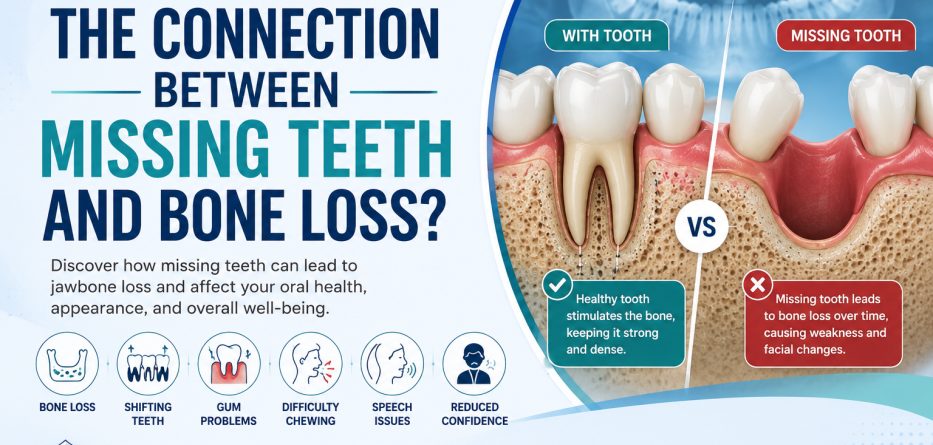
Most people understand that missing teeth can affect their appearance and ability to chew. However, many are unaware that tooth loss can also lead to significant bone loss in the jaw. This hidden consequence can change facial structure, impact oral health, and make future dental treatments more complicated.
When a tooth is lost, the underlying jawbone no longer receives the stimulation it needs to maintain its strength and density. Over time, this can cause the bone to shrink, leading to additional oral health problems. Understanding the connection between missing teeth and bone loss can help patients make informed decisions about tooth replacement and long-term dental care.
What You’ll Learn
In this article, you’ll discover:
- Why bone loss occurs after tooth loss
- How quickly jawbone deterioration can begin
- Signs and symptoms of bone loss
- The long-term effects on oral health
- How dental implants help prevent bone loss
- Treatment options for restoring lost bone
- Ways to protect your smile and jaw health
What Is Jawbone Loss?
Jawbone loss, also known as alveolar bone resorption, occurs when the bone that once supported a tooth begins to shrink and deteriorate. The jawbone relies on stimulation from tooth roots during chewing and biting. Without that stimulation, the body starts to reabsorb the unused bone tissue.
Quick Answer
Bone loss occurs after tooth loss because the jawbone no longer receives the pressure and stimulation provided by natural tooth roots. As a result, the body gradually breaks down and reabsorbs the bone in that area.
Why Missing Teeth Cause Bone Loss
The Role of Tooth Roots
Natural tooth roots do more than hold teeth in place. They continuously stimulate the jawbone whenever you chew or bite.
When a tooth is removed:
- The root is no longer present
- Bone stimulation stops
- The body assumes the bone is no longer needed
- Bone tissue begins to shrink
This process is similar to muscle loss that occurs when a body part is not used for an extended period.
How Fast Does Bone Loss Begin?
Research shows that bone loss can begin within the first few months after tooth extraction.
In many cases:
- Up to 25% of bone width may be lost during the first year
- Significant changes often occur within six months
- Continued bone deterioration may occur for years if the tooth is not replaced
Signs of Jawbone Loss After Tooth Loss
Bone loss is often gradual and may not be noticeable at first.
Common signs include:
- Changes in facial appearance
- Sunken cheeks
- Wrinkles around the mouth
- Shifting teeth
- Poor denture fit
- Bite changes
- Difficulty chewing
Many patients only realize the extent of bone loss when seeking tooth replacement years later.
Long-Term Effects of Bone Loss
Facial Collapse and Premature Aging
One of the most visible consequences of jawbone loss is facial collapse.
As bone shrinks:
- Lips lose support
- Cheeks appear hollow
- Facial height decreases
- Wrinkles become more noticeable
This can make individuals appear older than their actual age.
Shifting Teeth
Missing teeth create gaps that allow neighboring teeth to drift.
Consequences include:
- Crooked teeth
- Bite misalignment
- Increased wear on remaining teeth
- Higher risk of tooth damage
Increased Risk of Additional Tooth Loss
Bone loss can weaken support for surrounding teeth, increasing the risk of further tooth loss and periodontal complications.
The Connection Between Bone Loss and Overall Oral Health
Jawbone deterioration affects more than appearance.
Potential complications include:
- Difficulty chewing nutritious foods
- Speech problems
- Increased gum disease risk
- Reduced stability for dentures
- More complex future dental procedures
Maintaining healthy jawbone structure is essential for long-term oral function.
How Dental Implants Help Prevent Bone Loss
The Only Tooth Replacement That Stimulates Bone
Unlike dentures and bridges, dental implants replace both the tooth and its root.
Once placed into the jawbone, implants provide the stimulation needed to maintain bone density.
Benefits include:
- Preservation of jawbone volume
- Prevention of facial collapse
- Improved chewing function
- Long-term oral health support
Dental implants are widely considered the gold standard for replacing missing teeth because of their bone-preserving benefits.
Dental Implants vs Dentures and Bridges
| Feature | Dental Implants | Dentures | Bridges |
|---|---|---|---|
| Replaces Tooth Root | Yes | No | No |
| Prevents Bone Loss | Yes | No | Limited |
| Stability | Excellent | Moderate | Good |
| Long-Term Jaw Health | Excellent | Poor | Moderate |
| Lifespan | 20+ Years | 5–10 Years | 5–15 Years |
Can Lost Jawbone Be Restored?
Bone Grafting
For patients who have already experienced significant bone loss, bone grafting may help rebuild the jawbone.
Common bone graft procedures include:
- Socket preservation grafts
- Ridge augmentation
- Sinus lifts
- Guided bone regeneration
These treatments can often prepare patients for successful dental implant placement.
How to Prevent Bone Loss After Tooth Loss
If you’ve lost a tooth, early treatment is important.
Recommended steps:
- Schedule a dental evaluation promptly.
- Discuss tooth replacement options.
- Consider dental implants when appropriate.
- Maintain excellent oral hygiene.
- Attend regular dental checkups.
The sooner a missing tooth is addressed, the better the chances of preserving bone structure.
Conclusion
The connection between missing teeth and bone loss is stronger than many people realize. When a tooth is lost, the jawbone begins to shrink because it no longer receives the stimulation provided by natural tooth roots. Over time, this can affect facial appearance, oral health, and overall quality of life.
Fortunately, modern dentistry offers effective solutions. Dental implants not only restore your smile but also help preserve the jawbone and maintain long-term oral health. If you have one or more missing teeth, seeking treatment early can help prevent irreversible bone loss and protect your smile for years to come.
