
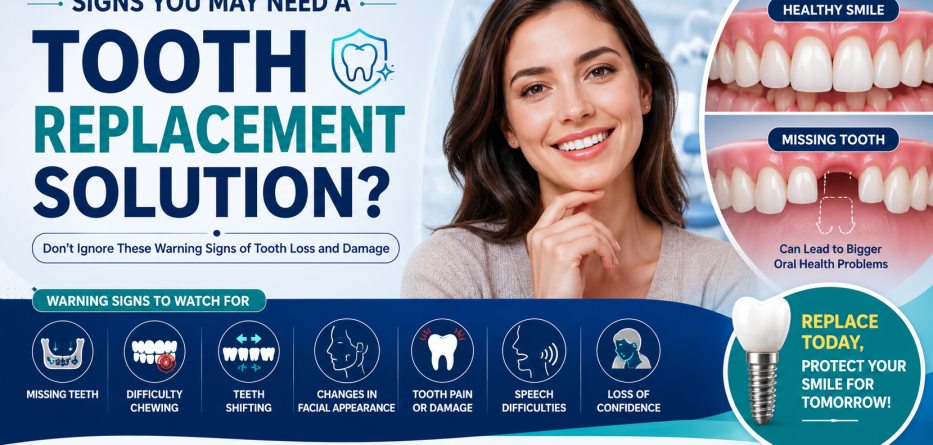
Your teeth play a vital role in your daily life. They help you chew food, speak clearly, and smile with confidence. However, tooth loss can happen due to injury, decay, gum disease, or aging. While some people delay treatment, replacing missing or severely damaged teeth is important for maintaining both oral health and overall well-being.
Recognizing the warning signs early can help prevent further dental complications and restore your smile before the problem worsens.
What You’ll Learn
In this article, you’ll discover:
- Common signs you may need a tooth replacement solution
- The risks of delaying treatment
- Available tooth replacement options
- Benefits of replacing missing teeth
- When to visit a dentist
What Is a Tooth Replacement Solution?
A tooth replacement solution is a dental treatment designed to replace a missing, damaged, or non-functional tooth. Common options include:
- Dental implants
- Dental bridges
- Partial dentures
- Full dentures
The right solution depends on your oral health, budget, and individual needs.
1. You Have One or More Missing Teeth
The most obvious sign is having a missing tooth.
Many people assume losing a single tooth isn’t a major issue, but even one missing tooth can affect:
- Your bite alignment
- Chewing efficiency
- Speech clarity
- Jawbone health
- Appearance of your smile
Replacing missing teeth promptly helps prevent additional oral health problems.
2. Difficulty Chewing Certain Foods
Do you avoid hard, crunchy, or chewy foods?
Missing or damaged teeth can make eating uncomfortable and reduce your ability to properly chew food.
Common symptoms include:
- Pain while chewing
- Favoring one side of your mouth
- Difficulty biting into foods
- Food getting trapped in gaps
A tooth replacement solution can restore normal chewing function.
3. Your Teeth Are Shifting Out of Place
When a tooth is lost, neighboring teeth often begin moving into the empty space.
This can cause:
- Crooked teeth
- Bite problems
- Increased wear on teeth
- Difficulty cleaning between teeth
Replacing the missing tooth helps maintain proper alignment.
4. Changes in Your Facial Appearance
Missing teeth can affect more than your smile.
Over time, tooth loss can lead to jawbone deterioration, causing:
- Sunken cheeks
- Facial sagging
- Premature aging
- Loss of facial support
Dental implants are particularly effective at preserving jawbone structure.
5. You Feel Self-Conscious About Your Smile
A missing tooth can impact confidence in social and professional situations.
You may find yourself:
- Smiling less often
- Covering your mouth when speaking
- Avoiding photographs
- Feeling embarrassed in social settings
Restoring your smile can significantly improve self-esteem and quality of life.
6. Persistent Tooth Pain or Severe Damage
Some teeth become so damaged that they cannot be saved through fillings or crowns.
Warning signs include:
- Cracked teeth
- Extensive decay
- Repeated infections
- Severe structural damage
In these cases, extraction followed by tooth replacement may be the best long-term solution.
7. Gum Disease Has Caused Tooth Loss
Advanced gum disease is one of the leading causes of tooth loss in adults.
Signs include:
- Bleeding gums
- Gum recession
- Loose teeth
- Chronic bad breath
If gum disease has already resulted in tooth loss, replacing those teeth can help restore function and appearance once gum health is stabilized.
8. You Have Loose Teeth
Adult teeth should never feel loose.
Loose teeth may indicate:
- Bone loss
- Gum disease
- Trauma
- Advanced infection
If a tooth cannot be saved, a replacement option may be necessary to prevent further complications.
Risks of Delaying Tooth Replacement
Ignoring missing teeth can lead to:
Bone Loss
The jawbone begins shrinking when it no longer receives stimulation from a tooth root.
Bite Problems
Missing teeth can alter the way your upper and lower teeth meet.
Increased Risk of Additional Tooth Loss
Shifting teeth and bone loss may place neighboring teeth at greater risk.
Speech Difficulties
Missing teeth can affect pronunciation and communication.
Reduced Quality of Life
Eating, smiling, and social interactions often become more challenging.
Tooth Replacement Options
Dental Implants
Best for:
- Long-term durability
- Natural appearance
- Jawbone preservation
Benefits:
- Permanent solution
- High success rate
- Functions like a natural tooth
Dental Bridges
Best for:
- Replacing one or several teeth
Benefits:
- Fixed restoration
- Faster treatment timeline
Dentures
Best for:
- Multiple missing teeth
- Full arch replacement
Benefits:
- Cost-effective
- Restores appearance and function
When Should You See a Dentist?
Schedule an evaluation if you experience:
- Missing teeth
- Loose teeth
- Difficulty chewing
- Significant tooth damage
- Changes in facial appearance
- Persistent oral discomfort
Early treatment often provides more options and better outcomes.
Conclusion
Recognizing the signs you may need a tooth replacement solution is the first step toward protecting your oral health. Missing teeth, difficulty chewing, shifting teeth, facial changes, and damaged teeth are all indicators that professional dental care may be needed.
The sooner you address tooth loss, the easier it is to preserve your smile, maintain jawbone health, and restore confidence. If you’re experiencing any of these symptoms, consult a dental professional to explore the best tooth replacement solution for your needs.
