
Missing teeth can affect much more than your smile. They can impact your confidence, ability to chew, speech, and overall oral health. Fortunately, dental implants offer a long-lasting and natural-looking solution.
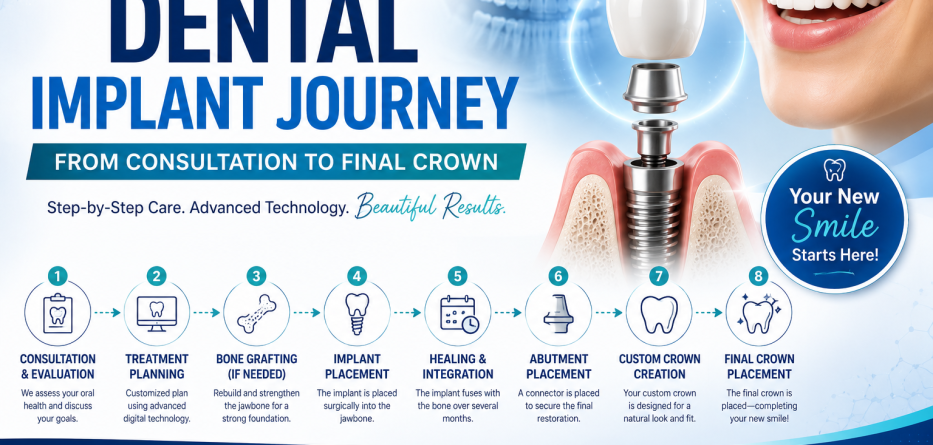
If you’re considering dental implants, understanding the treatment process can help ease anxiety and set realistic expectations. This guide walks you through the complete dental implant journey—from your first consultation to receiving your final crown.
What You’ll Learn
- What happens during a dental implant consultation
- How treatment planning works
- The implant placement procedure
- Healing and osseointegration
- Abutment placement
- Receiving your final crown
- Recovery tips and aftercare
What Is a Dental Implant?
A dental implant is a titanium post that is surgically placed into the jawbone to replace a missing tooth root. Once healed, it supports a custom-made dental crown that looks and functions like a natural tooth.
A complete dental implant consists of:
- Implant post
- Abutment
- Dental crown
Together, these components create a stable and permanent tooth replacement solution.
Step 1: Initial Consultation and Evaluation
Your dental implant journey begins with a comprehensive consultation.
During this appointment, your dentist will:
- Examine your teeth and gums
- Review your medical history
- Take digital X-rays
- Perform a CBCT scan if necessary
- Evaluate bone density and gum health
Why This Step Matters
Proper planning helps determine whether you’re a suitable candidate for implants and ensures long-term success.
Factors Your Dentist Will Assess
- Bone volume
- Gum condition
- Existing dental problems
- Smoking habits
- Medical conditions such as diabetes
Step 2: Personalized Treatment Planning
After your examination, a customized treatment plan is created.
This plan outlines:
- Number of implants needed
- Implant location
- Need for bone grafting
- Timeline of treatment
- Estimated costs
Modern dental technology allows dentists to create highly accurate surgical guides for precise implant placement.
Step 3: Bone Grafting (If Required)
Not every patient requires bone grafting.
However, if the jawbone has shrunk due to tooth loss, additional bone support may be necessary.
Common Reasons for Bone Grafting
- Long-term tooth loss
- Severe periodontal disease
- Previous dental infections
- Trauma-related bone loss
Healing from bone grafting can take several months before implant placement.
Step 4: Dental Implant Placement Surgery
This is the stage most patients think about when they hear the term “dental implant.”
During the procedure:
- Local anesthesia is administered.
- A small opening is made in the gum.
- The implant is placed into the jawbone.
- The site is closed for healing.
Is the Procedure Painful?
Most patients report minimal discomfort. In many cases, implant placement is less uncomfortable than tooth extraction.
Immediate Aftercare
You may experience:
- Mild swelling
- Minor bleeding
- Temporary soreness
These symptoms typically improve within a few days.
Step 5: Healing and Osseointegration
Osseointegration is the process where the implant fuses with the jawbone.
This phase is crucial because it creates a strong foundation for the replacement tooth.
Healing Timeline
| Treatment Stage | Typical Duration |
|---|---|
| Initial Recovery | 1–2 Weeks |
| Osseointegration | 3–6 Months |
| Final Restoration | After Healing |
Why Osseointegration Is Important
Successful osseointegration allows implants to:
- Support chewing forces
- Remain stable
- Last for decades
Step 6: Abutment Placement
Once healing is complete, the dentist attaches an abutment.
The abutment serves as a connector between the implant and the final crown.
This procedure is relatively minor and often requires minimal recovery time.
Step 7: Custom Crown Fabrication
Your dentist will take impressions or digital scans of your mouth.
A dental laboratory then creates a custom crown that matches:
- Tooth color
- Shape
- Size
- Bite alignment
The goal is to ensure the implant blends seamlessly with your natural smile.
Step 8: Final Crown Placement
The final crown is securely attached to the abutment.
Once placed, your new tooth should:
- Look natural
- Feel comfortable
- Function like a real tooth
Most patients are surprised by how quickly they adapt to their new implant.
Life After Dental Implants
Dental implants can last for decades when properly maintained.
Daily Care Tips
- Brush twice daily
- Floss regularly
- Attend routine dental checkups
- Avoid smoking
- Wear a nightguard if recommended
Good oral hygiene plays a significant role in long-term implant success.
Benefits of Completing the Dental Implant Journey
Restores Natural Function
Patients can comfortably enjoy foods they previously avoided.
Preserves Jawbone Health
Implants stimulate the jawbone and help prevent bone loss.
Enhances Appearance
A complete smile often improves self-confidence and facial aesthetics.
Long-Term Solution
Dental implants are among the most durable tooth replacement options available today.
Frequently Asked Questions
How long does the dental implant process take?
The complete process typically takes between 3 and 9 months, depending on healing and whether bone grafting is required.
Is getting a dental implant painful?
Most patients report only mild discomfort during recovery, which is usually manageable with prescribed medications.
Can I get a temporary tooth while healing?
Yes. Many patients receive temporary restorations while the implant integrates with the jawbone.
How successful are dental implants?
Dental implants have success rates exceeding 95% in healthy patients with good oral hygiene.
How long do dental implants last?
With proper care, dental implants can last 20 years or more and often a lifetime.
Conclusion
The dental implant journey may involve several stages, but each step is carefully designed to create a strong, healthy, and natural-looking smile. From your initial consultation to the placement of your final crown, dental implants offer a predictable and highly successful solution for replacing missing teeth.
Understanding the process can help you feel more confident about treatment and appreciate the long-term benefits that dental implants provide.
