
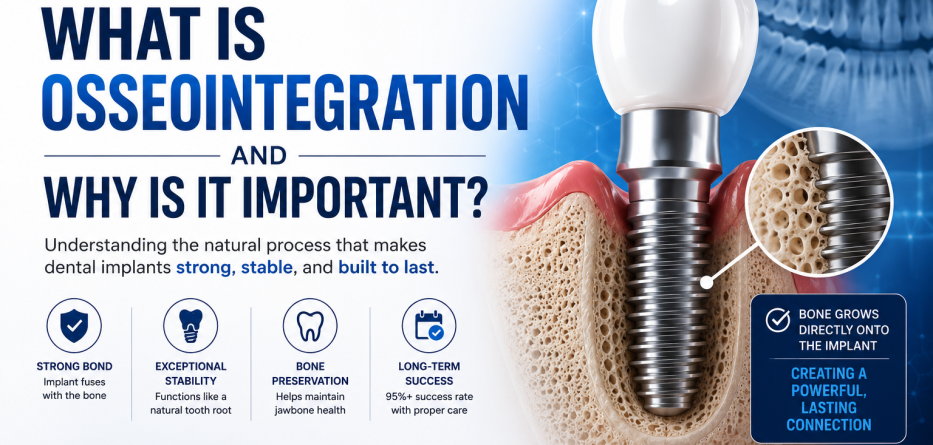
Dental implants have revolutionized modern dentistry, offering a long-lasting and natural-looking solution for missing teeth. But what makes dental implants so successful? The answer lies in a remarkable biological process known as osseointegration.
Osseointegration is the foundation of dental implant success. Without it, implants would not be able to function like natural teeth or provide the stability patients expect. Understanding how osseointegration works can help patients appreciate why dental implants are considered the gold standard for tooth replacement.
In this article, you’ll learn what osseointegration is, how it works, why it’s important, and what factors influence successful implant healing.
What Is Osseointegration?
Osseointegration is the process by which a dental implant fuses directly with the surrounding jawbone. The term comes from the Latin words “os” (bone) and “integrate” (to make whole).
When a titanium dental implant is placed into the jawbone, the bone cells gradually grow around and attach to the implant surface. Over time, the implant becomes securely anchored in the bone, creating a stable foundation for a dental crown, bridge, or denture.
Quick Definition
Osseointegration is the biological process in which the jawbone bonds with a dental implant, creating a strong and permanent connection that allows the implant to function like a natural tooth root.
How Does Osseointegration Work?
The osseointegration process occurs in several stages.
1. Implant Placement
During dental implant surgery, a titanium implant is carefully inserted into the jawbone where the missing tooth once existed.
2. Initial Healing
In the first few weeks, the surrounding tissue begins to heal and inflammation gradually decreases.
3. Bone Growth Around the Implant
Specialized bone cells called osteoblasts begin forming new bone around the implant surface.
4. Bone Fusion
Over the next several months, the bone bonds directly with the implant. This creates a strong connection capable of supporting everyday chewing and biting forces.
5. Restoration Placement
Once osseointegration is complete, the dentist attaches an abutment and custom-made crown to restore the missing tooth.
Why Is Osseointegration Important?
Osseointegration is what separates dental implants from other tooth replacement options such as dentures and bridges.
Provides Exceptional Stability
A successfully integrated implant becomes firmly anchored in the jawbone, preventing movement while eating, speaking, or smiling.
Benefits include:
- Secure fit
- Improved comfort
- Better chewing efficiency
- Natural tooth function
Helps Prevent Bone Loss
When a natural tooth is lost, the jawbone in that area no longer receives stimulation and begins to shrink over time.
Dental implants restore this stimulation through osseointegration, helping preserve bone density and facial structure.
Benefits include:
- Reduced bone resorption
- Preservation of facial appearance
- Better long-term oral health
Supports Long-Term Implant Success
Research consistently shows dental implant success rates above 95% when proper osseointegration occurs.
Strong bone integration contributes to:
- Implant longevity
- Reduced risk of implant failure
- Improved function for decades
Creates a Natural Feel
Because the implant becomes part of the jawbone, patients often report that implants feel remarkably similar to natural teeth.
Many individuals eventually forget which tooth is an implant.
How Long Does Osseointegration Take?
The timeline varies from patient to patient.
| Stage | Typical Duration |
|---|---|
| Initial Healing | 1–2 Weeks |
| Bone Integration | 3–6 Months |
| Final Restoration | After Successful Integration |
Factors such as age, bone quality, overall health, and smoking habits can affect healing speed.
Factors That Influence Successful Osseointegration
Bone Quality and Density
Healthy jawbone provides the ideal environment for implant stability and bone growth.
Oral Hygiene
Keeping the implant site clean reduces the risk of infection and supports healthy healing.
Non-Smoking Lifestyle
Smoking can significantly reduce blood flow and slow the healing process.
Medical Conditions
Certain conditions may affect healing, including:
- Uncontrolled diabetes
- Autoimmune disorders
- Osteoporosis
Proper medical management can often improve outcomes.
What Happens If Osseointegration Fails?
Although uncommon, implant failure can occur if the bone does not properly bond with the implant.
Possible causes include:
- Infection
- Poor bone quality
- Excessive pressure on the implant
- Smoking
- Inadequate oral hygiene
Signs of failure may include:
- Implant mobility
- Pain or discomfort
- Swelling
- Difficulty chewing
Early intervention can often resolve complications.
How Dentists Improve Osseointegration Success
Modern implant technology has significantly improved osseointegration rates.
Advanced techniques include:
- 3D digital treatment planning
- Surface-treated titanium implants
- Bone grafting procedures
- Guided implant surgery
- Advanced imaging technology
These innovations help maximize implant stability and long-term success.
Dental Implants vs Other Tooth Replacement Options
| Feature | Dental Implants | Bridges | Dentures |
| Osseointegration | Yes | No | No |
| Bone Preservation | Yes | Limited | No |
| Stability | Excellent | Good | Moderate |
| Longevity | 20+ Years | 5–15 Years | 5–10 Years |
| Natural Feel | Excellent | Good | Moderate |
This unique bone integration process is one of the primary reasons dental implants outperform alternative tooth replacement methods.
Frequently Asked Questions
Is osseointegration painful?
Most patients experience only mild discomfort following implant placement. The integration process itself is painless.
Can osseointegration fail?
Yes, although implant failure rates are low when treatment is performed by experienced professionals and patients follow aftercare instructions.
Why is titanium used for dental implants?
Titanium is biocompatible, durable, and uniquely capable of bonding with human bone.
How do I know if my implant has integrated successfully?
Your dentist will monitor healing through clinical examinations and imaging before placing the final restoration.
Can bone grafting improve osseointegration?
Yes. Bone grafting can increase bone volume and create a stronger foundation for successful implant integration.
Conclusion
Osseointegration is the key biological process that makes dental implants one of the most successful and reliable treatments in modern dentistry. By allowing the jawbone to bond directly with the implant, osseointegration provides exceptional stability, preserves bone health, and supports long-term implant success.
Understanding the importance of osseointegration helps patients appreciate why dental implants are considered the gold standard for replacing missing teeth. When proper healing occurs, the result is a strong, functional, and natural-looking smile that can last for decades.
