
Dental implants are one of the most reliable and long-lasting solutions for replacing missing teeth. However, one of the most common questions patients ask before treatment is, “How long does it take for a dental implant to heal?“
The answer varies from person to person, but understanding the healing timeline can help set realistic expectations and improve treatment success. While initial recovery may take only a few days, complete healing and integration of the implant with the jawbone typically takes several months.
In this guide, we’ll explain the dental implant healing process, what to expect during recovery, factors that affect healing, and tips for a smooth recovery.
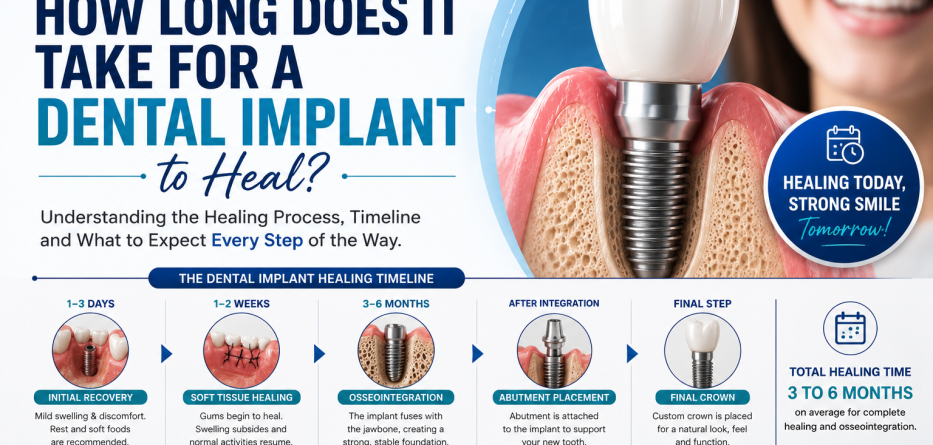
Quick Answer: How Long Does a Dental Implant Take to Heal?
Most patients experience initial healing within 1 to 2 weeks, while complete healing and osseointegration generally take 3 to 6 months.
Typical Timeline
| Healing Stage | Estimated Time |
|---|---|
| Initial Recovery | 1–7 Days |
| Soft Tissue Healing | 1–2 Weeks |
| Osseointegration | 3–6 Months |
| Final Crown Placement | After Full Integration |
The exact timeline depends on factors such as bone quality, overall health, and whether additional procedures like bone grafting are needed.
Understanding the Dental Implant Healing Process
Healing occurs in several stages after implant surgery.
Stage 1: First 24–72 Hours
Immediately after surgery, the body begins its natural healing response.
Common symptoms include:
- Mild swelling
- Minor bleeding
- Tenderness around the implant site
- Slight discomfort
Most patients manage these symptoms with prescribed medications and cold compresses.
What to Do
- Rest as much as possible
- Avoid strenuous activities
- Eat soft foods
- Follow your dentist’s instructions carefully
Stage 2: Soft Tissue Healing (1–2 Weeks)
During this phase, the gums begin healing around the implant.
Most patients notice:
- Reduced swelling
- Improved comfort
- Closure of the surgical site
- Normal daily activities resumed
Many people return to work within 1–3 days after implant surgery.
Stage 3: Osseointegration (3–6 Months)
Osseointegration is the most important phase of implant healing.
This biological process occurs when the jawbone fuses directly with the titanium implant.
Benefits include:
- Long-term stability
- Strong bite function
- Prevention of bone loss
- Permanent support for the crown
Although patients usually feel normal during this stage, significant healing continues beneath the surface.
Stage 4: Abutment and Crown Placement
Once your dentist confirms successful osseointegration, the final restoration process begins.
This includes:
- Attaching the abutment
- Taking impressions
- Fabricating the custom crown
- Securing the permanent restoration
After crown placement, the implant functions much like a natural tooth.
Factors That Affect Dental Implant Healing Time
Not every patient heals at the same rate.
Bone Quality and Density
Patients with strong jawbone support often heal faster than those with significant bone loss.
Overall Health
Certain conditions may slow healing, including:
- Diabetes
- Autoimmune disorders
- Osteoporosis
Proper medical management helps improve outcomes.
Smoking
Smoking is one of the biggest risk factors for delayed healing and implant failure.
Tobacco use can:
- Reduce blood flow
- Increase infection risk
- Slow bone regeneration
Oral Hygiene
Good oral hygiene is essential during recovery.
Poor cleaning habits can increase the risk of infection around the implant.
Does Bone Grafting Increase Healing Time?
Yes.
If bone grafting is needed before implant placement, healing time may increase significantly.
Typical Bone Grafting Timeline
| Procedure | Additional Healing Time |
| Minor Bone Graft | 2–4 Months |
| Major Bone Graft | 4–9 Months |
Your dentist will evaluate your jawbone and determine the most appropriate treatment plan.
Signs Your Dental Implant Is Healing Properly
Positive signs include:
- Decreasing swelling
- Reduced discomfort
- Healthy pink gums
- No implant movement
- Ability to chew comfortably after recovery
Regular follow-up appointments help monitor healing progress.
Warning Signs to Watch For
Contact your dentist if you experience:
- Severe pain after several days
- Persistent bleeding
- Fever
- Excessive swelling
- Implant looseness
- Pus or signs of infection
Early treatment can prevent complications and improve implant success.
Tips for Faster Dental Implant Healing
Follow Post-Operative Instructions
Your dentist’s recommendations are specifically designed to support healing.
Maintain Excellent Oral Hygiene
- Brush gently
- Use prescribed mouth rinses
- Keep the surgical area clean
Eat Soft Foods
Recommended foods include:
- Yogurt
- Smoothies
- Mashed potatoes
- Soup
- Scrambled eggs
Avoid hard or crunchy foods during early recovery.
Stay Hydrated
Proper hydration supports tissue repair and overall healing.
Avoid Smoking and Alcohol
These substances can interfere with blood flow and delay recovery.
How Successful Are Dental Implants?
Dental implants are among the most predictable procedures in modern dentistry.
Success Rates
Studies consistently report success rates exceeding 95% when patients maintain good oral health and follow professional guidance.
Successful osseointegration is the key factor behind these impressive long-term results.
Frequently Asked Questions
How painful is dental implant recovery?
Most patients report mild to moderate discomfort that improves within a few days.
Can I eat normally after implant surgery?
Soft foods are recommended initially. Most patients gradually return to normal eating habits as healing progresses.
Why does osseointegration take several months?
Bone tissue grows slowly. Time is required for the jawbone to securely bond with the implant surface.
Can dental implants heal faster?
Following your dentist’s instructions, maintaining oral hygiene, and avoiding smoking can support optimal healing.
When can I get my permanent crown?
Most patients receive their final crown after successful osseointegration, typically within 3–6 months.
Conclusion
So, how long does it take for a dental implant to heal?
While initial recovery usually takes just one to two weeks, complete healing and osseointegration typically require three to six months. This healing period is essential because it allows the implant to fuse with the jawbone and create a stable foundation for long-term success.
By following your dentist’s instructions, maintaining excellent oral hygiene, and attending follow-up appointments, you can help ensure a smooth recovery and enjoy the long-lasting benefits of your dental implant for years to come.
