
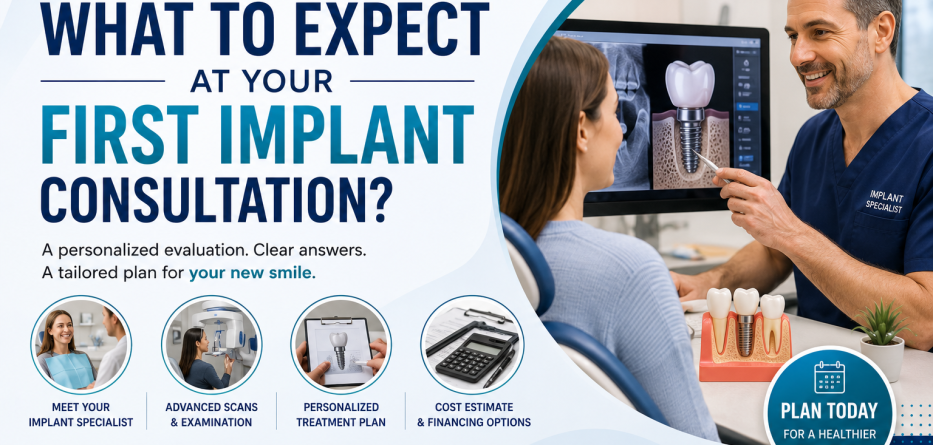
If you’re considering dental implants to replace missing teeth, your journey begins with an implant consultation. For many patients, the first appointment can feel overwhelming because they’re unsure what will happen, what questions to ask, or whether they’re a suitable candidate for treatment.
The good news is that an implant consultation is a comfortable, informative visit designed to evaluate your oral health and create a personalized treatment plan. Understanding what to expect can help you feel more confident and prepared.
In this guide, we’ll walk you through everything that happens during your first dental implant consultation, including examinations, imaging, treatment planning, and answers to common patient concerns.
What Is a Dental Implant Consultation?
A dental implant consultation is the initial appointment where a dentist or implant specialist evaluates your oral health, discusses your goals, and determines whether dental implants are the right solution for you.
The consultation helps answer important questions such as:
- Am I a good candidate for dental implants?
- How many implants do I need?
- How long will treatment take?
- What will the procedure cost?
- Are there alternative treatment options?
The goal is to create a customized treatment plan based on your unique needs.
Why the Consultation Is Important
Dental implants require careful planning to achieve long-term success.
Your consultation allows the dentist to:
- Assess bone density
- Examine gum health
- Review your medical history
- Identify potential challenges
- Develop a personalized treatment strategy
Proper planning significantly improves implant success rates and minimizes complications.
Step 1: Discussion of Your Dental and Medical History
The appointment typically begins with a conversation about your overall health.
Your dentist may ask about:
Medical Conditions
- Diabetes
- Heart disease
- Autoimmune disorders
- Osteoporosis
Medications
Certain medications can affect healing and bone integration.
Lifestyle Habits
- Smoking
- Alcohol consumption
- Oral hygiene habits
Being honest about your medical history helps ensure safe and successful treatment.
Step 2: Comprehensive Oral Examination
Next, your dentist will perform a thorough examination of your mouth.
The assessment usually includes:
- Missing teeth evaluation
- Gum health assessment
- Bite analysis
- Existing restorations
- Signs of infection or decay
The goal is to identify any issues that should be addressed before implant placement.
Step 3: Digital X-Rays and 3D Imaging
One of the most important parts of an implant consultation is diagnostic imaging.
Why Imaging Matters
Dental implants must be placed precisely within the jawbone.
Advanced imaging helps evaluate:
- Bone volume
- Bone density
- Nerve locations
- Sinus position
- Implant placement sites
Cone Beam CT Scan (CBCT)
Many implant practices use 3D Cone Beam Computed Tomography (CBCT) scans.
Benefits include:
- Highly accurate planning
- Improved safety
- Better treatment outcomes
- Reduced surgical risks
This technology allows dentists to create a detailed map of your oral anatomy.
Step 4: Evaluation of Jawbone Health
Successful implants depend on adequate bone support.
Your dentist will assess:
Bone Quantity
Is there enough bone to support an implant?
Bone Quality
Is the bone strong enough for long-term stability?
If bone loss is present, additional procedures such as bone grafting may be recommended.
Step 5: Determining Your Implant Eligibility
Many patients are surprised to learn that they qualify for implants even after years of tooth loss.
Ideal candidates generally have:
- Healthy gums
- Good oral hygiene
- Sufficient bone support
- Stable medical conditions
Even if bone loss exists, modern techniques often make treatment possible.
Step 6: Discussion of Treatment Options
Not every patient requires the same type of implant treatment.
Your dentist may discuss options such as:
Single Tooth Implant
Ideal for replacing one missing tooth.
Multiple Dental Implants
Used when several teeth are missing.
Implant-Supported Bridges
A solution for larger gaps without requiring one implant per tooth.
Full Arch Restoration
Options like All-on-4® can replace an entire row of teeth using fewer implants.
The recommended approach will depend on your specific situation.
Step 7: Review of the Treatment Timeline
Patients often want to know how long the process will take.
A typical timeline includes:
| Stage | Estimated Time |
|---|---|
| Consultation | 1 Visit |
| Preparatory Procedures | Varies |
| Implant Placement | 1 Day |
| Healing & Osseointegration | 3–6 Months |
| Final Crown Placement | 1–2 Visits |
Your dentist will provide a personalized schedule.
Step 8: Cost and Financing Discussion
One of the most common topics during the consultation is cost.
The dentist will explain factors that affect pricing, including:
- Number of implants
- Bone grafting requirements
- Implant materials
- Restoration type
- Complexity of treatment
Many practices also offer:
- Payment plans
- Financing options
- Insurance assistance
A detailed estimate is usually provided before treatment begins.
Step 9: Ask Questions and Address Concerns
The consultation is your opportunity to ask questions and fully understand the process.
Helpful questions include:
- How many implant procedures have you performed?
- What is your success rate?
- Will I need bone grafting?
- How long will recovery take?
- What are the risks and benefits?
An experienced implant provider should be happy to answer all of your concerns.
How to Prepare for Your Implant Consultation
To get the most value from your appointment:
Bring Medical Information
Include medications and health conditions.
Gather Dental Records
Previous X-rays or treatment records may be helpful.
Make a List of Questions
Prepare concerns you’d like addressed.
Know Your Goals
Think about what you want to improve:
- Appearance
- Function
- Comfort
- Confidence
Clear goals help guide treatment planning.
Common Concerns Patients Have
Will the Consultation Be Painful?
No. The consultation is non-invasive and generally comfortable.
Will I Need Surgery Immediately?
No. Implant surgery is scheduled for a future date after planning is completed.
What If I Have Bone Loss?
Many patients with bone loss can still receive implants through advanced procedures such as bone grafting.
Am I Too Old for Dental Implants?
Age alone rarely disqualifies someone from implant treatment. Overall health is usually more important than age.
Benefits of an Implant Consultation
A consultation helps patients:
- Understand treatment options
- Learn about implant suitability
- Receive personalized recommendations
- Estimate costs and timelines
- Build confidence in their decision
It is the first step toward restoring a healthy, functional smile.
Frequently Asked Questions
How long does a dental implant consultation take?
Most consultations take between 45 and 90 minutes depending on the complexity of the case.
Do I need X-rays during the consultation?
In most cases, yes. Imaging helps determine bone quality and treatment feasibility.
Can I get implants if I have missing teeth for many years?
Often yes. Bone grafting and modern implant techniques can help many patients qualify.
Is the consultation free?
Some practices offer complimentary consultations, while others charge a diagnostic fee.
Will I receive a treatment plan?
Yes. Most patients receive a customized treatment plan outlining procedures, costs, and timelines.
Conclusion
Knowing what to expect at your first implant consultation can make the process much less intimidating. During the appointment, your dentist will evaluate your oral health, review imaging, assess bone quality, discuss treatment options, and answer your questions.
The consultation serves as the foundation for a successful dental implant journey, helping ensure that your treatment is safe, predictable, and tailored to your needs. With proper planning and expert guidance, you’ll be one step closer to restoring your smile and confidence with dental implants.
