

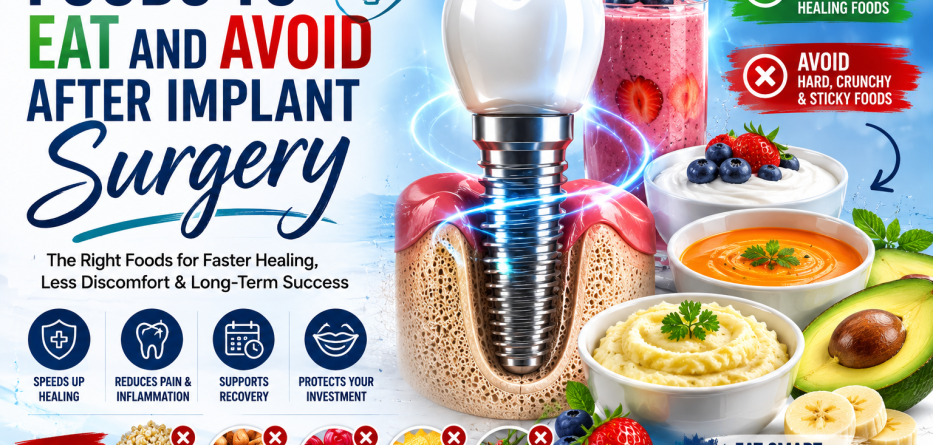
Dental implant surgery is an important step toward restoring your smile and improving your oral health. However, what you eat during the healing period can significantly impact your recovery and the long-term success of your implant.
Choosing the right foods helps minimize discomfort, reduce the risk of complications, and support the crucial healing process known as osseointegration, where the implant bonds with the jawbone. On the other hand, eating the wrong foods too soon can place excessive pressure on the surgical site and delay healing.
In this guide, you’ll learn which foods are best to eat after dental implant surgery, which foods to avoid, and how to support a smooth recovery.
Why Your Diet Matters After Dental Implant Surgery
Following implant placement, the surrounding gum tissue and bone need time to heal. During this period, the implant is gradually integrating with the jawbone.
A proper post-surgery diet can help:
- Reduce irritation around the implant site
- Prevent bleeding and swelling
- Support tissue repair
- Lower infection risk
- Promote faster healing
- Improve implant success rates
For the first few weeks, soft and nutrient-rich foods are typically recommended.
What to Eat Immediately After Implant Surgery
The first 24 to 48 hours are critical for healing.
Recommended Foods
Smoothies
Smoothies provide essential vitamins and minerals while requiring little chewing.
Good ingredients include:
- Bananas
- Berries
- Yogurt
- Protein powder
- Spinach
Tip: Avoid using a straw, as suction may disturb the surgical area.
Yogurt
Yogurt is soft, easy to eat, and rich in protein and probiotics that may support healing.
Choose:
- Plain Greek yogurt
- Low-sugar varieties
Applesauce
Applesauce offers a soft texture and provides vitamins without irritating the implant site.
Mashed Potatoes
Mashed potatoes are filling, soft, and easy to consume after surgery.
For additional nutrition, consider adding:
- Sweet potatoes
- Cauliflower mash
Broth and Soup
Warm (not hot) soups can help maintain hydration and provide nutrients.
Examples include:
- Chicken broth
- Vegetable soup
- Bone broth
Avoid soups containing large chunks that require chewing.
Best Foods During the First Week
As healing progresses, patients can gradually expand their diet.
Soft Protein Sources
Protein plays a vital role in tissue repair.
Good options include:
- Scrambled eggs
- Cottage cheese
- Tofu
- Soft fish
- Shredded chicken
Soft Fruits
Choose fruits that require minimal chewing.
Examples:
- Bananas
- Ripe peaches
- Avocados
- Mangoes
Cooked Vegetables
Steamed vegetables become easier to chew and digest.
Good choices include:
- Carrots
- Zucchini
- Squash
- Green beans
Oatmeal
Oatmeal provides fiber and nutrients while remaining gentle on healing tissues.
Allow it to cool before eating.
Nutrients That Support Implant Healing
Protein
Protein helps repair damaged tissue and supports bone regeneration.
Sources include:
- Eggs
- Fish
- Greek yogurt
- Lean poultry
Vitamin C
Vitamin C supports collagen production and wound healing.
Foods include:
- Strawberries
- Kiwi
- Oranges
- Bell peppers
Calcium
Calcium supports bone health and implant stability.
Sources include:
- Milk
- Cheese
- Yogurt
- Fortified plant-based alternatives
Vitamin D
Vitamin D helps the body absorb calcium effectively.
Sources include:
- Fatty fish
- Egg yolks
- Fortified foods
Foods to Avoid After Implant Surgery
Certain foods can interfere with healing and increase the risk of complications.
Hard Foods
Avoid:
- Nuts
- Popcorn
- Hard candy
- Chips
- Ice
These foods can place pressure on the implant site and damage healing tissue.
Crunchy Foods
Crunchy foods may irritate the surgical area.
Examples include:
- Crackers
- Pretzels
- Raw vegetables
Sticky Foods
Sticky foods can become trapped around the implant site.
Avoid:
- Caramel
- Chewing gum
- Taffy
Spicy Foods
Spices may irritate healing gums and cause discomfort.
Limit:
- Hot sauces
- Chili peppers
- Highly seasoned foods
Extremely Hot Foods and Drinks
Very hot temperatures may increase swelling and discomfort.
Allow foods and beverages to cool before consumption.
Alcohol
Alcohol can interfere with healing and may interact with medications prescribed after surgery.
Many dentists recommend avoiding alcohol for at least several days following implant placement.
Foods to Avoid During Osseointegration
Even after initial healing, the implant continues integrating with the jawbone for several months.
During this period, avoid excessive force from:
- Hard nuts
- Ice chewing
- Hard candies
- Tough meats
- Crusty bread
Your dentist will advise when normal eating habits can resume.
Sample Meal Plan After Implant Surgery
| Meal | Food Ideas |
|---|---|
| Breakfast | Greek yogurt and banana |
| Snack | Smoothie with protein powder |
| Lunch | Mashed potatoes and soft fish |
| Snack | Applesauce |
| Dinner | Scrambled eggs and steamed vegetables |
| Dessert | Pudding or yogurt |
Recovery Tips for Faster Healing
In addition to eating the right foods:
- Stay hydrated.
- Follow your dentist’s instructions.
- Avoid smoking.
- Maintain good oral hygiene.
- Get plenty of rest.
- Attend follow-up appointments.
These habits can help improve healing and support implant success.
Frequently Asked Questions
How soon can I eat after dental implant surgery?
Most patients can eat soft foods once the numbness wears off, usually within a few hours after surgery.
Can I drink coffee after implant surgery?
Warm coffee may be acceptable after the first day, but extremely hot beverages should be avoided initially.
When can I eat normal food again?
Many patients gradually return to normal foods within several weeks, depending on healing progress and their dentist’s recommendations.
Can I eat rice after implant surgery?
Soft, well-cooked rice may be suitable after the first few days, but individual recommendations may vary.
What foods help dental implants heal faster?
Protein-rich foods, vitamin C-rich fruits, calcium-containing foods, and plenty of water can support healing.
Conclusion
Knowing which foods to eat and avoid after implant surgery can make a significant difference in your recovery. Soft, nutritious foods help protect the surgical site while providing the nutrients needed for healing and successful osseointegration.
By avoiding hard, crunchy, sticky, and spicy foods during the recovery period, you can reduce complications and support the long-term success of your dental implant. Always follow your dentist’s instructions and gradually reintroduce regular foods as healing progresses.

