
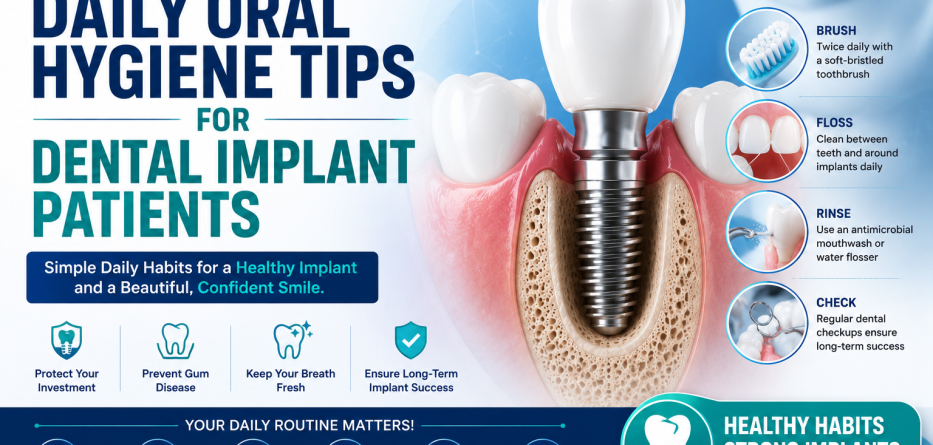
Dental implants are one of the most reliable and long-lasting solutions for replacing missing teeth. While implants cannot develop cavities like natural teeth, they still require proper daily care to maintain healthy gums, prevent complications, and ensure long-term success.
Many patients mistakenly believe that dental implants are maintenance-free. In reality, neglecting oral hygiene can lead to plaque buildup, gum inflammation, peri-implant disease, and even implant failure. Establishing a consistent oral care routine is essential for protecting your investment and maintaining a healthy smile.
In this guide, you’ll learn the most effective daily oral hygiene tips for dental implant patients, common mistakes to avoid, and best practices recommended by dental professionals.
Why Oral Hygiene Is Important for Dental Implants
Dental implants rely on healthy surrounding gum tissue and bone support. Poor oral hygiene can allow bacteria to accumulate around the implant, increasing the risk of infection and inflammation.
Proper oral care helps:
- Prevent peri-implant mucositis
- Reduce plaque and tartar buildup
- Protect surrounding gum tissue
- Maintain implant stability
- Improve implant longevity
- Support overall oral health
Daily maintenance is one of the most important factors influencing long-term implant success.
Brush Your Teeth Twice Daily
Brushing is the foundation of implant care.
Use a soft-bristled toothbrush to clean around the implant and gumline without causing irritation.
Best Practices
- Brush for at least two minutes
- Use gentle circular motions
- Clean all tooth surfaces
- Pay extra attention around implant restorations
- Brush morning and night
Electric toothbrushes can be particularly effective for removing plaque around implants.
Choose the Right Toothbrush
Not all toothbrushes are ideal for implant patients.
Recommended Options
- Soft-bristled manual toothbrush
- Electric toothbrush with pressure sensors
- Implant-specific brushes
- Interproximal brushes
Avoid hard-bristled brushes that may damage gum tissue.
Floss Every Day
Flossing helps remove plaque and food particles from areas a toothbrush cannot reach.
Best Flossing Options for Implants
- Implant-specific floss
- Unwaxed floss
- Water flosser
- Super floss
- Threader floss
Daily flossing helps reduce inflammation around implant-supported restorations.
Benefits of Flossing
- Removes trapped debris
- Prevents gum irritation
- Reduces bacterial growth
- Protects surrounding teeth
Use an Antimicrobial Mouthwash
A dentist-recommended antimicrobial mouth rinse can help reduce harmful bacteria.
Benefits include:
- Fresher breath
- Lower bacterial levels
- Reduced plaque formation
- Improved gum health
Alcohol-free mouthwashes are generally preferred because they are gentler on oral tissues.
Clean Around the Gumline Carefully
The gumline surrounding a dental implant requires special attention.
Plaque accumulation at this location can lead to peri-implant disease.
Areas to Focus On
- Implant crown margins
- Gum pockets
- Areas between teeth
- Back molar implants
Gentle but thorough cleaning is essential.
Consider a Water Flosser
Water flossers are increasingly recommended for implant patients.
These devices use pressurized water to remove plaque and debris from hard-to-reach areas.
Advantages
- Easy to use
- Effective around implants
- Gentle on gums
- Improves gum health
- Helpful for bridges and full-arch restorations
Many implant specialists recommend incorporating a water flosser into daily oral hygiene routines.
Avoid Smoking and Tobacco Products
Smoking significantly increases the risk of implant complications.
Tobacco use can:
- Reduce blood flow
- Slow healing
- Increase infection risk
- Contribute to bone loss
- Raise implant failure rates
Patients who quit smoking often experience better long-term implant outcomes.
Watch for Signs of Implant Problems
Early detection of issues can prevent more serious complications.
Warning Signs
- Bleeding gums
- Persistent bad breath
- Swelling around implants
- Gum recession
- Pain when chewing
- Implant mobility
Contact your dentist if you notice any of these symptoms.
Schedule Regular Dental Checkups
Professional maintenance is just as important as home care.
Most implant patients should visit their dentist every six months, although some may require more frequent appointments.
During Professional Visits
Dentists may:
- Assess implant stability
- Check gum health
- Remove tartar buildup
- Monitor bone levels
- Identify early signs of disease
Regular monitoring helps protect implants for years to come.
Foods and Habits That Support Implant Health
Daily lifestyle choices can influence implant success.
Healthy Habits
- Drink plenty of water
- Eat nutrient-rich foods
- Limit sugary snacks
- Maintain a balanced diet
- Follow dental instructions
Foods That Support Oral Health
- Leafy greens
- Dairy products
- Lean proteins
- Fruits and vegetables
- Foods rich in calcium and vitamin D
Good nutrition supports healthy gums and bone structure.
Common Oral Hygiene Mistakes Implant Patients Make
Many implant complications are preventable.
Avoid These Mistakes
- Skipping flossing
- Brushing too aggressively
- Missing dental appointments
- Ignoring bleeding gums
- Smoking after implant treatment
- Using hard-bristled toothbrushes
- Assuming implants don’t require maintenance
Small daily habits can significantly affect long-term outcomes.
Daily Oral Hygiene Routine for Implant Patients
Morning Routine
- Brush for two minutes.
- Clean around implant areas carefully.
- Use mouthwash if recommended.
Evening Routine
- Brush thoroughly.
- Floss around implants.
- Use a water flosser.
- Rinse with antimicrobial mouthwash.
Consistency is key to maintaining implant health.
Frequently Asked Questions
Do dental implants require special cleaning?
Yes. While similar to natural teeth, implants often benefit from specialized floss, interdental brushes, or water flossers.
Can dental implants get cavities?
No. Implants cannot develop cavities, but surrounding gum tissue can become infected if oral hygiene is neglected.
How often should implant patients floss?
Flossing should be performed at least once daily.
Is an electric toothbrush safe for implants?
Yes. Most dentists recommend electric toothbrushes because they effectively remove plaque while being gentle on gums.
What is peri-implantitis?
Peri-implantitis is an inflammatory condition affecting the tissues around a dental implant and can lead to bone loss if untreated.
Conclusion
Dental implants are designed to provide a durable and natural-looking solution for missing teeth, but their success depends heavily on proper oral hygiene. Daily brushing, flossing, professional cleanings, and healthy lifestyle habits help protect both the implant and surrounding tissues.
By following these daily oral hygiene tips, dental implant patients can reduce the risk of complications, preserve their oral health, and enjoy a healthy, confident smile for many years to come.
