
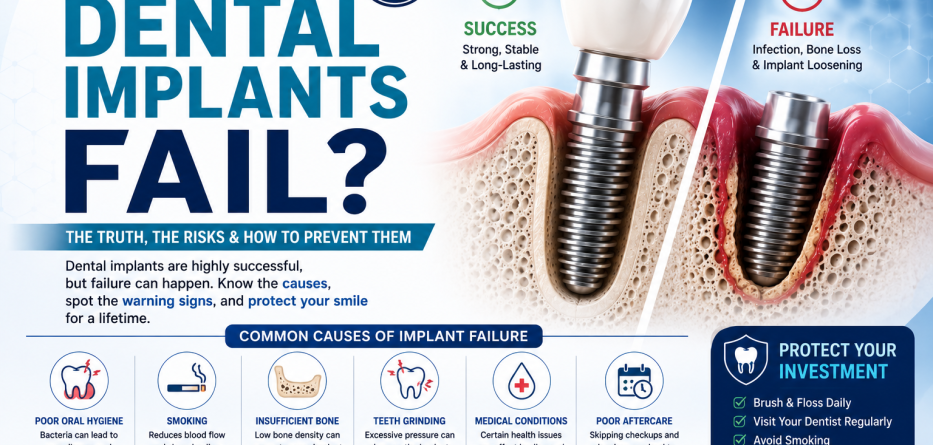
Dental implants are one of the most successful and reliable solutions for replacing missing teeth. With success rates often exceeding 95%, they have become the gold standard in modern restorative dentistry. However, despite their impressive track record, many patients still wonder: Can dental implants fail?
The short answer is yes. While dental implant failure is relatively uncommon, it can occur under certain circumstances. Understanding the causes, warning signs, and prevention strategies can help patients protect their investment and maintain a healthy smile for years to come.
In this article, we’ll explore why dental implants fail, how to recognize potential problems, and what you can do to reduce your risk.
Can Dental Implants Really Fail?
Yes, dental implants can fail, but failure is not common when treatment is properly planned and maintained.
Dental implant failure occurs when the implant does not properly integrate with the jawbone or loses support after successful placement.
Failure can happen:
- Shortly after implant surgery (early failure)
- Months or years later (late failure)
Fortunately, many complications can be prevented with proper care and regular dental visits.
What Is Considered Dental Implant Failure?
Dental implant failure occurs when the implant can no longer function properly due to loss of stability, infection, bone loss, or mechanical complications.
Signs of Implant Failure Include:
- Implant mobility or looseness
- Persistent pain or discomfort
- Swollen or bleeding gums
- Difficulty chewing
- Gum recession around the implant
- Infection near the implant site
A healthy implant should feel stable and function like a natural tooth.
Early Dental Implant Failure
Early failure occurs before complete osseointegration takes place.
Osseointegration is the process where the implant fuses with the surrounding jawbone.
Common Causes of Early Failure
Infection at the Implant Site
Bacterial infection can interfere with healing and prevent proper bone integration.
Risk factors include:
- Poor oral hygiene
- Existing gum disease
- Contaminated surgical site
Insufficient Bone Density
Dental implants require adequate bone support.
If the jawbone lacks sufficient volume or density, the implant may not stabilize properly.
Patients with severe bone loss may require the following:
- Bone grafting
- Sinus augmentation
- Guided bone regeneration
Excessive Pressure During Healing
Applying too much force before healing is complete can disrupt osseointegration.
Examples include:
- Premature loading
- Teeth grinding
- Clenching habits
Medical Conditions
Certain health conditions can affect healing.
Examples include:
- Uncontrolled diabetes
- Autoimmune disorders
- Osteoporosis
- Immune deficiencies
Proper medical management can improve outcomes.
Late Dental Implant Failure
Late failure occurs after successful osseointegration, often months or years after placement.
Perimplantitis
Peri-implantitis is one of the leading causes of implant failure.
It is an inflammatory condition affecting the tissues around the implant.
Symptoms include:
- Bleeding gums
- Swelling
- Bone loss
- Implant instability
Without treatment, peri-implantitis can eventually cause implant loss.
Smoking and Tobacco Use
Smoking significantly increases implant failure risk.
Tobacco can:
- Reduce blood flow
- Slow healing
- Increase infection risk
- Accelerate bone loss
Patients who quit smoking generally experience better long-term implant outcomes.
Teeth Grinding (Bruxism)
Excessive grinding or clenching places tremendous stress on implants.
Potential consequences include the following:
- Implant overload
- Crown fractures
- Screw loosening
- Bone damage
A custom nightguard can help protect implants from excessive force.
Poor Oral Hygiene
Dental implants cannot develop cavities, but surrounding tissues remain vulnerable.
Poor oral care can contribute to:
- Gum disease
- Peri-implantitis
- Bone deterioration
Daily maintenance is essential for long-term success.
Mechanical Causes of Implant Failure
Not all implant problems involve infection or bone loss.
Sometimes mechanical components fail.
Crown Damage
Implant crowns can become
- Chipped
- Cracked
- Worn
Most crown-related problems can be repaired or replaced without removing the implant.
Loose Abutment or Screw
The abutment connects the implant to the crown.
Occasionally, screws may loosen due to:
- Heavy biting forces
- Improper alignment
- Long-term wear
These issues are often repairable when addressed promptly.
Warning Signs That Your Dental Implant May Be Failing
Contact your dentist immediately if you notice:
Persistent Pain
Some discomfort after surgery is normal, but ongoing pain may indicate a problem.
Implant Movement
A dental implant should never feel loose.
Swelling or Bleeding
Persistent inflammation may signal infection.
Gum Recession
Receding gums can expose implant components and indicate tissue problems.
Difficulty Chewing
Changes in bite comfort should always be evaluated.
Early diagnosis often prevents more serious complications.
Who Is Most at Risk for Dental Implant Failure?
Certain individuals face a higher risk of implant complications.
Risk factors include:
- Smokers
- Patients with uncontrolled diabetes
- Individuals with active gum disease
- Heavy teeth grinders
- Patients with poor oral hygiene
- People with severe bone loss
An experienced implant dentist can assess and manage these risks before treatment.
How to Prevent Dental Implant Failure
Maintain Excellent Oral Hygiene
Brush and floss daily to control bacteria and protect surrounding tissues.
Attend Regular Dental Checkups
Professional monitoring helps identify problems early.
Avoid smoking.
Quitting tobacco significantly improves implant success rates.
Wear a nightguard.
Patients who grind their teeth should use a custom nightguard.
Follow Post-Operative Instructions
Carefully following your dentist’s instructions supports proper healing.
Treat Gum Disease Promptly
Healthy gums are critical for long-term implant stability.
What Happens If a Dental Implant Fails?
The treatment depends on the cause of failure.
Possible solutions include:
Implant Removal
The failed implant may need to be removed.
Bone Grafting
Bone regeneration procedures may be performed to rebuild lost bone.
Implant Replacement
Many patients successfully receive a new implant after healing.
Alternative Restorations
In some cases, bridges or dentures may be recommended.
An experienced implant specialist can determine the most appropriate treatment plan.
Dental Implant Success Rates
Dental implants remain one of the most predictable procedures in dentistry.
Average Success Rates
| Time Period | Success Rate |
|---|---|
| 1 Year | 95%–98% |
| 5 Years | 90%–95% |
| 10 Years | 85%–95% |
Most implants continue functioning successfully for decades when properly maintained.
Frequently Asked Questions
How common is dental implant failure?
Dental implant failure is relatively rare. Most studies report success rates above 95%.
Can a failed dental implant be replaced?
Yes. In many cases, a failed implant can be replaced after appropriate healing and treatment.
What is the most common cause of implant failure?
Peri-implantitis and poor oral hygiene are among the leading causes of late implant failure.
Are dental implants worth the risk?
For most patients, the benefits greatly outweigh the risks. Dental implants remain one of the most successful tooth replacement options available.
Can smoking cause dental implant failure?
Yes. Smoking significantly increases the risk of infection, bone loss, and implant failure.
Conclusion
So, can dental implants fail? Yes, but failure is uncommon when implants are placed by experienced professionals and properly maintained. Factors such as infection, smoking, poor oral hygiene, insufficient bone support, and excessive biting forces can increase the risk of complications.
The good news is that most implant failures are preventable. By practicing excellent oral hygiene, attending regular dental checkups, and following your dentist’s recommendations, you can significantly improve the lifespan and success of your dental implants.
With proper care, dental implants can provide a stable, functional, and natural-looking smile for decades.
