
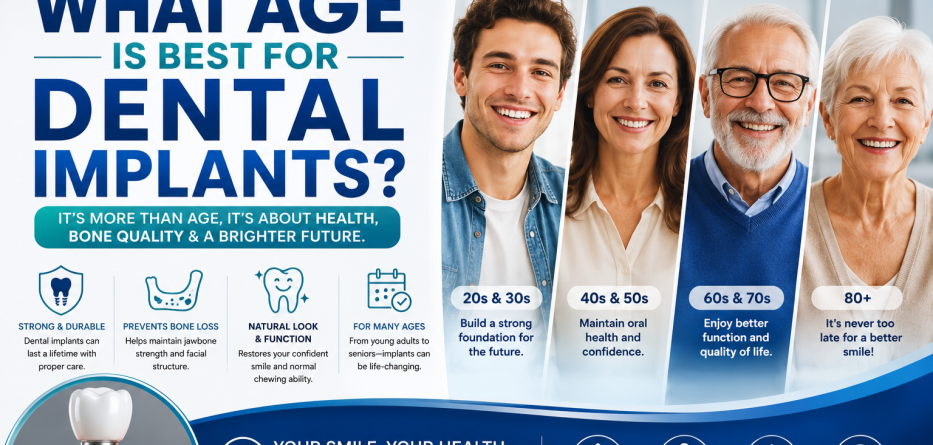
Dental implants have become one of the most effective and long-lasting solutions for replacing missing teeth. Whether tooth loss occurs due to injury, decay, gum disease, or aging, dental implants can restore both function and appearance. However, many patients wonder: What age is best for dental implants?
The good news is that there is no single “perfect” age for dental implants. Instead, candidacy depends more on jawbone development, oral health, and overall medical condition than on age alone. From young adults to seniors in their 80s and beyond, many people can successfully receive dental implants.
In this article, we’ll explore the ideal age for dental implants, age-related considerations, and factors that determine whether someone is a good candidate.
Is There a Minimum Age for Dental Implants?
Yes. Dental implants are generally not recommended until the jawbone has fully developed.
For most individuals:
- Females typically complete jaw growth between ages 16 and 18.
- Males typically complete jaw growth between ages 18 and 21.
If an implant is placed before bone growth is complete, the implant may not align properly with the surrounding teeth as the jaw continues to develop.
Why Bone Growth Matters
Unlike natural teeth, dental implants do not move or adjust as the jaw grows. Placing an implant too early can result in the following:
- Bite alignment problems
- Uneven tooth positioning
- Aesthetic concerns
- Future corrective treatment
Dentists often use X-rays and imaging scans to confirm skeletal maturity before recommending implants for younger patients.
What Is the Ideal Age for Dental Implants?
Most dental professionals consider the best age range for dental implants to be between 20 and 70 years old, when jawbone development is complete and overall health is generally stable.
However, there is no upper age limit for dental implant treatment.
The ideal candidate typically has:
- Fully developed jawbones
- Healthy gums
- Sufficient bone density
- Good overall health
- Commitment to oral hygiene
Dental Implants in Your 20s and 30s
Young adults are often excellent candidates for implants.
Common reasons for tooth loss in this age group include:
- Sports injuries
- Accidents
- Congenitally missing teeth
- Severe decay
Benefits for Younger Adults
- Strong bone quality
- Faster healing
- High implant success rates
- Long-term oral health benefits
Replacing missing teeth early can help prevent bone loss and maintain proper tooth alignment.
Dental Implants in Your 40s and 50s
Many implant patients fall into this age group.
Tooth loss may result from:
- Gum disease
- Large dental restorations
- Tooth fractures
- Decay
Advantages
- Established oral health routines
- Stable bone structure
- Strong long-term investment value
Patients in their 40s and 50s often benefit from replacing missing teeth before significant bone loss occurs.
Dental Implants in Your 60s and 70s
Dental implants remain highly successful for older adults.
In fact, many retirees choose implants because they offer greater comfort and function than traditional dentures.
Benefits for Seniors
- Improved chewing ability
- Better nutrition
- Enhanced speech
- Increased confidence
- Greater quality of life
Age itself is not a barrier to successful treatment.
Can You Be Too Old for Dental Implants?
One of the most common misconceptions is that patients can become “too old” for implants.
The reality is that many individuals in their 70s, 80s, and even 90s have successfully received dental implants.
What Matters More Than Age?
Dentists focus on:
- Overall health
- Bone quality
- Healing ability
- Oral hygiene habits
- Medical history
A healthy 80-year-old may be a better implant candidate than a younger individual with uncontrolled health conditions.
Factors That Matter More Than Age
1. Bone Density
Dental implants require adequate jawbone support.
Patients with bone loss may still qualify through the following:
- Bone grafting
- Sinus lift procedures
- Advanced implant techniques
2. Gum Health
Healthy gums provide protection around implants.
Conditions such as periodontitis should be treated before implant placement.
3. Overall Health
Medical conditions that may affect healing include:
- Uncontrolled diabetes
- Autoimmune disorders
- Osteoporosis
- Certain medications
Proper management often allows successful treatment.
4. Smoking Habits
Smoking can increase the risk of implant complications by slowing healing and reducing blood flow.
Patients who quit smoking generally achieve better outcomes.
5. Oral Hygiene Commitment
Long-term implant success depends heavily on:
- Daily brushing
- Flossing
- Professional cleanings
- Routine dental checkups
How Dentists Determine Implant Candidacy
Before recommending dental implants, your dentist will conduct a comprehensive evaluation.
Assessment May Include
- Oral examination
- Digital X-rays
- 3D CBCT scans
- Bone density evaluation
- Medical history review
This helps determine whether implants are appropriate regardless of age.
Dental Implants vs Other Tooth Replacement Options by Age
| Treatment Option | Younger Adults | Middle Age | Seniors |
|---|---|---|---|
| Dental Implants | Excellent | Excellent | Excellent |
| Bridges | Good | Good | Moderate |
| Dentures | Moderate | Moderate | Good |
| Implant-Supported Dentures | Good | Excellent | Excellent |
For many patients, implants provide the most natural and long-lasting solution across all age groups.
Benefits of Getting Dental Implants at the Right Time
Replacing missing teeth sooner rather than later can offer significant advantages.
Benefits Include
- Preventing bone loss
- Maintaining facial structure
- Preserving neighboring teeth
- Improving chewing ability
- Enhancing confidence
- Supporting long-term oral health
Early intervention often simplifies treatment and improves outcomes.
Frequently Asked Questions
What is the youngest age for dental implants?
Most patients must wait until jaw growth is complete, typically around 18 years old for females and 18–21 years old for males.
Can a 70-year-old get dental implants?
Yes. Many patients in their 70s and beyond successfully receive dental implants.
Are dental implants safe for seniors?
Yes. When overall health is suitable, implants are considered safe and effective for older adults.
Is there an age limit for dental implants?
No. There is no specific upper age limit.
Can teenagers receive implants?
Generally, implants are postponed until jawbone growth is complete.
Do older adults heal more slowly after implant surgery?
Healing may take slightly longer in some cases, but age alone does not significantly reduce success rates.
Conclusion
So, what age is best for dental implants?
The ideal age is not determined by a specific number but by factors such as jawbone maturity, oral health, bone density, and overall wellness. While younger patients must wait until their jaw development is complete, adults of nearly any age can benefit from dental implants.
Whether you’re in your 20s, 50s, or 80s, dental implants can provide a durable, natural-looking solution for missing teeth. The best way to determine your eligibility is through a comprehensive evaluation with an experienced dental implant professional.
