

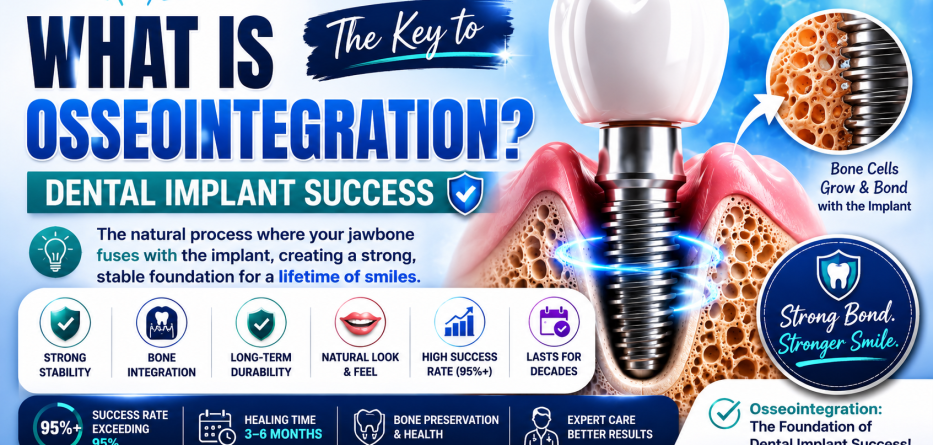
Dental implants have transformed modern dentistry by providing a reliable, long-lasting solution for missing teeth. One of the primary reasons for their high success rate is a remarkable biological process called osseointegration. Without osseointegration, dental implants would not be able to function like natural teeth or provide the stability patients need for everyday activities such as eating and speaking.
If you’re considering dental implants, understanding osseointegration can help you appreciate why implants are considered the gold standard in tooth replacement. In this article, we’ll explain what osseointegration is, how it works, and why it plays such a crucial role in dental implant success.
What Is Osseointegration?
Osseointegration is the natural process through which a dental implant fuses directly with the surrounding jawbone. The term combines the Latin word “os,” meaning bone, and “integration,” meaning to join together.
When a titanium implant is surgically placed into the jawbone, bone cells gradually grow around the implant surface and bond with it. This creates a strong, stable foundation that functions similarly to a natural tooth root.
Quick Definition
Osseointegration is the biological process where the jawbone bonds directly to a dental implant, creating a secure and long-lasting anchor for replacement teeth.
Why Is Osseointegration Important?
The success of a dental implant depends heavily on successful osseointegration.
Without proper bone integration, the implant may become loose or fail entirely. When osseointegration occurs successfully, the implant becomes a permanent part of the jawbone.
Key Benefits of Osseointegration
- Exceptional implant stability
- Natural chewing function
- Long-term durability
- Improved comfort
- Bone preservation
- High implant success rates
This unique process is what sets dental implants apart from dentures and bridges.
How Does Osseointegration Work?
The process takes place in several stages after implant placement.
Step 1: Implant Placement
A titanium implant is carefully inserted into the jawbone during a surgical procedure.
Step 2: Initial Healing
The gum tissue begins healing around the implant while inflammation decreases.
Step 3: Bone Formation
Bone-producing cells called osteoblasts start creating new bone around the implant surface.
Step 4: Implant Fusion
Over several months, the bone gradually attaches to the implant and forms a strong bond.
Step 5: Final Restoration
Once integration is complete, a custom crown, bridge, or denture is attached to the implant.
Why Titanium Is Used for Dental Implants
Titanium has become the preferred material for dental implants because of its unique properties.
Advantages of Titanium
- Highly biocompatible
- Corrosion-resistant
- Strong and lightweight
- Encourages bone growth
- Long clinical history of success
The body’s natural acceptance of titanium makes successful osseointegration possible.
How Long Does Osseointegration Take?
Healing times vary depending on several factors, including overall health and bone quality.
Typical Timeline
| Stage | Average Time |
|---|---|
| Initial Healing | 1–2 Weeks |
| Bone Integration | 3–6 Months |
| Final Restoration | After Integration |
Some patients may heal faster, while others may require additional healing time.
Factors That Affect Osseointegration Success
Several factors influence how well the implant integrates with the jawbone.
Bone Density
Healthy jawbone provides a strong foundation for implant stability.
Oral Hygiene
Keeping the implant site clean reduces infection risks and promotes healthy healing.
Smoking
Smoking restricts blood flow and can slow or interfere with bone healing.
Medical Conditions
Conditions such as uncontrolled diabetes or immune disorders may impact healing.
Surgical Technique
Proper implant placement by an experienced dentist significantly improves success rates.
How Osseointegration Helps Preserve Jawbone Health
One of the major advantages of dental implants is their ability to prevent bone loss.
When a natural tooth is lost, the jawbone beneath it begins to shrink because it no longer receives stimulation from chewing forces.
Dental implants restore this stimulation by transferring chewing pressure to the jawbone.
Benefits include:
- Reduced bone loss
- Maintained facial structure
- Improved oral health
- Better long-term function
This is a major reason why dental implants are often recommended over removable dentures.
What Happens If Osseointegration Fails?
Although dental implant success rates are extremely high, complications can occasionally occur.
Possible causes include the following:
- Infection
- Poor bone quality
- Smoking
- Excessive implant movement during healing
- Uncontrolled medical conditions
Warning Signs
- Persistent pain
- Implant mobility
- Swelling
- Difficulty chewing
- Gum recession around the implant
Early diagnosis and treatment can often improve outcomes.
Osseointegration vs Traditional Tooth Replacement Options
| Feature | Dental Implants | Dental Bridges | Dentures |
| Osseointegration | Yes | No | No |
| Bone Preservation | Yes | Limited | No |
| Stability | Excellent | Good | Moderate |
| Natural Feel | Excellent | Good | Fair |
| Longevity | 20+ Years | 5–15 Years | 5–10 Years |
The ability to integrate with the jawbone is one of the biggest advantages dental implants offer over alternative tooth replacement options.
How to Improve Osseointegration Success
Patients can help promote successful healing by following these recommendations:
- Follow post-surgical instructions carefully.
- Maintain excellent oral hygiene.
- Avoid smoking and tobacco products.
- Attend follow-up appointments.
- Eat a nutritious diet rich in calcium and vitamin D.
- Avoid excessive pressure on the implant during healing.
These simple steps can significantly improve implant success rates.
Frequently Asked Questions
Is osseointegration painful?
The integration process itself is painless. Some mild discomfort may occur after implant surgery but typically subsides within a few days.
How successful is osseointegration?
Modern dental implants have success rates exceeding 95% when placed and maintained properly.
Can osseointegration occur in older adults?
Yes. Age alone does not prevent successful osseointegration if overall health and bone quality are adequate.
Does bone grafting help osseointegration?
Yes. Bone grafting can improve bone volume and create a stronger foundation for implant placement.
Can dental implants fail years later?
Although uncommon, late implant failure can occur due to infection, bone loss, or excessive bite forces.
Conclusion
Osseointegration is the foundation of dental implant success. This remarkable process allows the jawbone to fuse with the implant, creating a strong and permanent anchor for replacement teeth. Thanks to osseointegration, dental implants provide unmatched stability, preserve bone health, and offer long-term functionality that closely mimics natural teeth.
Understanding what osseointegration is and why it matters can help patients make informed decisions about tooth replacement and appreciate the science behind one of modern dentistry’s most successful treatments.
