
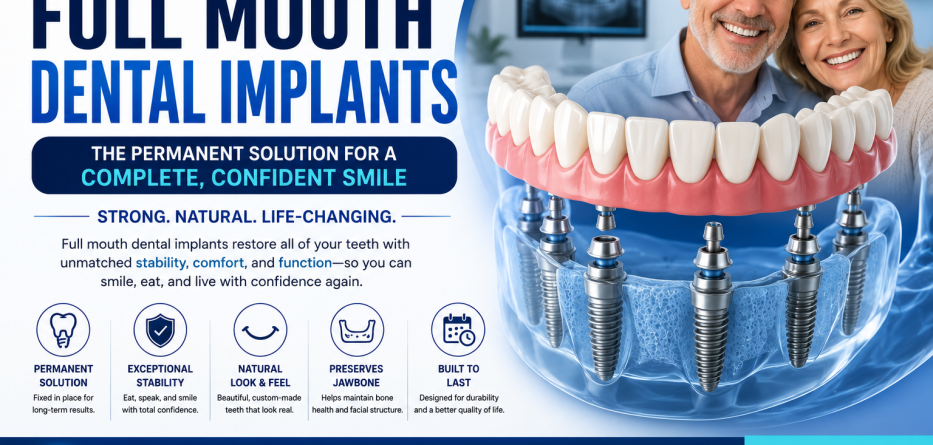
Missing most or all of your teeth can affect much more than your appearance. It can impact your ability to eat, speak, smile confidently, and maintain good oral health. Fortunately, modern dentistry offers a permanent and highly effective solution: full mouth dental implants.
Unlike traditional dentures, full-mouth dental implants provide exceptional stability, natural aesthetics, and long-term functionality. They are designed to restore an entire arch—or both arches—of missing teeth using strategically placed dental implants.
In this guide, you’ll learn everything you need to know about full mouth dental implants, including how they work, their benefits, costs, candidacy requirements, and what to expect during treatment.
What Are Full Mouth Dental Implants?
Full mouth dental implants are a comprehensive tooth replacement solution for patients who have lost most or all of their teeth.
Instead of replacing each tooth individually, multiple implants are placed into the jawbone to support a full set of prosthetic teeth.
Common Full Mouth Implant Options
- All-on-4 Dental Implants
- All-on-6 Dental Implants
- Implant-Supported Dentures
- Full Arch Dental Implants
These treatments provide a permanent alternative to removable dentures.
How Do Full Mouth Dental Implants Work?
The procedure involves placing several titanium implants into the jawbone.
Once the implants integrate with the bone through osseointegration, a custom-designed prosthetic arch is attached.
Basic Process
- Initial consultation and examination
- Digital imaging and treatment planning
- Implant placement surgery
- Healing and osseointegration
- Placement of the final prosthetic teeth
The result is a strong, stable, and natural-looking smile.
Benefits of Full Mouth Dental Implants
1. Permanent Tooth Replacement
Unlike traditional dentures, implants are fixed in place and do not require removal.
2. Natural Appearance
Modern implant restorations closely mimic natural teeth.
Benefits include:
- Natural smile aesthetics
- Improved facial structure
- Customized tooth design
3. Better Chewing Function
Patients can comfortably enjoy foods that may be difficult with removable dentures.
4. Improved Speech
Because implants remain securely anchored, they help eliminate speech issues associated with loose dentures.
5. Jawbone Preservation
Dental implants stimulate the jawbone and help prevent bone loss after tooth loss.
6. Long-Term Durability
With proper care, implants can last for decades.
Full Mouth Dental Implants vs Traditional Dentures
| Feature | Full-Mouth Implants | Traditional Dentures |
|---|---|---|
| Stability | Excellent | Moderate |
| Bone Preservation | Yes | No |
| Natural Feel | Excellent | Moderate |
| Removable | No | Yes |
| Lifespan | 20+ Years | 5–10 Years |
| Chewing Ability | Excellent | Limited |
Many patients choose implants because they provide a more natural and comfortable experience.
Who Is a Candidate for Full Mouth Dental Implants?
You may be a good candidate if you:
- Have multiple missing teeth
- Have severely damaged teeth
- Wear dentures and want a permanent solution
- Have adequate jawbone density
- Maintain good overall health
Even patients with bone loss may qualify after bone grafting procedures.
Types of Full Mouth Dental Implant Solutions
All-on-4 Dental Implants
This technique uses four strategically placed implants to support a full arch of teeth.
Benefits include:
- Fewer implants required
- Faster treatment
- Reduced need for bone grafting
All-on-6 Dental Implants
Six implants are used to provide additional support and stability.
Ideal for patients with:
- Higher bite forces
- Greater bone availability
- Long-term durability goals
Implant-Supported Dentures
These dentures snap onto implants for increased stability compared to traditional dentures.
The Full Mouth Dental Implant Procedure
Step 1: Consultation
The dentist evaluates:
- Oral health
- Bone quality
- Medical history
- Treatment goals
Step 2: Treatment Planning
Advanced imaging technologies such as CBCT scans help create a precise treatment plan.
Step 3: Implant Surgery
Titanium implants are placed into the jawbone.
Step 4: Healing Period
Osseointegration typically takes 3 to 6 months.
Step 5: Final Restoration
A custom-made prosthetic arch is attached to the implants.
Recovery After Full Mouth Dental Implant Surgery
Recovery varies among patients but generally includes:
First Few Days
- Mild swelling
- Minor discomfort
- Temporary dietary restrictions
First Few Weeks
- Soft tissue healing
- Improved comfort
Long-Term Healing
- Complete osseointegration
- Permanent restoration placement
Following post-operative instructions helps ensure successful healing.
How Long Do Full Mouth Dental Implants Last?
The implant posts themselves can often last a lifetime.
Average lifespan:
| Component | Lifespan |
|---|---|
| Implant Posts | 20+ Years |
| Prosthetic Teeth | 10–15 Years |
| Abutments | 15–20 Years |
Routine maintenance significantly affects longevity.
Factors That Influence Success
Several factors contribute to long-term success:
Oral Hygiene
Daily brushing and flossing remain essential.
Smoking
Smoking can increase the risk of implant complications.
Bone Health
Healthy jawbone support improves implant stability.
Regular Dental Visits
Professional monitoring helps detect issues early.
Potential Risks and Complications
Although highly successful, full-mouth dental implants may involve risks such as
- Infection
- Implant failure
- Nerve injury
- Sinus complications
- Delayed healing
Choosing an experienced implant dentist significantly reduces these risks.
Cost of Full Mouth Dental Implants
The cost varies depending on the following:
- Number of implants
- Type of restoration
- Bone grafting requirements
- Geographic location
- Dentist expertise
While implants involve a higher initial investment than dentures, many patients consider them more cost-effective over the long term.
Why Patients Choose Full Mouth Dental Implants
Patients frequently report:
- Greater confidence
- Better chewing ability
- Improved speech
- Enhanced comfort
- More youthful facial appearance
The life-changing benefits often make full-mouth dental implants one of the most rewarding dental treatments available.
Frequently Asked Questions
How many implants are needed for a full mouth restoration?
Most treatments use between 4 and 8 implants per arch.
Are full mouth dental implants painful?
Patients typically experience manageable discomfort during recovery, which can be controlled with medication.
How long does the treatment take?
Most cases require several months due to the healing and osseointegration process.
Can full-mouth implants fail?
Failure is uncommon but can occur due to infection, smoking, poor oral hygiene, or medical conditions.
Are full-mouth implants better than dentures?
Many patients prefer implants because they offer superior stability, comfort, and long-term benefits.
Conclusion
Full mouth dental implants provide a permanent, natural-looking, and highly functional solution for patients who have lost multiple or all of their teeth. By restoring chewing ability, preserving jawbone health, improving speech, and enhancing confidence, they offer significant advantages over traditional dentures.
With proper care and professional guidance, full mouth dental implants can transform your smile and improve your quality of life for decades to come.
