
Losing a single tooth can have a significant impact on your smile, confidence, and oral health. Whether the tooth was lost due to injury, decay, gum disease, or extraction, replacing it promptly is important to prevent further dental complications.
Among the available tooth replacement options, a single tooth dental implant is widely considered the most effective and long-lasting solution. Unlike traditional bridges or removable partial dentures, dental implants replace both the missing tooth root and crown, providing a natural appearance and exceptional functionality.
In this article, we’ll explore everything you need to know about single tooth dental implants, including their benefits, procedure, cost factors, recovery process, and long-term success rates.
What Is a Single Tooth Dental Implant?
A single tooth dental implant is a permanent tooth replacement solution designed to replace one missing tooth without affecting neighboring teeth.
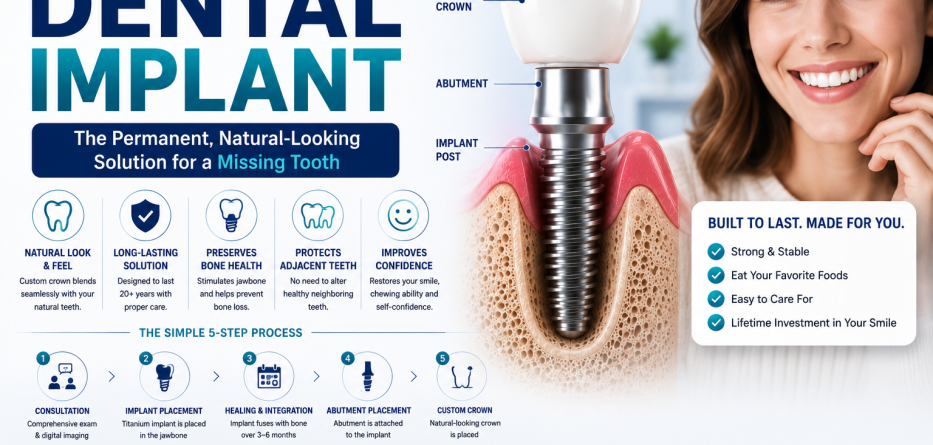
The implant system consists of three components:
1. Implant Post
A titanium screw-like post surgically placed into the jawbone.
2. Abutment
A connector that attaches the implant post to the crown.
3. Dental Crown
A custom-made artificial tooth that matches the shape and color of your natural teeth.
Together, these components create a replacement tooth that looks, feels, and functions like a natural tooth.
Why Replace a Missing Tooth?
Many people assume a single missing tooth is only a cosmetic concern, but tooth loss can affect overall oral health.
Problems Caused by Missing Teeth
- Shifting of neighboring teeth
- Difficulty chewing
- Bite misalignment
- Bone loss in the jaw
- Increased risk of gum disease
- Changes in facial appearance
- Reduced confidence
Replacing a missing tooth early can help prevent these complications.
Benefits of a Single-Tooth Dental Implant
Natural Appearance
Implant-supported crowns are customized to blend seamlessly with surrounding teeth.
Benefits include:
- Natural shape
- Color matching
- Realistic appearance
- Improved smile aesthetics
Long-Term Durability
Dental implants are designed to last for many years.
| Restoration Type | Average Lifespan |
|---|---|
| Single Tooth Implant | 20+ Years |
| Dental Bridge | 5–15 Years |
| Partial Denture | 5–10 Years |
With proper care, the implant post may last a lifetime.
Preserves Jawbone Health
After tooth loss, the jawbone begins to shrink because it no longer receives stimulation from the tooth root.
Dental implants help preserve bone by stimulating the jaw during chewing.
Benefits include:
- Reduced bone loss
- Improved facial support
- Better long-term oral health
Protects Adjacent Teeth
Traditional dental bridges often require reshaping healthy neighboring teeth.
Single tooth implants:
- Preserve natural tooth structure
- Do not rely on adjacent teeth
- Reduce future dental complications
Improved Functionality
Implants restore nearly full chewing strength.
Patients can comfortably eat the following:
- Fruits
- Vegetables
- Meat
- Nuts
- Crunchy foods
Unlike removable appliances, implants remain securely fixed.
Who Is a Good Candidate for a Single Tooth Implant?
Most healthy adults qualify for dental implant treatment.
Ideal candidates generally have:
- Healthy gums
- Sufficient jawbone density
- Good oral hygiene habits
- Stable medical conditions
- Non-smoking lifestyle
Even patients with bone loss may qualify after bone grafting procedures.
The Single Tooth Dental Implant Procedure
Step 1: Initial Consultation
Your dentist evaluates:
- Oral health
- Bone quality
- Gum condition
- Medical history
Digital imaging and X-rays are typically used for planning.
Step 2: Implant Placement
The titanium implant post is surgically inserted into the jawbone.
The procedure is typically performed under local anesthesia.
Step 3: Healing and Osseointegration
Over the next 3–6 months, the implant fuses with the jawbone through a process called osseointegration.
This creates a stable foundation for the replacement tooth.
Step 4: Abutment Placement
Once healing is complete, an abutment is attached to the implant.
Step 5: Crown Placement
A custom-made dental crown is secured to the abutment.
The final restoration closely resembles a natural tooth.
How Long Does a Single Tooth Implant Last?
Several factors influence longevity, including:
- Oral hygiene
- Gum health
- Smoking habits
- Bone quality
- Regular dental visits
Average Lifespan
- Implant Post: 20+ years or lifetime
- Crown: 10–15 years
Routine maintenance significantly improves long-term success.
Are Single Tooth Implants Safe?
Yes.
Dental implants have one of the highest success rates in modern dentistry.
Success Rates
Most studies report success rates between the following:
95% and 98%
Factors contributing to success include:
- Proper treatment planning
- Healthy bone support
- Good oral hygiene
- Experienced implant placement
Single Tooth Implant vs Dental Bridge
| Feature | Dental Implant | Dental Bridge |
|---|---|---|
| Replaces Tooth Root | Yes | No |
| Bone Preservation | Yes | No |
| Affects Adjacent Teeth | No | Yes |
| Longevity | 20+ Years | 5–15 Years |
| Stability | Excellent | Good |
Many dentists consider implants the preferred long-term solution when conditions allow.
Recovery After Implant Placement
Most patients recover quickly after surgery.
Common Recovery Symptoms
- Mild swelling
- Minor discomfort
- Tenderness around the implant site
These symptoms typically improve within a few days.
Recovery Tips
- Follow aftercare instructions
- Maintain oral hygiene
- Avoid smoking
- Eat soft foods initially
- Attend follow-up visits
Cost Factors for Single Tooth Dental Implants
The cost of treatment may vary depending on:
- Geographic location
- Implant brand
- Bone grafting requirements
- Complexity of treatment
- Dentist experience
Although implants often have higher upfront costs, their long lifespan may provide better long-term value compared to other options.
Caring for a Single Tooth Implant
Dental implants require maintenance similar to natural teeth.
Daily Care Routine
- Brush twice daily
- Floss regularly
- Use recommended oral hygiene products
- Schedule routine dental checkups
Good oral hygiene helps prevent complications such as peri-implantitis.
Frequently Asked Questions
Is a single tooth implant painful?
Most patients experience minimal discomfort during and after the procedure. Local anesthesia ensures comfort during treatment.
How long does the entire process take?
Most treatments take between 3 and 6 months, depending on healing and bone conditions.
Can a single implant replace any tooth?
Yes. Implants can replace front teeth, premolars, and molars.
Does a dental implant look natural?
Yes. The custom crown is designed to match surrounding teeth in shape, size, and color.
Can dental implants fail?
While uncommon, implant failure can occur due to infection, smoking, poor oral hygiene, or inadequate bone support.
Conclusion
A single tooth dental implant is one of the most advanced and reliable solutions for replacing a missing tooth. By restoring both the tooth root and crown, implants provide unmatched stability, natural appearance, and long-term oral health benefits.
With success rates exceeding 95%, the ability to preserve jawbone health, and a lifespan that can extend for decades, single tooth dental implants continue to be the preferred choice for patients seeking a permanent and natural-looking tooth replacement solution.
