
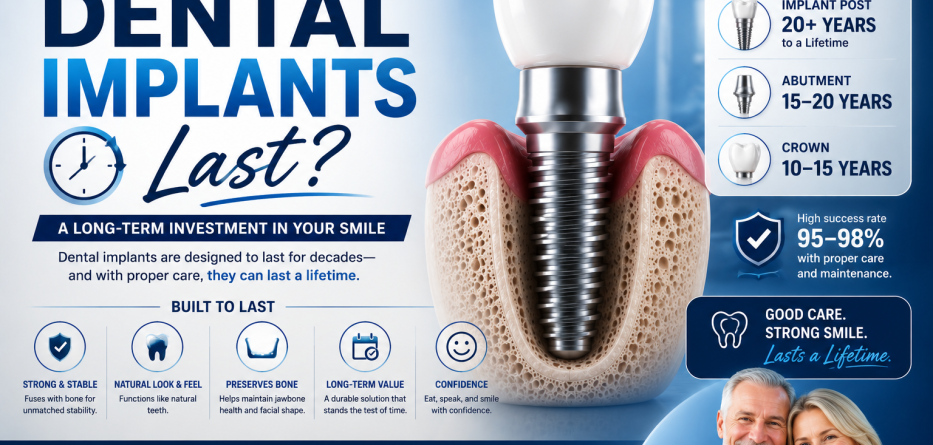
Dental implants are widely considered the gold standard for replacing missing teeth. They look, feel, and function like natural teeth while offering exceptional durability and long-term success. One of the most common questions patients ask before treatment is, “How long do dental implants last?”
The good news is that dental implants are designed to be a long-term solution. With proper care and maintenance, many implants can last 20 years or more, and some even last a lifetime. However, several factors influence their longevity, including oral hygiene, lifestyle habits, overall health, and the quality of the implant procedure.
In this guide, we’ll explore how long dental implants typically last, what affects their lifespan, and how you can maximize their longevity.
What Is the Average Lifespan of a Dental Implant?
A dental implant consists of three separate components:
- Implant post (placed in the jawbone)
- Abutment (connector piece)
- Dental crown (visible replacement tooth)
Each component has a different lifespan.
Typical Lifespan
| Component | Average Lifespan |
|---|---|
| Implant Post | 20+ Years to Lifetime |
| Abutment | 15–20 Years |
| Crown | 10–15 Years |
The titanium implant post often lasts the longest because it becomes permanently integrated with the jawbone through osseointegration.
Why Do Dental Implants Last So Long?
Dental implants are designed differently from other tooth replacement options.
Unlike bridges or dentures, implants replace the entire tooth root and become part of the jawbone.
Key Reasons for Their Longevity
- Titanium biocompatibility
- Strong osseointegration
- Advanced implant design
- Bone preservation
- Resistance to tooth decay
- Modern dental technology
These factors contribute to success rates exceeding 95% in many cases.
What Factors Affect the Lifespan of Dental Implants?
Several factors determine how long a dental implant will remain healthy and functional.
1. Oral Hygiene
Good oral hygiene is one of the most important factors.
Patients should:
- Brush twice daily
- Floss around implants
- Use recommended oral care products
- Attend professional cleanings
Poor oral hygiene can lead to peri-implantitis, a condition that may cause implant failure.
2. Gum Health
Healthy gums protect the implant and surrounding bone.
Gum disease can cause:
- Inflammation
- Bone loss
- Implant instability
Routine dental visits help maintain healthy gum tissue.
3. Bone Quality
Dental implants rely on strong jawbone support.
Healthy bones help:
- Maintain implant stability
- Distribute chewing forces
- Improve long-term outcomes
Patients with bone loss may require bone grafting before implant placement.
4. Smoking
Smoking significantly increases the risk of implant complications.
Potential effects include the following:
- Delayed healing
- Increased infection risk
- Reduced blood flow
- Higher implant failure rates
Patients who quit smoking generally experience better implant success.
5. Teeth Grinding (Bruxism)
Grinding or clenching places excessive force on implants.
This can lead to:
- Crown damage
- Implant overload
- Component wear
A custom nightguard may help protect implant restorations.
6. Overall Health
Certain medical conditions can affect implant longevity.
Examples include:
- Uncontrolled diabetes
- Autoimmune disorders
- Osteoporosis
Managing these conditions properly can improve long-term outcomes.
How Long Does the Implant Crown Last?
The crown is the visible part of the restoration.
Although highly durable, crowns experience daily wear from chewing and biting.
Average Crown Lifespan
Most implant crowns last
- 10–15 years
- Sometimes longer with excellent care
Factors affecting crown lifespan include:
- Material quality
- Bite force
- Oral hygiene
- Dietary habits
If the crown wears out, it can often be replaced without replacing the implant itself.
Dental Implants vs Other Tooth Replacement Options
Longevity Comparison
| Treatment Option | Average Lifespan |
|---|---|
| Dental Implants | 20+ Years |
| Dental Bridges | 5–15 Years |
| Partial Dentures | 5–10 Years |
| Complete Dentures | 5–10 Years |
Dental implants typically offer the longest lifespan among common tooth replacement solutions.
Signs Your Dental Implant Is Healthy
A healthy implant should:
- Feel stable
- Function comfortably
- Allow normal chewing
- Show healthy gum tissue
- Remain free from pain
Regular dental evaluations help ensure continued implant health.
Signs of Potential Implant Problems
Although uncommon, complications can occur.
Warning signs include:
- Implant mobility
- Persistent pain
- Gum swelling
- Bleeding around the implant
- Difficulty chewing
Prompt treatment can often prevent further damage.
How to Make Dental Implants Last Longer
Patients can maximize implant longevity by following a few important habits.
Daily Care Tips
- Brush twice daily.
- Floss carefully around implants.
- Use an antimicrobial mouthwash if recommended.
- Avoid smoking.
- Wear a nightguard if you grind your teeth.
- Attend regular dental checkups.
These simple habits can significantly extend implant lifespan.
What Is the Success Rate of Dental Implants?
Modern dental implants have some of the highest success rates in dentistry.
Clinical Success Rates
| Implant Type | Success Rate |
|---|---|
| Single Tooth Implant | 95–98% |
| Multiple Implants | 95%+ |
| Full Arch Implants | 90–98% |
Many successful implants remain functional for decades.
Can Dental Implants Last a Lifetime?
Yes, many dental implants can last a lifetime.
The implant post itself is often permanent when
- Proper osseointegration occurs
- Oral hygiene is maintained
- Regular dental care is received
- Risk factors are minimized
While crowns may occasionally require replacement, the implant foundation can continue functioning for many years.
Frequently Asked Questions
How long do dental implants usually last?
Most dental implants last 20 years or more, and many last a lifetime with proper care.
Do dental implants ever need replacing?
The implant post rarely requires replacement, but the crown may need replacement after 10–15 years.
What is the biggest cause of implant failure?
Poor oral hygiene, smoking, and peri-implant disease are among the leading causes.
Are dental implants permanent?
The implant post is considered a permanent tooth replacement solution.
Can a failed implant be replaced?
In many cases, yes. Additional treatment such as bone grafting may be required before replacement.
Do dental implants decay like natural teeth?
No. The implant itself cannot develop cavities, but surrounding gums and bone still require care.
Conclusion
So, how long do dental implants last?
For most patients, dental implants provide a long-term solution that can last 20 years or more, with many lasting a lifetime. Their remarkable durability comes from advanced materials, strong osseointegration, and proper maintenance.
By practicing good oral hygiene, attending regular dental checkups, avoiding tobacco products, and following your dentist’s recommendations, you can maximize the lifespan of your dental implants and enjoy a healthy, confident smile for decades to come.
