
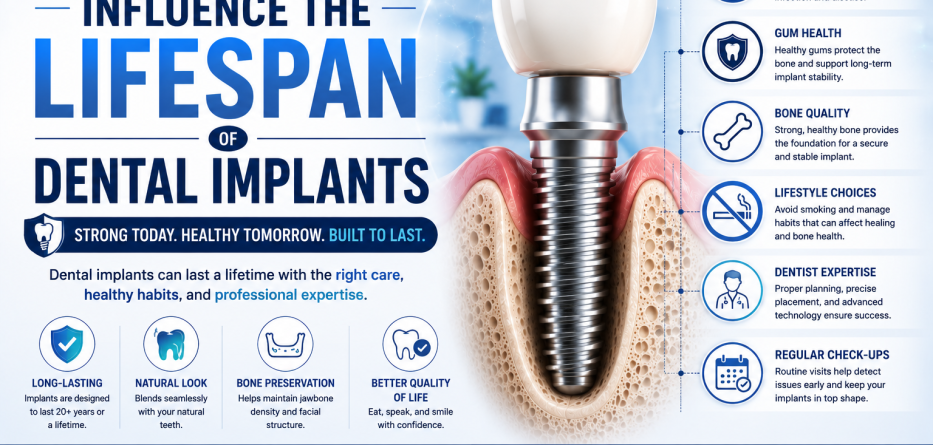
Dental implants are widely recognized as the most durable and reliable solution for replacing missing teeth. Unlike dentures or bridges, dental implants are designed to become a permanent part of your oral structure, providing stability, functionality, and a natural appearance.
However, while dental implants are built to last, their lifespan depends on several important factors. Some patients enjoy implant success for decades, while others may experience complications that shorten the life of their restoration.
Understanding what affects dental implant longevity can help you protect your investment and maintain a healthy smile for years to come. In this guide, we’ll explore the key factors that influence the lifespan of dental implants and share practical tips for maximizing their success.
How Long Do Dental Implants Last?
Dental implants have two primary components:
- The titanium implant post placed in the jawbone
- The visible restoration (crown, bridge, or denture)
In many cases, the implant post can last a lifetime, while the crown may need replacement after 10–15 years due to normal wear.
Average Lifespan of Implant Components
| Component | Expected Lifespan |
|---|---|
| Implant Post | 20+ Years to Lifetime |
| Abutment | 15–20 Years |
| Crown | 10–15 Years |
The actual lifespan depends heavily on patient habits, oral health, and professional care.
1. Oral Hygiene Practices
One of the most significant factors affecting implant longevity is daily oral hygiene.
Although implants cannot develop cavities, the surrounding gum tissue and bone remain vulnerable to infection.
Poor oral hygiene can lead to:
- Plaque accumulation
- Gum inflammation
- Peri-implant mucositis
- Peri-implantitis
- Bone loss
Recommended Daily Care
- Brush twice daily
- Floss around implants
- Use interdental brushes when recommended
- Attend professional cleanings
Healthy gums are essential for long-term implant stability.
2. Quality of Bone Support
Dental implants depend on strong jawbone support.
After tooth loss, bone naturally begins to shrink. If too much bone is lost, implant stability may be compromised.
Strong bone support provides:
- Better implant anchorage
- Faster healing
- Improved chewing performance
- Higher success rates
Bone grafting procedures may be recommended for patients with insufficient bone volume.
3. Successful Osseointegration
Osseointegration is the process in which the jawbone fuses with the implant surface.
This biological connection creates the foundation for long-term implant success.
Benefits include:
- Exceptional stability
- Improved durability
- Better force distribution
- Reduced risk of movement
Incomplete osseointegration is one of the most common causes of early implant failure.
4. Smoking and Tobacco Use
Smoking remains one of the biggest threats to implant longevity.
Tobacco products reduce blood flow and slow healing, making it more difficult for implants to integrate successfully.
Research has linked smoking to:
- Increased implant failure rates
- Delayed healing
- Higher infection risk
- Greater bone loss
Patients who quit smoking often experience significantly better long-term outcomes.
5. Gum Health
Healthy gums act as a protective barrier around dental implants.
Conditions such as gingivitis and periodontitis can damage supporting tissues and increase the risk of implant complications.
Warning signs of gum problems include:
- Redness
- Swelling
- Bleeding
- Bad breath
- Gum recession
Regular periodontal evaluations help identify issues before they become serious.
6. The Skill of the Implant Dentist
The success of an implant begins with proper treatment planning and surgical placement.
Experienced implant dentists use advanced technology to:
- Assess bone density
- Identify anatomical structures
- Determine ideal implant positioning
- Minimize complications
Accurate placement helps distribute chewing forces properly and supports long-term success.
7. Bite Alignment and Occlusal Forces
Dental implants are exposed to significant daily pressure from chewing and biting.
Poor bite alignment can place excessive stress on implants, resulting in the following:
- Crown fractures
- Screw loosening
- Bone stress
- Implant overload
Proper occlusal adjustment helps protect the implant and surrounding bone.
8. Teeth Grinding and Clenching
Bruxism, or chronic teeth grinding, can significantly reduce implant lifespan.
Excessive pressure may lead to:
- Restoration wear
- Implant component damage
- Bone loss
- Implant instability
Many dentists recommend custom nightguards for patients who grind their teeth while sleeping.
9. Overall Health Conditions
General health plays an important role in implant healing and maintenance.
Medical conditions that may affect implant longevity include:
- Uncontrolled diabetes
- Osteoporosis
- Autoimmune diseases
- Immune disorders
Patients with these conditions can often receive implants successfully with proper medical management.
10. Diet and Nutrition
Healthy nutrition supports both bone health and tissue healing.
Important nutrients include:
- Calcium
- Vitamin D
- Protein
- Magnesium
- Phosphorus
A balanced diet strengthens the structures supporting dental implants and promotes long-term success.
11. Regular Dental Checkups
Routine dental visits are essential for monitoring implant health.
During checkups, dentists can:
- Detect early signs of infection
- Evaluate bone levels
- Examine restoration integrity
- Perform professional cleanings
Preventive care helps address minor issues before they become major problems.
12. Implant Material and Technology
Modern dental implants benefit from decades of scientific advancement.
Today’s implants feature the following:
- Medical-grade titanium
- Advanced surface treatments
- Precision manufacturing
- Improved thread designs
These innovations enhance osseointegration and contribute to higher success rates.
Signs Your Dental Implant May Need Attention
Early detection can prevent serious complications.
Watch for:
- Persistent discomfort
- Implant mobility
- Swollen gums
- Bleeding around the implant
- Difficulty chewing
Contact your dentist immediately if you notice any of these symptoms.
How to Extend the Life of Your Dental Implants
Follow these simple strategies:
- Maintain excellent oral hygiene.
- Attend regular dental appointments.
- Avoid smoking and tobacco products.
- Wear a nightguard if recommended.
- Follow your dentist’s instructions.
- Eat a healthy, balanced diet.
- Address gum disease promptly.
Consistent care can dramatically improve implant longevity.
Dental Implants vs Other Tooth Replacement Options
| Treatment Option | Average Lifespan |
|---|---|
| Dental Implants | 20+ Years |
| Dental Bridges | 5–15 Years |
| Partial Dentures | 5–10 Years |
| Complete Dentures | 5–10 Years |
This superior longevity is one reason dental implants remain the preferred solution for tooth replacement.
Frequently Asked Questions
Can dental implants last forever?
While no dental treatment is guaranteed to last forever, many implant posts can last a lifetime with proper care.
What is the leading cause of implant failure?
Poor oral hygiene and peri-implant disease are among the most common causes of implant failure.
Does smoking affect dental implants?
Yes. Smoking significantly increases the risk of complications and implant failure.
How often should dental implants be checked?
Most patients should have implants evaluated every six months during routine dental visits.
Can implants fail after many years?
Yes. Late implant failures can occur due to infection, bone loss, excessive pressure, or poor maintenance.
Conclusion
The lifespan of dental implants depends on a combination of biological, lifestyle, and professional factors. Good oral hygiene, healthy gums, strong bone support, proper treatment planning, and regular dental care all contribute to long-term success.
By understanding the factors that influence the lifespan of dental implants and adopting healthy habits, patients can enjoy a strong, stable, and beautiful smile for decades. With the right care, dental implants remain one of the most reliable investments in modern dentistry.
