
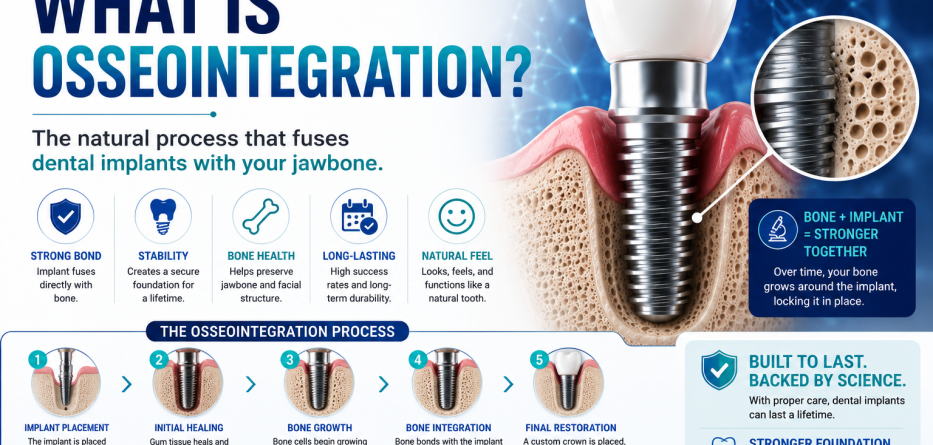
Dental implants have become the preferred solution for replacing missing teeth because they look, feel, and function like natural teeth. One of the key reasons behind their long-term success is a remarkable biological process known as osseointegration.
Without osseointegration, dental implants would not be able to provide the stability, strength, and durability that make them such an effective tooth replacement option. This process allows the implant to become securely anchored within the jawbone, creating a strong foundation for a replacement tooth.
In this article, we’ll explain what osseointegration is, how it works, why it’s important, and how it contributes to successful dental implant treatment.
What Is Osseointegration?
Quick Definition
Osseointegration is the natural biological process in which a dental implant fuses directly with the surrounding jawbone, creating a stable and permanent foundation for a replacement tooth.
The word “osseointegration” comes from the following:
- Osseo = Bone
- Integration = To join together
During this process, the jawbone grows around the titanium implant and bonds with its surface, allowing the implant to function like a natural tooth root.
Why Is Osseointegration Important?
Osseointegration is the primary reason dental implants are so successful.
Unlike dentures or bridges, dental implants become physically connected to the jawbone, providing superior support and stability.
Benefits of Osseointegration
- Strong implant stability
- Improved chewing function
- Natural tooth feel
- Long-term durability
- Preservation of jawbone health
- Reduced risk of implant movement
Without proper osseointegration, an implant cannot adequately support a crown, bridge, or denture.
How Does Osseointegration Work?
The process occurs gradually after implant placement.
Step 1: Implant Placement
A titanium implant is surgically inserted into the jawbone where the missing tooth once existed.
Step 2: Initial Healing
The surrounding tissues begin healing while inflammation decreases.
Step 3: Bone Cell Activity
Specialized bone-forming cells called osteoblasts start producing new bone around the implant surface.
Step 4: Bone Fusion
Over several months, the bone bonds directly with the implant, creating a stable and secure connection.
Step 5: Restoration Placement
Once healing is complete, the dentist attaches a custom-made crown or restoration.
Why Is Titanium Used for Dental Implants?
Titanium is considered the gold standard material for dental implants because of its unique ability to integrate with human bone.
Benefits of Titanium
- Highly biocompatible
- Corrosion-resistant
- Strong yet lightweight
- Long-lasting
- Supports bone attachment
The body’s tissues generally accept titanium without triggering adverse reactions, making it ideal for implant dentistry.
How Long Does Osseointegration Take?
The timeline varies depending on the individual patient and treatment circumstances.
Typical Healing Timeline
| Stage | Time Frame |
|---|---|
| Initial Healing | 1–2 Weeks |
| Bone Integration | 3–6 Months |
| Final Restoration | After Integration |
Some patients may heal faster, while others may require additional time depending on bone quality and overall health.
Factors That Affect Osseointegration
Several factors can influence how successfully an implant integrates with the jawbone.
Bone Quality
Healthy, dense bone provides better support and stability for implants.
Oral Hygiene
Keeping the implant area clean helps prevent infection and supports healing.
Smoking
Smoking can reduce blood flow and interfere with the healing process.
Medical Conditions
Certain health conditions may affect bone healing, including:
- Uncontrolled diabetes
- Osteoporosis
- Autoimmune disorders
Implant Placement Technique
Proper surgical placement is essential for long-term implant success.
What Happens If Osseointegration Fails?
Although dental implants have a high success rate, osseointegration may occasionally fail.
Possible Causes
- Infection
- Smoking
- Poor bone quality
- Excessive pressure on the implant
- Poor oral hygiene
Signs of Failure
- Implant mobility
- Pain or discomfort
- Swelling around the implant
- Difficulty chewing
If detected early, corrective treatment may help restore implant health.
How Osseointegration Protects Jawbone Health
One of the biggest advantages of dental implants is their ability to stimulate the jawbone.
When a natural tooth is lost, the surrounding bone begins to shrink due to lack of stimulation.
Because implants function like natural tooth roots, they help:
- Preserve bone density
- Maintain facial structure
- Reduce bone resorption
- Support neighboring teeth
This benefit is unique to dental implants.
Osseointegration vs Traditional Tooth Replacement Options
| Feature | Dental Implants | Bridges | Dentures |
|---|---|---|---|
| Osseointegration | Yes | No | No |
| Bone Preservation | Yes | Limited | No |
| Stability | Excellent | Good | Moderate |
| Natural Feel | Excellent | Good | Moderate |
| Longevity | 20+ Years | 5–15 Years | 5–10 Years |
The ability to integrate with bone is what sets implants apart from other tooth replacement solutions.
Modern Technology That Improves Osseointegration
Today’s implant dentistry utilizes advanced technology to improve success rates.
Innovations Include
- Surface-treated implants
- 3D CBCT imaging
- Computer-guided surgery
- Digital treatment planning
- Advanced implant designs
These technologies help create ideal conditions for successful bone integration.
How to Promote Successful Osseointegration
Patients can improve healing outcomes by following these recommendations:
Before Treatment
- Maintain good oral hygiene
- Follow pre-operative instructions
- Discuss medical history with your dentist
After Treatment
- Avoid smoking
- Take medications as prescribed
- Follow dietary recommendations
- Attend follow-up appointments
- Maintain excellent oral care
These habits support healthy healing and long-term implant success.
Frequently Asked Questions
Is osseointegration painful?
No. The process itself is painless. Some mild discomfort may occur following implant surgery, but it is usually manageable.
How do dentists know osseointegration is successful?
Dentists evaluate implant stability through examinations and imaging before attaching the final restoration.
Can osseointegration fail?
Yes, although failure rates are low when implants are properly placed and maintained.
Why is titanium used instead of other metals?
Titanium is highly biocompatible and has a unique ability to bond directly with bone.
How long do implants last after successful osseointegration?
Many implants last 20 years or longer, and some can last a lifetime with proper care.
Conclusion
Osseointegration is the scientific foundation behind the success of modern dental implants. By allowing the jawbone to bond directly with a titanium implant, this remarkable biological process creates a strong, stable, and long-lasting foundation for tooth replacement.
Understanding what osseointegration is and why it matters can help patients feel more confident about dental implant treatment. With proper care, healthy habits, and professional guidance, successful osseointegration can lead to decades of reliable function, improved oral health, and a beautiful smile.
