
Dental implants are widely recognized as one of the most reliable and effective solutions for replacing missing teeth. Whether you’re missing a single tooth or require a full-mouth restoration, dental implants offer a durable, natural-looking option that can significantly improve oral health and quality of life.
One of the most common questions patients ask is, “What is the success rate of dental implants?” The good news is that dental implants have some of the highest success rates in modern dentistry. Decades of clinical research and technological advancements have made implant treatment safer, more predictable, and more successful than ever before.
In this article, we’ll explore dental implant success rates, the factors that influence outcomes, and what patients can do to maximize the longevity of their implants.
What Is the Success Rate of Dental Implants?
Quick Answer
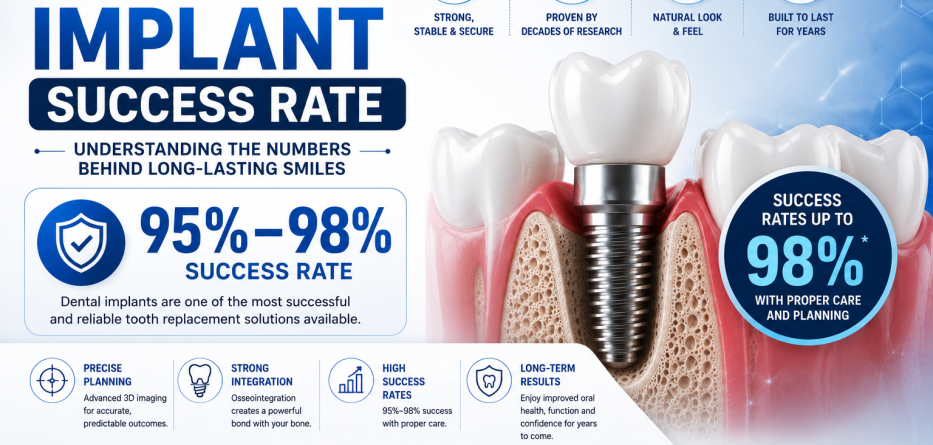
Dental implants have an average success rate of 95% to 98%, making them one of the most successful procedures in dentistry.
Success rates may vary depending on:
- Implant location
- Bone quality
- Patient health
- Oral hygiene habits
- Smoking status
- Dentist experience
When properly planned and maintained, many dental implants remain functional for decades.
What Does “Dental Implant Success” Mean?
A successful dental implant is one that:
- Integrates properly with the jawbone
- Remains stable and functional
- Supports chewing and speaking
- Causes no pain or discomfort
- Maintains healthy surrounding bone and gum tissue
Success is not simply about implant survival—it’s about long-term health, comfort, and function.
Average Dental Implant Success Rates by Treatment Type
| Implant Procedure | Average Success Rate |
|---|---|
| Single Tooth Implant | 95–98% |
| Multiple Dental Implants | 95%+ |
| Implant-Supported Bridges | 94–97% |
| Full Arch Dental Implants | 90–98% |
| Immediate Load Implants | 90–95% |
These figures demonstrate why dental implants are considered the gold standard for tooth replacement.
Why Do Dental Implants Have Such High Success Rates?
Several scientific and technological factors contribute to implant success.
1. Osseointegration
Osseointegration is the process in which the jawbone bonds directly with the titanium implant.
Benefits include:
- Exceptional stability
- Long-term durability
- Natural tooth function
- Bone preservation
This biological process is one of the main reasons implants perform so well over time.
2. Biocompatible Titanium
Most dental implants are made from medical-grade titanium.
Titanium is
- Strong and durable
- Corrosion-resistant
- Lightweight
- Highly compatible with human bone
The body’s ability to accept titanium significantly improves implant success.
3. Advanced Dental Technology
Modern implant dentistry utilizes the following:
- CBCT scans
- Digital treatment planning
- Computer-guided surgery
- Intraoral scanning
These technologies improve precision and reduce complications.
Factors That Influence Dental Implant Success Rate
Healthy Bone Structure
Strong jawbone support is essential for implant stability.
Patients with adequate bone density often experience the following:
- Faster healing
- Better integration
- Higher success rates
Bone grafting may be recommended when bone volume is insufficient.
Good Oral Hygiene
Healthy gums play a critical role in implant longevity.
Daily care should include:
- Brushing twice daily
- Flossing regularly
- Professional cleanings
- Routine dental examinations
Poor oral hygiene increases the risk of peri-implant disease.
Non-Smoking Lifestyle
Smoking can negatively affect:
- Blood circulation
- Healing ability
- Bone integration
- Gum health
Studies consistently show higher implant success rates among non-smokers.
Overall Health
Medical conditions that may affect implant outcomes include:
- Uncontrolled diabetes
- Autoimmune disorders
- Osteoporosis
Proper management of these conditions often improves treatment success.
Dentist Experience
The skill of the implant provider directly impacts results.
Experienced implant dentists can:
- Plan treatment accurately
- Place implants precisely
- Minimize surgical risks
- Identify potential complications early
Dental Implant Success Rate by Location
The location of the implant can influence outcomes.
| Implant Location | Success Rate |
|---|---|
| Lower Jaw (Mandible) | 95–98% |
| Upper Jaw (Maxilla) | 90–95% |
The lower jaw typically has denser bone, which supports stronger implant integration.
How Long Do Successful Dental Implants Last?
Dental implants are designed for long-term use.
Typical Lifespan
| Component | Expected Lifespan |
|---|---|
| Implant Post | 20+ Years to Lifetime |
| Abutment | 15–20 Years |
| Crown | 10–15 Years |
Many patients enjoy decades of function with proper maintenance.
Common Reasons for Dental Implant Failure
Although uncommon, implant failure can occur.
Early Implant Failure
Occurs before osseointegration is complete.
Possible causes include the following:
- Infection
- Poor bone quality
- Surgical complications
- Excessive implant movement
Late Implant Failure
Occurs months or years after treatment.
Common causes:
- Peri-implantitis
- Smoking
- Poor oral hygiene
- Teeth grinding
- Excessive bite forces
Fortunately, most failures are preventable through proper care.
How to Improve Your Dental Implant Success Rate
Patients can take several steps to maximize success.
Follow These Tips
- Choose an experienced implant dentist.
- Maintain excellent oral hygiene.
- Attend regular dental checkups.
- Avoid smoking and tobacco products.
- Follow post-operative instructions carefully.
- Manage underlying health conditions.
- Wear a nightguard if you grind your teeth.
These habits significantly increase long-term implant success.
Dental Implants vs Other Tooth Replacement Options
| Treatment | Average Lifespan | Stability | Bone Preservation |
|---|---|---|---|
| Dental Implants | 20+ Years | Excellent | Yes |
| Dental Bridges | 5–15 Years | Good | Limited |
| Partial Dentures | 5–10 Years | Moderate | No |
| Complete Dentures | 5–10 Years | Moderate | No |
This superior longevity and functionality contribute to the high satisfaction rates associated with implants.
Frequently Asked Questions
What is the success rate of dental implants?
Most studies report success rates between 95% and 98%.
Do dental implants last forever?
The implant post can potentially last a lifetime with proper care, although crowns may require replacement after 10–15 years.
What is the biggest cause of implant failure?
Peri-implantitis, smoking, and poor oral hygiene are among the most common causes.
Are dental implants more successful than bridges?
In many cases, yes. Dental implants often provide greater longevity, stability, and bone preservation.
Does age affect implant success?
Age alone is rarely a limiting factor. Overall health and bone quality are more important considerations.
Conclusion
Dental implants have one of the highest success rates in modern dentistry, with most studies reporting success rates between 95% and 98%. Their remarkable performance is supported by advanced materials, biological integration, modern technology, and decades of clinical research.
While no medical procedure can guarantee 100% success, patients who maintain excellent oral hygiene, follow professional recommendations, and work with experienced implant providers can expect long-lasting and highly successful results. For many individuals, dental implants offer a reliable solution that restores confidence, function, and oral health for years to come.
