
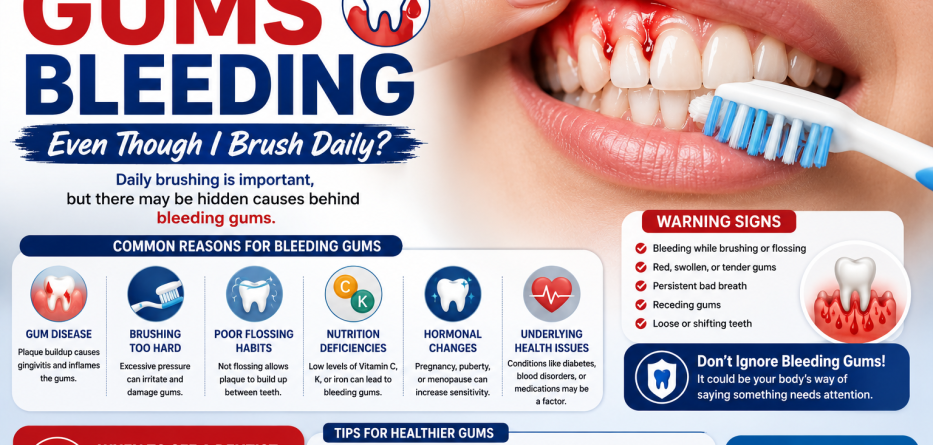
Many people are surprised and concerned when they notice blood while brushing or flossing their teeth. After all, if you’re brushing every day, shouldn’t your gums be healthy?
The truth is that bleeding gums are not normal, even if you maintain a daily brushing routine. While poor oral hygiene is a common cause, several other factors can contribute to gum bleeding, including gum disease, brushing technique, medical conditions, medications, and nutritional deficiencies.
Understanding why your gums bleed despite regular brushing can help you identify the underlying issue and take the right steps to protect your oral health.
In this article, we’ll explore the most common causes of bleeding gums, when to seek professional help, and how to keep your gums healthy.
Are Bleeding Gums Normal?
Quick Answer
No. Healthy gums generally do not bleed during brushing or flossing.
Occasional bleeding may occur if you’ve recently started flossing or changed your oral care routine. However, persistent bleeding is usually a sign that something needs attention.
Bleeding gums often indicate inflammation, infection, or irritation that should not be ignored.
The Most Common Cause: Gingivitis
What Is Gingivitis?
Gingivitis is the earliest stage of gum disease.
It occurs when plaque—a sticky film of bacteria—builds up along the gumline and causes inflammation.
Symptoms of Gingivitis
- Bleeding while brushing
- Red or swollen gums
- Tender gums
- Persistent bad breath
- Gum sensitivity
The good news is that gingivitis is reversible when treated early.
You May Be Brushing Too Hard
Many people believe that brushing harder results in cleaner teeth.
In reality, excessive brushing pressure can damage gum tissue and cause bleeding.
Signs You’re Brushing Too Aggressively
- Gum recession
- Tooth sensitivity
- Worn enamel
- Bleeding gums
Solution
Use:
- A soft-bristled toothbrush
- Gentle circular motions
- Light pressure
Your toothbrush should clean plaque, not scrub your gums.
Poor Flossing Habits
If you rarely floss and suddenly begin doing it regularly, your gums may bleed temporarily.
This happens because inflamed gum tissue reacts when plaque and debris are disturbed.
What to Do
Continue flossing gently every day.
In many cases, bleeding decreases within one to two weeks as gum health improves.
Plaque and Tartar Buildup
Even if you brush daily, plaque can still accumulate in hard-to-reach areas.
When plaque hardens, it becomes tartar (calculus), which can only be removed professionally.
Tartar buildup can lead to the following:
- Gum inflammation
- Bleeding
- Gum disease
- Bad breath
Regular dental cleanings are essential for preventing tartar-related problems.
Early or Advanced Gum Disease
If gingivitis progresses without treatment, it can develop into periodontitis.
Signs of Periodontitis
- Persistent bleeding
- Receding gums
- Loose teeth
- Pus around the gums
- Chronic bad breath
Periodontitis can cause permanent damage to the supporting structures of the teeth if left untreated.
Vitamin Deficiencies
Certain nutritional deficiencies can affect gum health.
Vitamin C Deficiency
Vitamin C supports healthy connective tissue and healing.
Low levels may contribute to:
- Bleeding gums
- Swollen gums
- Delayed healing
Vitamin K Deficiency
Vitamin K plays a role in blood clotting.
Insufficient levels can make bleeding more likely.
Foods That Support Gum Health
- Citrus fruits
- Strawberries
- Bell peppers
- Leafy greens
- Broccoli
- Kale
A balanced diet helps maintain healthy gums.
Hormonal Changes
Hormonal fluctuations can make gums more sensitive and prone to bleeding.
This is particularly common during:
- Pregnancy
- Puberty
- Menstruation
- Menopause
Pregnancy-induced gingivitis
Many pregnant women experience increased gum inflammation due to hormonal changes.
Regular dental care during pregnancy is important for maintaining oral health.
Medications That May Cause Bleeding Gums
Certain medications can increase the likelihood of gum bleeding.
Examples include:
- Blood thinners
- Aspirin
- Anticoagulants
- Some blood pressure medications
These medications may affect clotting or increase gum sensitivity.
Always consult your healthcare provider before making medication changes.
Smoking and Tobacco Use
Smoking significantly increases the risk of gum disease.
Ironically, smokers may initially notice less bleeding because nicotine restricts blood flow to the gums.
However, smoking can:
- Mask symptoms
- Delay healing
- Increase infection risk
- Accelerate gum disease progression
Quitting tobacco products can dramatically improve gum health.
Stress and Immune Function
Chronic stress affects the body’s ability to fight infections.
Stress can contribute to the following:
- Increased inflammation
- Weakened immune response
- Higher risk of gum disease
Managing stress may benefit both oral and overall health.
Certain Medical Conditions
Bleeding gums may sometimes indicate underlying health conditions.
Examples include:
Diabetes
Poorly controlled blood sugar can increase inflammation and infection risk.
Blood Disorders
Conditions affecting clotting may contribute to bleeding gums.
Autoimmune Diseases
Certain immune disorders can affect gum tissue health.
If bleeding persists despite good oral hygiene, a medical evaluation may be recommended.
How to Stop Your Gums from Bleeding
Improve Your Oral Hygiene Routine
- Brush twice daily
- Floss every day
- Use fluoride toothpaste
- Clean along the gumline
Use the Right Toothbrush
Choose a soft-bristled toothbrush to minimize gum irritation.
Schedule a Professional Cleaning
Professional cleanings remove tartar and bacteria that cannot be eliminated at home.
Maintain a Healthy Diet
Focus on nutrient-rich foods that support gum health and immune function.
Stay Hydrated
Adequate hydration helps maintain saliva production and oral health.
When Should You See a Dentist?
Schedule a dental appointment if:
- Bleeding continues for more than one week
- Your gums are swollen or painful
- You notice gum recession
- Teeth feel loose
- Bad breath persists
- Bleeding worsens over time
Early diagnosis can prevent more serious dental problems.
Preventing Bleeding Gums
Daily Prevention Tips
- Brush gently twice daily.
- Floss every day.
- Visit your dentist regularly.
- Avoid smoking.
- Eat a balanced diet.
- Stay hydrated.
- Replace your toothbrush every three months.
These simple habits can significantly reduce your risk of gum problems.
Frequently Asked Questions
Why do my gums bleed even though I brush every day?
Bleeding gums can result from gingivitis, brushing too hard, plaque buildup, vitamin deficiencies, medications, or underlying health conditions.
Is bleeding while flossing normal?
Occasional bleeding may occur when starting a flossing routine, but persistent bleeding should be evaluated.
Can stress cause bleeding gums?
Yes. Stress can weaken the immune system and increase susceptibility to gum inflammation.
Will bleeding gums heal on their own?
Mild gingivitis may improve with better oral hygiene, but persistent bleeding requires professional evaluation.
Can vitamin deficiencies cause gum bleeding?
Yes. Deficiencies in vitamins C and K can contribute to gum bleeding and poor healing.
Conclusion
If you’re wondering, “Why are my gums bleeding even though I brush daily?” the answer may involve more than simply brushing frequency. Factors such as gingivitis, brushing technique, plaque buildup, nutritional deficiencies, medications, and underlying health conditions can all contribute to gum bleeding.
The good news is that most causes of bleeding gums can be treated or managed effectively when identified early. By maintaining proper oral hygiene, visiting your dentist regularly, and addressing any underlying issues, you can restore your gum health and protect your smile for years to come.
