

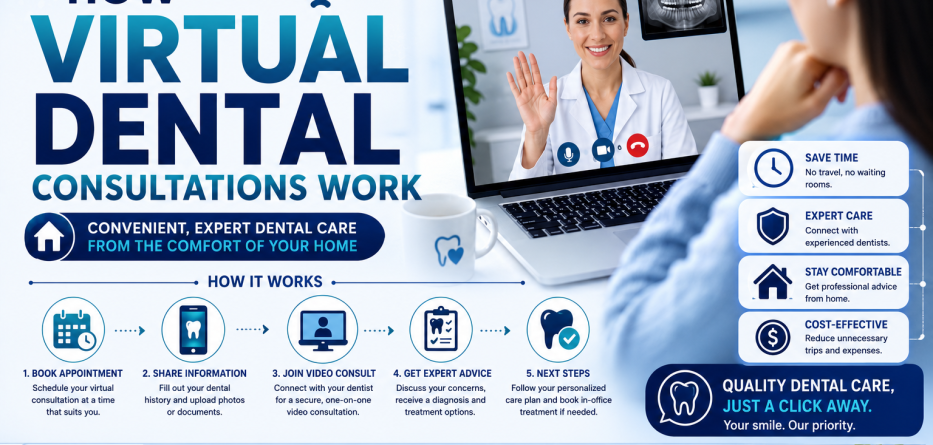
Technology has transformed nearly every aspect of healthcare, and dentistry is no exception. Virtual dental consultations, also known as teledentistry consultations, have become an increasingly popular way for patients to connect with dental professionals from the comfort of their homes.
Whether you’re experiencing a dental concern, seeking a second opinion, discussing treatment options, or simply looking for expert advice, virtual dental consultations offer a convenient and efficient solution. They can save time, reduce unnecessary clinic visits, and help patients access professional dental care more easily than ever before.
In this guide, we’ll explain how virtual dental consultations work, their benefits, limitations, and what patients can expect during an online dental appointment.
What Is a Virtual Dental Consultation?
A virtual dental consultation is an online appointment where patients communicate with a dentist using video calls, phone calls, secure messaging, or specialized teledentistry platforms.
During the consultation, the dentist can:
- Assess symptoms
- Review dental concerns
- Examine uploaded photos
- Discuss treatment options
- Provide recommendations
- Determine if an in-person visit is necessary
Virtual consultations are designed to improve accessibility while maintaining professional dental care standards.
How Does a Virtual Dental Consultation Work?
The process is simple and user-friendly.
Step 1: Schedule an Appointment
Patients book a consultation through:
- Dental clinic websites
- Teledentistry platforms
- Mobile applications
- Telephone scheduling
The clinic will provide appointment details and instructions.
Step 2: Complete Medical and Dental History Forms
Before the appointment, patients may be asked to provide:
- Medical history
- Current medications
- Dental concerns
- Previous treatments
- Symptoms and pain levels
This information helps the dentist prepare for the consultation.
Step 3: Upload Photos or Documents
Many dentists request clear photos of the affected area before the appointment.
Helpful images may include:
- Close-up tooth photographs
- Gum condition images
- Swelling or injury photos
- Previous X-rays or reports
These visuals help improve diagnostic accuracy.
Step 4: Attend the Video Consultation
At the scheduled time, the patient joins a secure video call.
During the consultation, the dentist may:
- Ask questions about symptoms
- Review photos and records
- Observe visible oral issues
- Discuss treatment options
- Recommend next steps
Most virtual consultations last between 15 and 30 minutes.
Step 5: Receive a Treatment Plan
Following the consultation, the dentist may:
- Provide home care instructions
- Prescribe medications (where permitted)
- Recommend further diagnostic tests
- Schedule an in-office visit
- Refer to a specialist if necessary
Patients typically receive a summary of recommendations after the appointment.
What Dental Issues Can Be Evaluated Virtually?
Virtual consultations are useful for many non-emergency dental concerns.
Common Conditions Assessed Online
- Tooth pain
- Gum inflammation
- Oral infections
- Dental trauma evaluations
- Broken fillings or crowns
- Orthodontic concerns
- Implant follow-up appointments
- Cosmetic dentistry consultations
Many initial assessments can be completed remotely before determining whether in-person treatment is required.
Benefits of Virtual Dental Consultations
Convenience
Patients can consult with a dentist without traveling to a clinic.
Benefits include:
- Reduced travel time
- Flexible scheduling
- Faster access to care
Improved Access to Dental Care
Teledentistry helps patients who:
- Live in rural areas
- Have mobility challenges
- Have limited transportation options
- Require specialist opinions
Virtual consultations make expert dental care more accessible.
Reduced Costs
In some cases, virtual consultations may reduce the following:
- Transportation expenses
- Time away from work
- Unnecessary office visits
This can make dental care more affordable and efficient.
Faster Professional Advice
Patients can often receive guidance sooner than by waiting for an available in-person appointment.
This is especially valuable for:
- Urgent concerns
- Treatment planning
- Post-operative questions
What Cannot Be Done During a Virtual Consultation?
Although virtual consultations are highly useful, they have limitations.
Procedures That Require In-Person Visits
- Dental cleanings
- Fillings
- Root canal treatment
- Tooth extractions
- Dental implant placement
- Crowns and bridges
- X-ray imaging
Hands-on treatment still requires a physical dental appointment.
Are Virtual Dental Consultations Accurate?
Virtual consultations can be highly effective for screening, education, and treatment planning.
Accuracy depends on:
- Quality of photos
- Patient communication
- Clinical history
- Nature of the dental concern
When necessary, dentists will recommend an in-person examination to confirm a diagnosis.
Virtual Dental Consultations for Emergencies
Teledentistry can help determine whether a situation requires immediate care.
Examples include:
- Severe toothaches
- Broken teeth
- Swelling
- Dental trauma
However, life-threatening conditions should always be treated as medical emergencies.
Seek immediate care for:
- Difficulty breathing
- Severe facial swelling
- Uncontrolled bleeding
Virtual Consultations for Cosmetic Dentistry
Many cosmetic dentists offer virtual smile consultations.
Patients can discuss:
- Teeth whitening
- Veneers
- Smile makeovers
- Invisalign treatment
- Dental implants
Virtual consultations allow dentists to explain treatment options before scheduling in-office visits.
Virtual Consultations for Dental Implants
Patients considering dental implants often use virtual consultations to:
- Discuss candidacy
- Review treatment options
- Understand costs
- Evaluate timelines
- Ask questions about recovery
This helps patients make informed decisions before beginning treatment.
Tips for a Successful Virtual Dental Consultation
To get the most value from your appointment:
Before the Consultation
- Test your internet connection.
- Charge your device.
- Prepare questions.
- Gather dental records.
- Take clear photos if requested.
During the Consultation
- Sit in a well-lit area.
- Explain symptoms clearly.
- Follow the dentist’s instructions.
- Ask questions about treatment recommendations.
Proper preparation improves the effectiveness of the consultation.
The Future of Teledentistry
Teledentistry continues to grow as technology advances.
Future innovations may include:
- AI-assisted diagnostics
- Enhanced imaging tools
- Remote monitoring systems
- Integrated digital health records
- Improved patient communication platforms
These developments are expected to make virtual dental care even more accessible and efficient.
Frequently Asked Questions
Are virtual dental consultations effective?
Yes. They are highly effective for initial assessments, treatment planning, follow-up care, and professional advice.
Can a dentist diagnose a cavity virtually?
A dentist may suspect a cavity based on symptoms and images, but confirmation often requires an in-person examination and X-rays.
How long does a virtual dental consultation take?
Most appointments last between 15 and 30 minutes.
Can I get a prescription through a virtual consultation?
In some situations and jurisdictions, dentists may prescribe medications when clinically appropriate.
Are virtual dental consultations secure?
Reputable dental providers use secure and privacy-compliant platforms to protect patient information.
Conclusion
Virtual dental consultations have become an important part of modern dental care, offering patients a convenient, accessible, and efficient way to connect with dental professionals. From treatment planning and second opinions to implant consultations and follow-up care, teledentistry provides valuable support without requiring an immediate office visit.
While virtual consultations cannot replace hands-on dental procedures, they are an excellent first step for many dental concerns. As technology continues to evolve, virtual dental care will likely play an even greater role in improving patient access, convenience, and overall oral health outcomes.

