

Introduction
Dental veneers are one of the most popular cosmetic dentistry treatments for transforming smiles. Whether you’re looking to correct stained, chipped, uneven, or slightly misaligned teeth, veneers can provide a dramatic and long-lasting improvement in appearance.
One of the most common questions patients ask is, “How much do dental veneers cost?”
The answer depends on several factors, including the type of veneers, the number of teeth being treated, the dentist’s expertise, and your location. Understanding these factors can help you make an informed decision and determine whether veneers are the right investment for your smile.
In this guide, we’ll break down dental veneer costs, compare different veneer types, and explain what influences pricing.
What Are Dental Veneers?
Dental veneers are thin, custom-made shells bonded to the front surface of teeth to improve their appearance.
Veneers can address:
- Tooth discoloration
- Chipped teeth
- Cracked teeth
- Minor gaps
- Uneven tooth shape
- Mild misalignment
The two most common types are the following:
- Porcelain veneers
- Composite veneers
How Much Do Dental Veneers Cost?
The cost of dental veneers varies depending on the material used and the complexity of treatment.
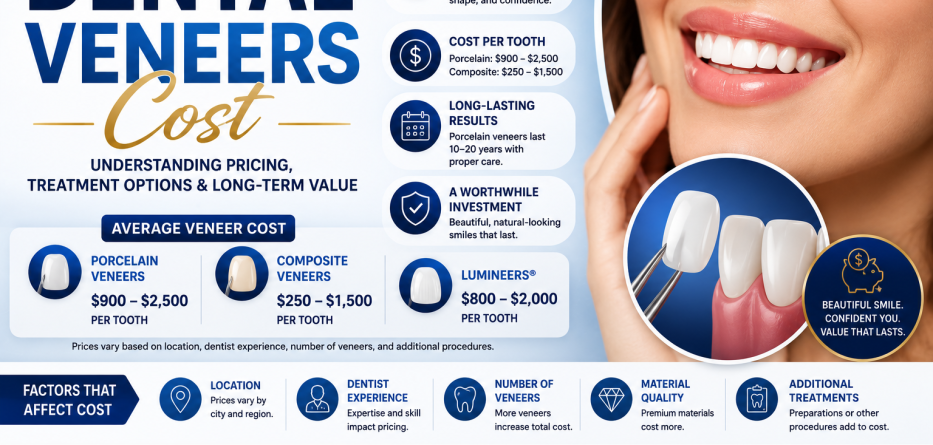
Average Veneer Costs
| Veneer Type | Cost Per Tooth |
|---|---|
| Composite Veneers | $250 – $1,500 |
| Porcelain Veneers | $900 – $2,500 |
| Lumineers® | $800 – $2,000 |
Full Smile Makeover Cost
| Number of Veneers | Estimated Cost |
|---|---|
| 4 Veneers | $3,600 – $10,000 |
| 6 Veneers | $5,400 – $15,000 |
| 8 Veneers | $7,200 – $20,000 |
| 10 Veneers | $9,000 – $25,000 |
Actual costs may vary depending on the clinic and geographic location.
Factors That Affect Dental Veneer Cost
Several factors influence the final price of veneer treatment.
1. Type of Veneer Material
Porcelain veneers generally cost more because they offer:
- Superior aesthetics
- Better stain resistance
- Longer lifespan
- More natural translucency
Composite veneers are more affordable but typically require more maintenance.
2. Number of Teeth Treated
The more veneers you receive, the higher the overall treatment cost.
Many patients choose veneers for:
- Front two teeth
- Front four teeth
- Front six to ten teeth
The treatment plan depends on your smile goals.
3. Dentist Experience
Highly experienced cosmetic dentists often charge more due to:
- Advanced training
- Artistic expertise
- Proven results
- Precision treatment planning
The quality of work can significantly affect the appearance and longevity of veneers.
4. Geographic Location
Dental veneer costs vary between cities and regions.
Clinics located in:
- Major metropolitan areas
- Luxury cosmetic practices
- High-demand markets
typically charge more than smaller community practices.
5. Additional Procedures
Some patients require additional treatments before veneer placement, such as:
- Teeth whitening
- Gum contouring
- Orthodontic treatment
- Dental cleaning
- Tooth reshaping
These procedures may increase total treatment costs.
Porcelain Veneers vs Composite Veneers Cost
Porcelain Veneers
Advantages
- Highly natural appearance
- Excellent durability
- Superior stain resistance
- Long lifespan
Average Cost
$900–$2,500 per tooth
Lifespan
10–20 years with proper care
Composite Veneers
Advantages
- Lower upfront cost
- Faster treatment
- Easier repairs
Average Cost
$250–$1,500 per tooth
Lifespan
4–8 years on average
Why Are Porcelain Veneers More Expensive?
Porcelain veneers involve:
- Advanced laboratory fabrication
- Custom design
- Premium materials
- Multiple appointments
- Greater artistic precision
These factors contribute to higher costs but often provide better long-term value.
Are Dental Veneers Worth the Cost?
For many patients, veneers provide significant benefits.
Benefits Include
- Improved smile appearance
- Enhanced confidence
- Long-lasting cosmetic results
- Natural-looking teeth
- Resistance to staining
Many individuals view veneers as an investment in both appearance and self-confidence.
Do Dental Insurance Plans Cover Veneers?
In most cases, dental veneers are considered cosmetic procedures.
As a result:
- Insurance coverage is typically limited
- Cosmetic-only treatment is often excluded
- Medically necessary cases may qualify for partial coverage
Patients should verify benefits with their insurance provider before treatment.
Financing Options for Dental Veneers
Many dental offices offer financing solutions.
Common options include:
- Monthly payment plans
- Third-party healthcare financing
- Dental membership programs
- Credit-based financing
These options can make treatment more affordable.
How Long Do Veneers Last?
The longevity of veneers affects their overall value.
Average Lifespan
| Veneer Type | Lifespan |
|---|---|
| Porcelain Veneers | 10–20 Years |
| Composite Veneers | 4–8 Years |
Proper maintenance can significantly extend their lifespan.
How to Protect Your Veneer Investment
To maximize longevity:
- Brush twice daily
- Floss regularly
- Avoid chewing ice
- Wear a nightguard if you grind your teeth
- Attend routine dental checkups
- Avoid using teeth as tools
Good oral hygiene helps protect both veneers and natural teeth.
Common Questions About Dental Veneer Costs
Why are veneers so expensive?
Veneers require custom fabrication, advanced materials, cosmetic expertise, and precise placement.
How many veneers do I need?
Most patients receive between 4 and 10 veneers depending on their smile goals.
Are veneers permanent?
Veneers are considered a long-term treatment because some enamel is typically removed during preparation.
Is there a cheaper alternative to veneers?
Composite bonding may be a more affordable option for minor cosmetic improvements.
Do veneers look natural?
Yes. Modern porcelain veneers are designed to closely mimic the appearance of natural enamel.
Veneers vs Other Cosmetic Treatments
| Treatment | Average Cost | Longevity |
|---|---|---|
| Veneers | High | 10–20 Years |
| Teeth Whitening | Low | Months–Years |
| Dental Bonding | Moderate | 3–8 Years |
| Orthodontics | Moderate–High | Long-Term |
Each option serves different cosmetic goals.
Conclusion
Dental veneers are a highly effective cosmetic dentistry solution that can dramatically improve the appearance of your smile. While costs vary depending on the type of veneer, the number of teeth treated, and the dentist’s expertise, many patients find the investment worthwhile due to the long-lasting aesthetic benefits.
Understanding dental veneer costs, available options, and long-term value can help you make a confident decision about your smile transformation. Consulting with an experienced cosmetic dentist is the best way to receive an accurate treatment plan and personalized cost estimate.

