
Missing teeth can affect more than just your appearance. They can impact your ability to chew, speak clearly, and maintain proper oral health. Fortunately, modern dentistry offers a highly effective solution: dental implants.
Dental implants have become the gold standard for replacing missing teeth because they look, feel, and function like natural teeth. Unlike traditional dentures or bridges, implants replace the entire tooth structure, including the root, providing exceptional stability and long-term benefits.
In this guide, you’ll learn what dental implants are, how they work, their benefits, the treatment process, and why millions of people choose them to restore their smiles.
What Are Dental Implants?
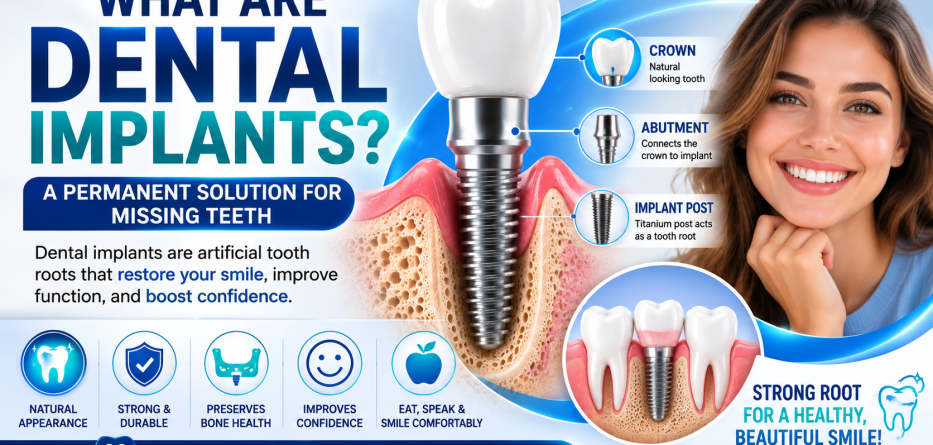
A dental implant is a small titanium post that is surgically placed into the jawbone to act as an artificial tooth root. Once the implant integrates with the bone, it supports a replacement tooth such as a crown, bridge, or denture.
Dental implants are designed to provide a permanent and natural-looking solution for missing teeth.
Quick Definition
Dental implants are artificial tooth roots made of biocompatible materials that are placed in the jawbone to support replacement teeth and restore oral function.
The Three Main Components of a Dental Implant
1. Implant Post
The implant post is the titanium screw-like structure that is inserted into the jawbone.
Its purpose is to:
- Replace the natural tooth root
- Provide stability
- Support long-term function
2. Abutment
The abutment is a connector that attaches the implant post to the final restoration.
It serves as the link between the implant and the replacement tooth.
3. Dental Crown
The crown is the visible portion of the restoration.
It is custom-designed to:
- Match surrounding teeth
- Restore appearance
- Improve chewing ability
Together, these components create a strong and functional replacement tooth.
How Do Dental Implants Work?
Dental implants work through a biological process called osseointegration.
After the implant is placed, the surrounding jawbone gradually grows around and bonds with the titanium surface.
This process creates:
- Exceptional stability
- Long-term durability
- Natural tooth function
- Strong bone support
Once healing is complete, the restoration is attached, allowing the implant to function like a natural tooth.
Why Are Dental Implants So Popular?
Dental implants offer several advantages compared to traditional tooth replacement options.
Key Benefits
- Natural appearance
- Improved chewing ability
- Enhanced speech
- Long-lasting results
- Bone preservation
- Increased confidence
- Better oral health
Many patients report that implants feel almost identical to their natural teeth.
Types of Dental Implants
Single Tooth Implants
Used to replace one missing tooth without affecting neighboring teeth.
Multiple Tooth Implants
Ideal for replacing several missing teeth using implant-supported bridges.
Full Mouth Dental Implants
Suitable for patients missing most or all of their teeth.
Popular options include:
- All-on-4 implants
- All-on-6 implants
- Implant-supported dentures
Mini Dental Implants
Smaller implants are sometimes used when bone volume is limited.
Your dentist will recommend the most suitable option based on your needs.
Who Is a Candidate for Dental Implants?
Most healthy adults can qualify for implant treatment.
Ideal candidates typically have:
- Healthy gums
- Adequate jawbone density
- Good oral hygiene habits
- Stable overall health
Even patients with bone loss may qualify after bone grafting procedures.
A comprehensive consultation helps determine eligibility.
The Dental Implant Procedure
Step 1: Initial Consultation
The dentist evaluates:
- Oral health
- Bone density
- Medical history
- Treatment goals
Step 2: Implant Placement
The titanium implant is surgically inserted into the jawbone.
Step 3: Healing and Osseointegration
The implant fuses with the jawbone over several months.
Step 4: Abutment Placement
The connector is attached to the implant.
Step 5: Final Restoration
A custom crown, bridge, or denture is placed to complete the smile.
How Long Do Dental Implants Last?
One of the biggest advantages of implants is their longevity.
Average Lifespan
| Component | Typical Lifespan |
|---|---|
| Implant Post | 20+ Years to Lifetime |
| Abutment | 15–20 Years |
| Crown | 10–15 Years |
With proper care, many implants last a lifetime.
Dental Implants vs Dentures
| Feature | Dental Implants | Dentures |
|---|---|---|
| Stability | Excellent | Moderate |
| Bone Preservation | Yes | No |
| Chewing Ability | Excellent | Limited |
| Appearance | Very Natural | Natural |
| Lifespan | 20+ Years | 5–10 Years |
Dental implants provide greater comfort and functionality compared to removable dentures.
Dental Implants vs Dental Bridges
| Feature | Dental Implants | Bridges |
|---|---|---|
| Preserve Adjacent Teeth | Yes | No |
| Bone Preservation | Yes | Limited |
| Lifespan | 20+ Years | 5–15 Years |
| Stability | Excellent | Good |
Because implants do not rely on neighboring teeth for support, they help preserve overall oral health.
Are Dental Implants Safe?
Yes.
Dental implants are one of the safest and most successful procedures in modern dentistry.
Success rates typically range from 95% to 98% when treatment is performed by qualified professionals.
Their safety is supported by:
- Decades of research
- Advanced materials
- Modern surgical techniques
- Extensive clinical evidence
What Are the Risks of Dental Implants?
Although highly successful, implants do carry some potential risks.
Possible complications include:
- Infection
- Delayed healing
- Implant failure
- Nerve irritation
- Sinus complications
These risks are relatively rare and can often be minimized through proper planning and aftercare.
How to Care for Dental Implants
Proper maintenance is essential for long-term success.
Daily Care Tips
- Brush twice daily
- Floss regularly
- Attend routine dental checkups
- Avoid tobacco products
- Follow professional recommendations
Implants require care similar to natural teeth.
Frequently Asked Questions
Are dental implants permanent?
Dental implants are designed to be a long-term solution and can last for decades or even a lifetime.
Do dental implants hurt?
Most patients experience only mild discomfort during recovery, which can be managed with medication.
How successful are dental implants?
Success rates typically range between 95% and 98%.
Can older adults get dental implants?
Yes. Age alone is not usually a barrier to treatment.
Do dental implants prevent bone loss?
Yes. Implants stimulate the jawbone and help preserve bone density.
How long does the treatment process take?
Most implant treatments take between three and six months, depending on healing requirements.
Conclusion
Dental implants are one of the most advanced and reliable solutions for replacing missing teeth. By replacing both the tooth root and visible crown, they provide unmatched stability, functionality, and aesthetics.
Whether you’re missing a single tooth or require full-mouth restoration, dental implants offer a long-lasting solution that can improve your oral health, confidence, and quality of life. With proper care and professional guidance, dental implants can help you enjoy a healthy, beautiful smile for many years to come.
