
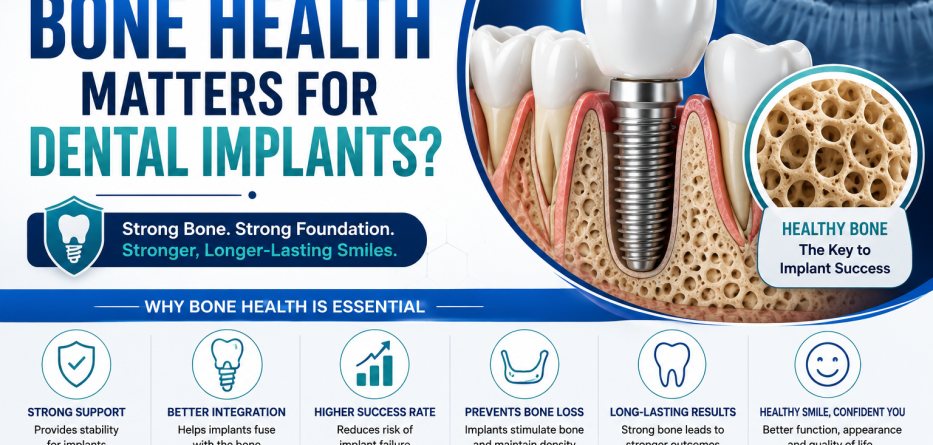
Dental implants are widely considered the gold standard for replacing missing teeth. They offer a natural appearance, excellent stability, and long-lasting results. However, the success of a dental implant depends on more than just the implant itself. One of the most important factors is the health and strength of the jawbone.
Many patients are surprised to learn that bone health plays a critical role in determining whether they are good candidates for dental implants. Without sufficient bone density and volume, the implant may not have the support needed to integrate properly and function like a natural tooth.
In this guide, we’ll explore why bone health matters for dental implants, how bone loss occurs, and what treatment options are available for patients with insufficient jawbone density.
What Is Bone Health in Dentistry?
Bone health refers to the quality, density, and volume of the jawbone that supports your teeth and dental implants. A healthy jawbone provides a strong foundation that allows implants to remain stable for many years.
The jawbone is a living tissue that constantly remodels itself. When natural teeth are present, everyday chewing stimulates the bone and helps maintain its strength. When a tooth is lost, the bone in that area no longer receives stimulation and may begin to shrink over time.
Why Dental Implants Need Healthy Bone
Unlike dentures or bridges, dental implants are surgically placed into the jawbone. The implant acts as an artificial tooth root and must fuse with the surrounding bone through a process known as osseointegration.
Healthy bone is essential because it:
- Provides stability for the implant
- Supports successful osseointegration
- Reduces the risk of implant failure
- Helps maintain long-term function
- Improves implant longevity
Without adequate bone support, the implant may become loose or fail to integrate properly.
How Bone Loss Happens After Tooth Loss
One of the most common causes of jawbone deterioration is missing teeth.
After tooth extraction or tooth loss:
- The tooth root is no longer present.
- The jawbone stops receiving stimulation.
- Bone cells begin to break down.
- The bone gradually shrinks and loses density.
Research shows that significant bone loss can occur within the first year after tooth loss, making early treatment important.
Common Causes of Jawbone Loss
Several factors can contribute to bone loss, including:
Missing Teeth
The longer a tooth remains missing, the greater the risk of bone deterioration.
Gum Disease
Advanced periodontal disease can destroy the bone that supports teeth.
Denture Use
Traditional dentures do not stimulate the jawbone, which can accelerate bone resorption.
Trauma or Injury
Accidents affecting the mouth and jaw may result in bone loss.
Osteoporosis
This condition weakens bones throughout the body and may affect jawbone density.
Signs of Insufficient Bone for Dental Implants
Patients may not notice bone loss immediately, but common signs include:
- Sunken facial appearance
- Loose dentures
- Difficulty chewing
- Changes in facial structure
- Reduced jawbone height visible on X-rays
A dental examination and 3D imaging scan can accurately determine bone availability.
What Happens If There Isn’t Enough Bone?
Insufficient bone does not automatically disqualify someone from receiving dental implants.
Modern dentistry offers several solutions:
Bone Grafting
Bone grafting adds new bone material to areas with inadequate volume.
Benefits include:
- Improved implant support
- Increased bone density
- Better long-term implant success
Sinus Lift Procedure
For upper back teeth, a sinus lift can create additional bone height before implant placement.
Zygomatic Implants
In severe cases of upper jaw bone loss, specialized implants anchored in the cheekbone may be an option.
Benefits of Strong Bone for Dental Implant Success
Patients with healthy jawbones often experience:
- Higher implant success rates
- Faster healing
- Better stability
- Improved chewing function
- Long-lasting results
- Enhanced aesthetics
Strong bone provides the foundation necessary for a lifetime of implant performance.
How Dental Implants Help Preserve Bone
One unique advantage of dental implants is their ability to protect bone health.
Once integrated into the jaw, implants:
- Mimic natural tooth roots
- Stimulate the surrounding bone
- Help prevent further bone loss
- Maintain facial structure
This is one reason implants are often preferred over traditional dentures.
How to Improve Bone Health Before Dental Implant Treatment
Patients can support jawbone health by:
- Maintaining excellent oral hygiene
- Treating gum disease early
- Eating calcium-rich foods
- Getting adequate vitamin D
- Avoiding tobacco products
- Following professional dental recommendations
In some cases, bone augmentation procedures may be recommended before implant placement.
Are You a Candidate for Dental Implants?
The best way to determine implant eligibility is through a comprehensive dental evaluation.
Your dentist may assess:
- Bone density
- Bone volume
- Gum health
- Medical history
- Lifestyle factors
Even patients with bone loss often have treatment options available thanks to advances in implant dentistry.
Conclusion
Bone health is one of the most important factors in the success of dental implants. A strong, healthy jawbone provides the stability needed for implants to integrate properly and function like natural teeth. While bone loss can create challenges, modern dental techniques such as bone grafting and sinus lifts have made dental implants accessible to more patients than ever before.
If you are considering dental implants, an early consultation can help evaluate your bone health and identify the best path toward restoring your smile.
