
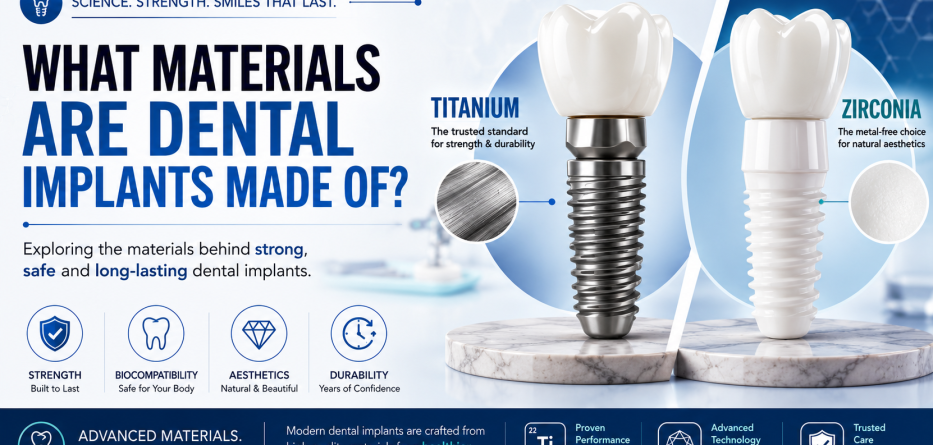
Dental implants have revolutionized modern dentistry, providing a durable and natural-looking solution for missing teeth. If you’re considering dental implants, one of the most common questions you may have is: What materials are dental implants made of?
The materials used in dental implants play a crucial role in their strength, longevity, biocompatibility, and overall success. In this guide, we’ll explore the different materials used in dental implants, their advantages, and how dentists determine the best option for each patient.
What You’ll Learn
- The primary materials used in dental implants
- Why titanium is the gold standard
- The growing popularity of zirconia implants
- Materials used in implant crowns
- Safety and biocompatibility considerations
- Which implant material may be right for you
What Are Dental Implants?
A dental implant is a replacement tooth root that is surgically placed into the jawbone. Once the implant integrates with the bone, it supports a dental crown, bridge, or denture.
A complete dental implant typically consists of three parts:
- Implant Fixture (the post placed in the jawbone)
- Abutment (connector piece)
- Dental Crown (visible tooth replacement)
Each component may be made from different materials depending on the patient’s needs.
Titanium: The Most Common Dental Implant Material
Titanium has been the preferred material for dental implants for more than 50 years.
Why Titanium Is Used
Titanium offers several unique benefits:
- Exceptional strength
- Lightweight properties
- High corrosion resistance
- Excellent biocompatibility
- Long-term durability
Most importantly, titanium can fuse directly with the jawbone through a process called osseointegration.
This biological bond creates a stable foundation that closely mimics a natural tooth root.
Types of Titanium Used in Dental Implants
Commercially Pure Titanium
This form contains very high levels of titanium and is widely used due to its excellent compatibility with human tissue.
Titanium Alloy
Some implants use titanium alloy combined with small amounts of:
- Aluminum
- Vanadium
These alloys provide additional strength while maintaining biocompatibility.
Advantages of Titanium Implants
- Proven clinical success
- Over 95% success rate in many studies
- Suitable for single and multiple tooth replacements
- Long lifespan, often exceeding 20 years
- Widely accepted by dental professionals
Zirconia Dental Implants: The Metal-Free Alternative
In recent years, zirconia implants have become increasingly popular.
Zirconia is a high-strength ceramic material known for its tooth-colored appearance and excellent aesthetics.
Why Patients Choose Zirconia
Many patients prefer zirconia because:
- It is metal-free
- It provides natural aesthetics
- It resists plaque accumulation
- It may be suitable for patients with metal sensitivities
Benefits of Zirconia Implants
Natural Appearance
Unlike titanium, zirconia is white, making it ideal for patients with thin gum tissue where metal visibility could be a concern.
Biocompatibility
Zirconia is highly compatible with oral tissues and supports healthy gum attachment.
Corrosion Resistance
As a ceramic material, zirconia does not corrode or oxidize.
Titanium vs Zirconia Dental Implants
| Feature | Titanium | Zirconia |
|---|---|---|
| Material Type | Metal | Ceramic |
| Color | Silver Gray | White |
| Clinical History | 50+ Years | Newer Technology |
| Strength | Excellent | Very Good |
| Aesthetics | Good | Excellent |
| Biocompatibility | Excellent | Excellent |
| Cost | Typically Lower | Often Higher |
Both materials can provide successful outcomes when used appropriately.
What Materials Are Implant Crowns Made Of?
The visible tooth attached to the implant can be made from several materials.
Porcelain
Porcelain remains one of the most popular choices because it closely resembles natural tooth enamel.
Benefits include:
- Excellent aesthetics
- Natural translucency
- Stain resistance
Zirconia Crowns
Many modern implant restorations use zirconia crowns due to their durability and appearance.
Advantages:
- High fracture resistance
- Natural-looking results
- Long-lasting performance
Porcelain-Fused-to-Metal (PFM)
PFM crowns combine:
- Metal framework
- Porcelain outer layer
While durable, they are becoming less common as all-ceramic options continue to improve.
Are Dental Implant Materials Safe?
Dental implant materials undergo rigorous testing before being approved for clinical use.
Modern implant materials are designed to:
- Integrate with human tissue
- Resist corrosion
- Minimize allergic reactions
- Maintain long-term stability
Titanium and zirconia have both demonstrated excellent safety records in dental applications.
How Dentists Choose the Right Implant Material
Several factors influence material selection:
Oral Health Condition
Bone quality and gum health affect implant planning.
Aesthetic Goals
Front tooth replacements often require superior cosmetic outcomes.
Medical History
Patients with specific concerns may benefit from metal-free alternatives.
Budget Considerations
Different materials may involve varying treatment costs.
Future Innovations in Dental Implant Materials
Dental implant technology continues to evolve.
Researchers are exploring:
- Surface-treated titanium implants
- Advanced zirconia designs
- Bioactive implant coatings
- Nanotechnology-enhanced materials
- Faster osseointegration techniques
These advancements aim to improve healing times, durability, and long-term success rates.
Conclusion
Understanding what materials dental implants are made of can help you make a more informed treatment decision.
Titanium remains the most widely used implant material due to its exceptional strength, biocompatibility, and decades of proven success. However, zirconia implants have emerged as an attractive metal-free alternative for patients seeking superior aesthetics and ceramic-based restorations.
Ultimately, the best implant material depends on your oral health, treatment goals, and your dentist’s recommendations. A consultation with an experienced implant dentist can help determine which option is best suited for your smile.
By choosing high-quality implant materials and maintaining good oral hygiene, patients can enjoy functional, beautiful, and long-lasting tooth replacement solutions for many years.
