
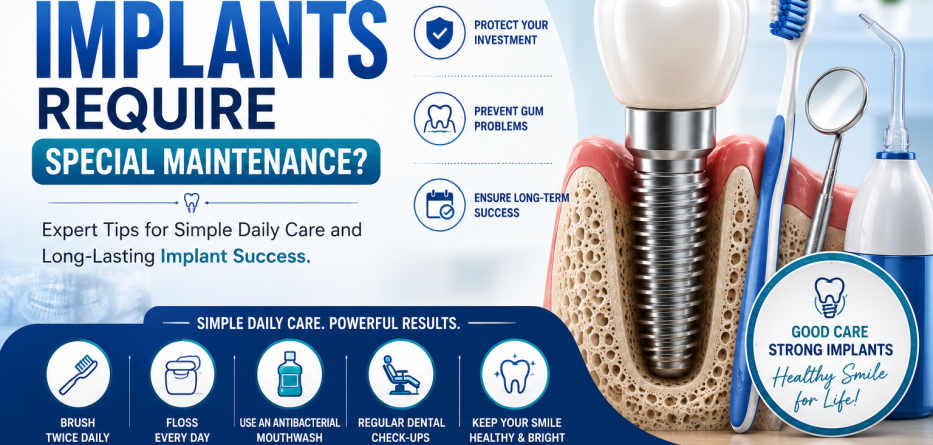
Dental implants are one of the most durable and natural-looking solutions for replacing missing teeth. With proper care, they can last for decades and, in many cases, a lifetime. However, many patients wonder: Do dental implants require special maintenance?
The good news is that dental implants do not require complicated or expensive maintenance routines. In fact, caring for dental implants is very similar to caring for your natural teeth. However, maintaining excellent oral hygiene is essential to protect the surrounding gums and bone that support the implant.
In this guide, we’ll explain how to care for dental implants, what maintenance is required, and how you can maximize the lifespan of your new smile.
Do Dental Implants Need Special Care?
The simple answer is no.
Dental implants don’t require special cleaning solutions, adhesives, or removal like traditional dentures. However, they do require consistent oral hygiene to prevent complications such as gum disease and peri-implantitis.
Think of a dental implant as a replacement tooth root. While the titanium implant itself cannot develop cavities, the surrounding gum tissue and supporting bone still need protection.
Quick Answer
Dental implants do not require special maintenance, but they do require excellent oral hygiene, regular dental checkups, and professional cleanings to ensure long-term success.
Why Proper Implant Maintenance Is Important
Dental implants have success rates exceeding 95%, but their longevity depends heavily on proper care.
Benefits of regular maintenance include:
- Preventing gum infections
- Protecting jawbone health
- Extending implant lifespan
- Maintaining fresh breath
- Preserving your smile’s appearance
- Reducing the risk of implant failure
Neglecting oral hygiene can lead to complications that may threaten the implant’s stability.
Daily Care Routine for Dental Implants
1. Brush Twice Daily
Brush your teeth and implants at least twice a day using:
- A soft-bristled toothbrush
- Non-abrasive toothpaste
- Gentle circular motions
Proper brushing helps remove plaque and bacteria around the implant.
2. Floss Every Day
Flossing is essential because plaque often accumulates between teeth and around implants.
Options include:
- Traditional dental floss
- Implant-specific floss
- Water flossers
- Interdental brushes
Your dentist may recommend the best option based on your restoration type.
3. Use an Antibacterial Mouthwash
An alcohol-free antibacterial mouthwash can help reduce harmful bacteria and support healthy gums.
Benefits include:
- Reduced plaque buildup
- Fresher breath
- Improved gum health
4. Stay Hydrated
Dry mouth can increase bacterial growth.
Drinking plenty of water helps:
- Wash away food particles
- Promote saliva production
- Support oral health
Professional Maintenance Requirements
Regular Dental Checkups
Most dentists recommend visits every six months.
During these appointments, your dental team will:
- Examine the implant
- Check gum health
- Evaluate bone stability
- Assess bite alignment
Early detection of problems can prevent costly treatment later.
Professional Cleanings
Even patients with excellent oral hygiene benefit from routine cleanings.
Professional cleanings help remove:
- Plaque
- Tartar
- Surface stains
- Hard-to-reach deposits
These visits play a critical role in long-term implant success.
What Is Peri-Implantitis?
One of the most significant threats to dental implants is peri-implantitis.
Definition
Peri-implantitis is an inflammatory condition that affects the gums and bone surrounding a dental implant.
Symptoms may include:
- Bleeding gums
- Swelling
- Bad breath
- Gum recession
- Implant mobility
Without treatment, peri-implantitis can lead to implant failure.
Foods and Habits to Avoid
Although implants are strong, certain habits can reduce their lifespan.
Avoid:
- Smoking
- Chewing ice
- Biting hard objects
- Using teeth as tools
- Excessive alcohol consumption
These habits can damage restorations or affect supporting tissues.
Do Dental Implants Require Special Cleaning Products?
In most cases, standard oral hygiene products are sufficient.
Recommended products include:
- Soft-bristle toothbrushes
- Fluoride toothpaste
- Dental floss
- Water flossers
- Alcohol-free mouthwash
Some dentists may recommend implant-specific tools for patients with multiple implants or full-arch restorations.
How Long Do Dental Implants Last With Proper Maintenance?
The lifespan of a dental implant depends largely on oral hygiene and lifestyle choices.
| Component | Average Lifespan |
|---|---|
| Titanium Implant | 20+ Years to Lifetime |
| Implant Crown | 10–15 Years |
| Implant Bridge | 10–15 Years |
Many patients enjoy decades of successful function when implants are properly maintained.
Signs Your Dental Implant Needs Attention
Contact your dentist if you notice:
- Bleeding around the implant
- Swollen gums
- Persistent bad breath
- Pain while chewing
- Loose crown
- Changes in bite alignment
Prompt treatment can prevent more serious complications.
Common Mistakes That Can Damage Dental Implants
Many implant complications are preventable.
Avoid these common mistakes:
Skipping Dental Visits
Routine monitoring helps identify issues early.
Poor Oral Hygiene
Plaque buildup increases the risk of gum disease.
Smoking
Smoking significantly increases implant failure risk.
Ignoring Symptoms
Even mild discomfort should be evaluated by your dentist.
Are Dental Implants Easier to Maintain Than Dentures?
Many patients find implants easier to care for than removable dentures.
| Feature | Dental Implants | Dentures |
| Daily Removal | No | Yes |
| Adhesives Required | No | Often |
| Special Soaking | No | Yes |
| Brushing Routine | Similar to Natural Teeth | Different Process |
| Stability | Excellent | Variable |
This convenience is one reason implants remain a popular tooth replacement option.
Frequently Asked Questions
Do dental implants need to be removed for cleaning?
No. Dental implants remain permanently fixed in the mouth and are cleaned just like natural teeth.
Can dental implants get cavities?
The implant itself cannot decay, but surrounding gums and tissues can develop disease if neglected.
How often should dental implants be professionally cleaned?
Most patients benefit from professional cleanings every six months, although some may require more frequent visits.
Is a water flosser good for implants?
Yes. Water flossers can effectively remove plaque and debris around implants and restorations.
Can poor maintenance cause implant failure?
Yes. Poor oral hygiene can lead to peri-implantitis and bone loss, which may result in implant failure.
Conclusion
So, do dental implants require special maintenance?
Not necessarily. Dental implants are designed to function much like natural teeth and can be cared for with regular brushing, flossing, and routine dental visits. While they don’t require special adhesives or complicated cleaning routines, maintaining healthy gums and supporting bone is crucial for long-term success.
With proper care and professional monitoring, dental implants can provide a strong, beautiful, and long-lasting solution for missing teeth for many years to come.
