
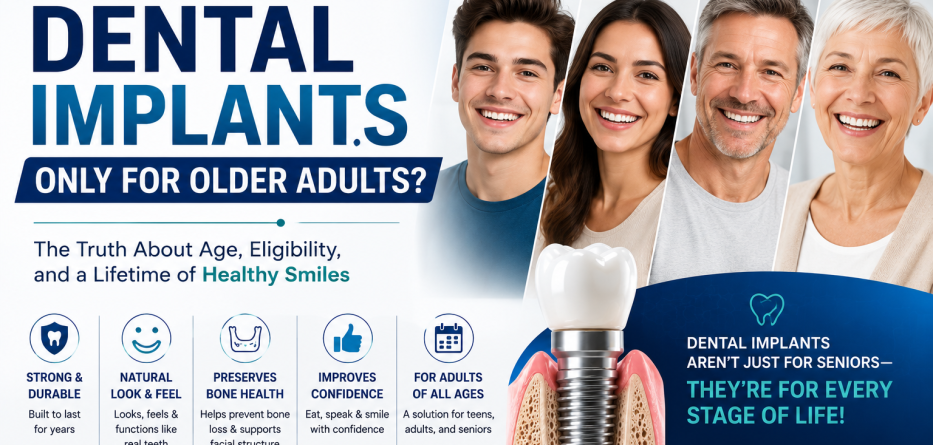
When many people hear the term “dental implants,” they often picture older adults replacing teeth lost due to age-related dental issues. While dental implants are certainly popular among seniors, they are not exclusively designed for older individuals.
In fact, adults of various ages choose dental implants to restore missing teeth caused by accidents, sports injuries, gum disease, tooth decay, or congenital conditions. Modern dental implant technology has made tooth replacement more effective and accessible for younger adults than ever before.
So, are dental implants only for older adults? The short answer is no. Dental implants can be an excellent solution for many healthy adults regardless of age.
In this article, we’ll explore who can benefit from dental implants, age requirements, common misconceptions, and why younger patients are increasingly choosing implants to restore their smiles.
What Are Dental Implants?
Dental implants are artificial tooth roots made from biocompatible titanium that are surgically placed into the jawbone. Over time, the implant fuses with the bone through a process called osseointegration, creating a strong foundation for a dental crown, bridge, or denture.
Unlike removable dentures, dental implants are designed to function like natural teeth, providing long-term stability, comfort, and aesthetics.
Why People Think Dental Implants Are Only for Seniors
There are several reasons why this misconception exists.
Tooth Loss Is More Common in Older Adults
As people age, they are more likely to experience:
- Tooth decay
- Gum disease
- Wear and tear on teeth
- Previous dental work failure
Because older adults experience higher rates of tooth loss, dental implants are frequently associated with this age group.
Traditional Marketing Focused on Seniors
Historically, many dental implant advertisements targeted retirees and seniors seeking alternatives to dentures. This created the perception that implants were primarily an older adult treatment.
Dentures Are Often Associated with Aging
Since dental implants are commonly used to support dentures, many people assume implants are only necessary later in life.
Can Younger Adults Get Dental Implants?
Absolutely.
Many adults in their 20s, 30s, and 40s receive dental implants every year.
Common reasons include:
- Sports injuries
- Car accidents
- Severe tooth decay
- Failed root canals
- Congenitally missing teeth
- Advanced gum disease
For younger adults, implants often provide a more permanent and natural-looking solution compared to bridges or removable appliances.
What Is the Minimum Age for Dental Implants?
Age itself is not the deciding factor.
The most important consideration is whether jawbone growth has been completed.
General Guidelines
| Patient Group | Implant Eligibility |
|---|---|
| Children | Usually Not Recommended |
| Teenagers | Depends on Bone Growth |
| Adults (18+) | Typically Eligible |
| Seniors | Often Excellent Candidates |
Most dentists recommend waiting until jaw development is complete before placing implants.
This generally occurs around:
- 17–18 years for females
- 18–21 years for males
Advanced imaging helps determine whether growth is complete.
Why Younger Adults Are Choosing Dental Implants
Long-Term Solution
A dental implant can last for decades with proper care.
Many younger patients prefer:
- Fewer future replacements
- Long-term stability
- Better oral health outcomes
Better Appearance
Dental implants closely mimic natural teeth.
Benefits include:
- Natural smile
- Improved confidence
- Seamless appearance
- Preservation of facial structure
Improved Function
Unlike removable options, implants allow patients to:
- Eat comfortably
- Speak clearly
- Maintain an active lifestyle
- Avoid worrying about movement or slippage
Benefits of Dental Implants at Any Age
Preserve Jawbone Health
When a tooth is lost, the jawbone begins shrinking due to lack of stimulation.
Dental implants help maintain:
- Bone density
- Facial contours
- Oral health
Protect Neighboring Teeth
Unlike traditional bridges, implants do not require adjacent healthy teeth to be altered.
Improve Quality of Life
Patients often report:
- Increased confidence
- Better social interactions
- Improved comfort
- Enhanced overall well-being
Are Seniors Still Good Candidates for Dental Implants?
Yes.
In many cases, seniors are excellent candidates.
Age alone does not prevent successful implant treatment.
Factors dentists evaluate include:
- Overall health
- Bone density
- Gum health
- Medical history
- Lifestyle habits
Many patients in their 70s and 80s successfully receive dental implants and enjoy significant improvements in quality of life.
Who Is a Good Candidate for Dental Implants?
Ideal candidates generally have:
- Healthy gums
- Adequate jawbone support
- Good oral hygiene habits
- Controlled medical conditions
- Commitment to follow-up care
Even patients with bone loss may qualify through bone grafting procedures.
Are There Any Age Limits for Dental Implants?
There is no upper age limit for dental implant treatment.
As long as a patient is healthy enough for minor oral surgery and has sufficient bone support, age is rarely a barrier.
Many successful implant patients are well into their 70s, 80s, and beyond.
Common Myths About Dental Implants and Age
Myth 1: Dental Implants Are Only for Seniors
Fact: Adults of all ages can benefit from implants.
Myth 2: You’re Too Young for Implants
Fact: Once jaw growth is complete, many younger adults are excellent candidates.
Myth 3: Older Adults Can’t Get Implants
Fact: Healthy seniors often achieve excellent implant outcomes.
Myth 4: Dentures Are the Only Option for Seniors
Fact: Implant-supported dentures offer greater stability and comfort.
Frequently Asked Questions
Can a 25-year-old get dental implants?
Yes. Many adults in their 20s receive implants due to injury, tooth decay, or congenital tooth loss.
Is there a maximum age for dental implants?
No. Health status matters more than age.
Are implants better than bridges for younger adults?
In many cases, implants preserve surrounding teeth and provide longer-lasting results.
Can teenagers get dental implants?
Only after jaw growth is complete.
How long do dental implants last?
With proper care, implants can last 20 years or more and often a lifetime.
Conclusion
Dental implants are not just for older adults. They are a versatile and effective tooth replacement solution for healthy adults of nearly any age. Whether you’re in your 20s recovering from a sports injury or in your 70s looking for a stable alternative to dentures, dental implants can restore function, appearance, and confidence.
The best way to determine if you’re a candidate is through a professional dental evaluation. In most cases, age is far less important than overall oral health and bone support. For many patients, dental implants provide a long-term investment in both their smile and their quality of life.
