

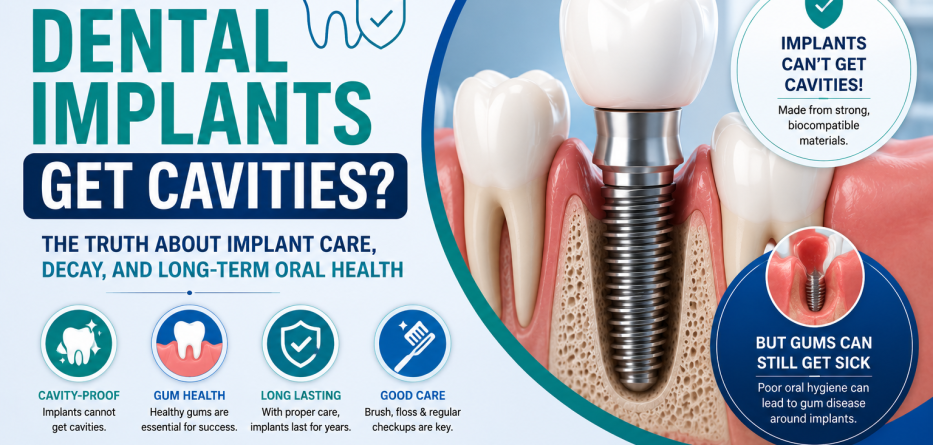
Dental implants are one of the most reliable and long-lasting solutions for replacing missing teeth. They look natural, function like real teeth, and can last for decades with proper care. However, many patients considering dental implants ask an important question: Can dental implants get cavities?
The short answer is no—dental implants themselves cannot develop cavities. However, that doesn’t mean they are completely maintenance-free. The gums and surrounding tissues supporting the implant can still develop problems if oral hygiene is neglected.
In this article, we’ll explain why dental implants don’t get cavities, what risks they can face, and how to keep your implant healthy for years to come.
What Are Dental Implants Made Of?
To understand why dental implants cannot get cavities, it’s important to know what they’re made from.
A dental implant consists of three main components:
Implant Post
A titanium or zirconia post surgically placed into the jawbone.
Abutment
A connector piece that attaches the implant to the restoration.
Dental Crown
A custom-made artificial tooth typically crafted from porcelain, ceramic, or zirconia.
Unlike natural teeth, these materials are not vulnerable to bacterial decay.
Can Dental Implants Get Cavities?
The Simple Answer: No
Dental implants cannot get cavities because they are made from artificial materials rather than natural tooth enamel and dentin.
Tooth decay occurs when bacteria in the mouth produce acids that break down natural tooth structure. Since implants contain no living tooth tissue, cavities cannot form on the implant itself.
Quick Definition
Dental implants cannot develop cavities because they are made from materials such as titanium and porcelain, which are resistant to decay-causing bacteria and acids.
Why Natural Teeth Get Cavities
Natural teeth contain enamel, dentin, and pulp.
When plaque accumulates on the teeth, bacteria feed on sugars from food and produce acids. These acids gradually weaken enamel and create cavities.
The cavity process involves:
- Plaque buildup
- Acid production
- Enamel erosion
- Tooth decay progression
Since dental implants contain no enamel, they are immune to this process.
If Implants Can’t Get Cavities, What Problems Can They Develop?
Although cavities aren’t a concern, dental implants can still experience other complications.
Peri-Implant Mucositis
This condition is similar to gingivitis around natural teeth.
Symptoms include:
- Red gums
- Swelling
- Bleeding while brushing
- Tenderness
The good news is that it is usually reversible with proper treatment.
Peri-Implantitis
Peri-implantitis is a more serious infection affecting the tissues and bone surrounding an implant.
Symptoms may include:
- Gum recession
- Bone loss
- Implant mobility
- Bleeding gums
- Persistent bad breath
If left untreated, peri-implantitis can eventually lead to implant failure.
Gum Disease Around Implants
Even though the implant cannot decay, the surrounding gums remain vulnerable to bacterial infection.
Healthy gums are essential for long-term implant success.
Why Oral Hygiene Is Still Important
Many patients mistakenly believe implants require less care than natural teeth.
In reality, excellent oral hygiene remains essential.
Benefits of proper care include:
- Healthy gums
- Reduced risk of infection
- Longer implant lifespan
- Better oral health
- Improved appearance
Daily care helps protect the tissues supporting the implant.
How to Care for Dental Implants
Brush Twice Daily
Use a soft-bristled toothbrush and non-abrasive toothpaste.
Floss Every Day
Special implant floss or interdental brushes can help clean difficult-to-reach areas.
Use Antibacterial Mouthwash
This can help reduce bacterial buildup around implants.
Schedule Regular Dental Checkups
Professional cleanings help remove plaque and monitor implant health.
Avoid Tobacco Products
Smoking significantly increases the risk of implant complications.
How Long Do Dental Implants Last?
One reason implants are so popular is their longevity.
With proper maintenance:
| Dental Restoration | Average Lifespan |
|---|---|
| Dental Implant | 20+ Years |
| Dental Bridge | 5–15 Years |
| Dentures | 5–10 Years |
Many implants successfully function for a lifetime.
Signs Your Dental Implant May Need Attention
Although cavities are not possible, patients should watch for:
- Bleeding gums
- Persistent swelling
- Pain around the implant
- Gum recession
- Loose restoration
- Difficulty chewing
- Bad breath
Prompt treatment can prevent more serious complications.
Dental Implants vs Natural Teeth
| Feature | Natural Teeth | Dental Implants |
| Can Get Cavities | Yes | No |
| Can Develop Gum Disease | Yes | Yes |
| Requires Brushing | Yes | Yes |
| Requires Flossing | Yes | Yes |
| Can Experience Bone Loss | Yes | Yes |
| Needs Professional Cleaning | Yes | Yes |
While implants are cavity-proof, they still require regular care and maintenance.
Common Myths About Dental Implants
Myth #1: Implants Never Need Cleaning
False. Plaque can accumulate around implants just like natural teeth.
Myth #2: Dental Implants Cannot Fail
False. Poor oral hygiene and gum disease can compromise implant stability.
Myth #3: Once an Implant Is Placed, No Further Dental Visits Are Needed
False. Routine checkups are essential for monitoring implant health.
Frequently Asked Questions
Can a dental implant crown get a cavity?
No. Crowns attached to implants are made from materials such as porcelain or zirconia and cannot decay.
Can food get trapped around implants?
Yes. Food particles can accumulate around implants and should be removed through proper brushing and flossing.
What is peri-implantitis?
Peri-implantitis is an infection affecting the tissues and bone surrounding a dental implant.
Do implants require special toothpaste?
Most dentists recommend a non-abrasive toothpaste to avoid damaging implant restorations.
How often should implant patients visit the dentist?
Most patients benefit from professional examinations and cleanings every six months.
Conclusion
So, can dental implants get cavities?
No. Dental implants themselves cannot develop cavities because they are made from artificial materials that do not decay. However, the gums and bone supporting the implant can still develop infections and other complications if oral hygiene is neglected.
By brushing, flossing, attending regular dental visits, and maintaining healthy habits, patients can protect their implants and enjoy a strong, healthy smile for many years to come. While implants may be cavity-proof, they still require the same level of care and attention as natural teeth to ensure long-term success.

