

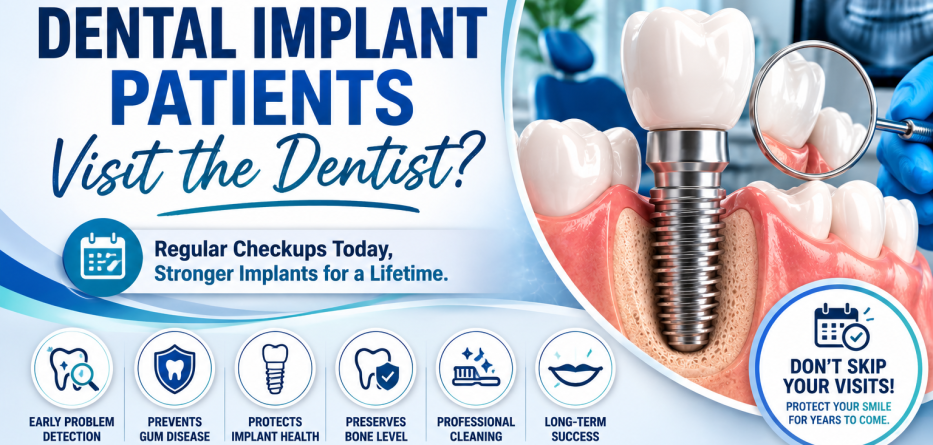
Dental implants are one of the most reliable and long-lasting solutions for replacing missing teeth. While implants are designed to be durable and function like natural teeth, they still require regular professional care to maintain their health and longevity.
Many patients assume that because dental implants cannot develop cavities, routine dental visits are less important. However, regular checkups remain essential for protecting both the implant and the surrounding gums and bone.
So, how often should dental implant patients visit the dentist? The answer depends on several factors, including oral health, lifestyle habits, and individual risk factors. In this guide, we’ll explain the recommended dental visit schedule for implant patients and why these appointments play a critical role in long-term implant success.
Why Regular Dental Visits Matter After Dental Implant Treatment
Dental implants have impressive success rates, often exceeding 95%. However, their long-term success depends heavily on ongoing maintenance and professional monitoring.
Regular dental visits help:
- Detect early signs of gum disease
- Monitor implant stability
- Prevent peri-implantitis
- Remove plaque and tartar buildup
- Assess bone health around the implant
- Extend implant lifespan
Even though the implant itself cannot decay, the surrounding tissues remain vulnerable to infection and inflammation.
How Often Should Dental Implant Patients See the Dentist?
General Recommendation
Most dental professionals recommend visiting the dentist every six months for routine examinations and cleanings.
These appointments allow your dentist to:
- Evaluate implant health
- Check gum condition
- Examine bite alignment
- Monitor surrounding teeth
- Perform professional cleaning
For many patients, twice-yearly visits are sufficient to maintain excellent implant health.
When More Frequent Visits May Be Necessary
Some implant patients may benefit from more frequent appointments.
Every 3 to 4 Months
Your dentist may recommend more frequent visits if you have:
- A history of gum disease
- Multiple dental implants
- Diabetes
- Smoking habits
- Poor oral hygiene
- Previous implant complications
These additional visits help detect problems before they become serious.
What Happens During an Implant Maintenance Appointment?
Dental implant checkups involve more than a routine cleaning.
Comprehensive Examination
Your dentist will assess the following:
- Implant stability
- Gum tissue health
- Signs of inflammation
- Bone support
- Bite pressure
Professional Cleaning
Specialized instruments are used to clean around implants without damaging their surface.
Benefits include:
- Removal of plaque buildup
- Reduction of bacteria
- Prevention of gum inflammation
- Improved implant longevity
Digital X-Rays
Periodic X-rays help evaluate:
- Bone levels around the implant
- Implant integration
- Hidden complications
Early detection significantly improves treatment outcomes.
Signs You Should Schedule an Appointment Sooner
Don’t wait for your next routine visit if you notice:
- Bleeding gums around the implant
- Swelling or redness
- Persistent bad breath
- Pain or discomfort
- Implant mobility
- Difficulty chewing
These symptoms may indicate peri-implant disease or other complications requiring immediate attention.
Understanding Peri-Implantitis
One of the primary reasons regular dental visits are important is the prevention of peri-implantitis.
What Is Peri-Implantitis?
Peri-implantitis is an inflammatory condition that affects the tissues surrounding a dental implant.
It can cause:
- Gum recession
- Bone loss
- Implant instability
- Implant failure if left untreated
The good news is that routine examinations often detect peri-implantitis in its early stages when treatment is most effective.
How Professional Cleanings Protect Dental Implants
Even patients with excellent brushing and flossing habits can develop plaque buildup in hard-to-reach areas.
Professional cleanings help:
- Remove hardened tartar
- Reduce bacterial accumulation
- Protect gum tissues
- Preserve bone support
- Maintain oral freshness
Think of these visits as preventive maintenance for your investment.
Daily Care Between Dental Visits
Professional care works best when combined with proper home care.
Recommended Daily Habits
Brush Twice Daily
Use a soft-bristled toothbrush and non-abrasive toothpaste.
Floss Every Day
Special implant floss or interdental brushes can help clean around implant restorations.
Use antimicrobial mouthwash.
When recommended by your dentist, mouthwash can help reduce harmful bacteria.
Avoid Tobacco Products
Smoking significantly increases the risk of implant complications and failure.
Factors That Influence Dental Visit Frequency
Several factors determine how often implant patients should visit the dentist.
Oral Hygiene Quality
Patients with excellent oral hygiene may require fewer maintenance visits.
Medical Conditions
Certain health conditions increase the need for closer monitoring.
Examples include:
- Diabetes
- Autoimmune disorders
- Osteoporosis
Number of Implants
Patients with full-mouth restorations often require more comprehensive maintenance programs.
History of Gum Disease
Individuals who previously experienced periodontal disease may benefit from more frequent professional care.
Long-Term Benefits of Regular Implant Checkups
Consistent dental visits offer several advantages.
Improved Implant Longevity
Routine monitoring helps prevent conditions that can shorten implant lifespan.
Lower Treatment Costs
Preventive care often costs far less than correcting advanced implant complications.
Better Oral Health
Regular visits protect both implants and natural teeth.
Greater Peace of Mind
Knowing your implants are being professionally monitored provides confidence and reassurance.
Frequently Asked Questions
Can dental implants last forever?
With proper care and regular dental visits, many implants can last several decades and potentially a lifetime.
Do implants need professional cleanings?
Yes. Professional cleanings help prevent gum disease and implant-related complications.
What happens if I skip dental checkups?
Missed appointments can allow plaque buildup, gum disease, and bone loss to progress unnoticed.
How often are dental X-rays needed for implants?
Your dentist will determine the schedule based on your oral health and implant history, but periodic imaging is often recommended.
Are implant cleanings different from regular cleanings?
Yes. Dentists often use specialized instruments designed specifically for implant maintenance.
Conclusion
So, how often should dental implant patients visit the dentist? For most individuals, a dental examination and professional cleaning every six months is the standard recommendation. However, patients with risk factors such as gum disease, smoking, or certain medical conditions may benefit from more frequent visits.
Regular dental appointments play a vital role in protecting your investment, preserving oral health, and ensuring your dental implants remain strong, stable, and functional for many years to come. By combining professional care with excellent home hygiene habits, patients can maximize the lifespan and success of their dental implants.

