

If you’re considering replacing a missing tooth, you’ve likely heard that dental implants are the closest thing to natural teeth. But one of the most common questions patients ask is, “Are dental implants a permanent solution?”
The short answer is yes—dental implants are designed to be a long-term and often permanent solution for missing teeth. However, their longevity depends on several factors, including oral hygiene, lifestyle habits, overall health, and regular dental care.
In this article, we’ll explore how long dental implants last, what makes them so durable, and what you can do to maximize their lifespan.
What Are Dental Implants?
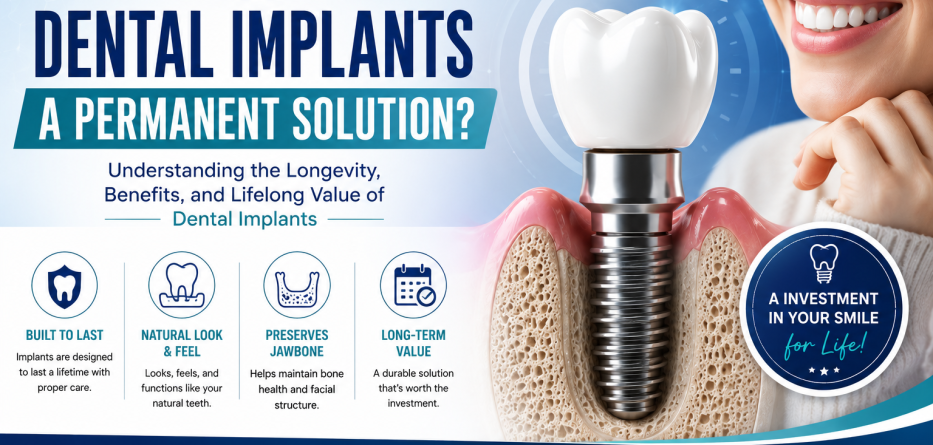
A dental implant is an artificial tooth root made from biocompatible titanium or zirconia. The implant is surgically placed into the jawbone, where it fuses with the bone through a process called osseointegration.
A complete dental implant consists of:
- Implant post (artificial root)
- Abutment (connector piece)
- Dental crown (visible replacement tooth)
Once fully healed, the implant functions much like a natural tooth.
Are Dental Implants Truly Permanent?
Dental implants are considered the most permanent tooth replacement option available today.
The implant post itself is designed to last for decades and, in many cases, a lifetime. Because it becomes integrated with the jawbone, it provides exceptional stability and durability.
Quick Answer
Yes, dental implants are intended to be a permanent solution. While the implant post can last a lifetime, the crown attached to it may eventually need replacement due to normal wear and tear.
How Long Do Dental Implants Last?
Implant Post
The titanium implant post is the most durable component.
With proper care, studies show that implants can last:
- 20+ years
- 30+ years
- Often a lifetime
Many patients never need their implant replaced.
Dental Crown
The crown experiences daily chewing forces and may need replacement after:
- 10–15 years
- 15–20 years in many cases
- Longer with excellent care
Why Dental Implants Last So Long
Osseointegration Creates a Strong Foundation
Unlike dentures or bridges, implants become part of the jawbone through osseointegration.
Benefits include:
- Superior stability
- Natural function
- Reduced movement
- Long-term durability
This biological bond is the primary reason implants last significantly longer than other tooth replacement options.
High-Quality Materials
Dental implants are manufactured using advanced materials such as:
- Medical-grade titanium
- Zirconia
- Porcelain crowns
- Ceramic restorations
These materials are highly resistant to corrosion and wear.
Preservation of Jawbone Health
When a tooth is lost, the jawbone begins shrinking due to lack of stimulation.
Dental implants help:
- Preserve bone density
- Maintain facial structure
- Prevent bone deterioration
A healthy jawbone contributes to long-term implant success.
Dental Implants vs Other Tooth Replacement Options
| Feature | Dental Implants | Dental Bridges | Dentures |
|---|---|---|---|
| Lifespan | 20+ Years to Lifetime | 5–15 Years | 5–10 Years |
| Bone Preservation | Yes | No | No |
| Stability | Excellent | Good | Moderate |
| Maintenance | Similar to Natural Teeth | Moderate | High |
| Replacement Frequency | Very Low | Moderate | High |
Dental implants consistently offer the best long-term value.
Factors That Affect Implant Longevity
Oral Hygiene
Poor oral hygiene can lead to gum disease around implants.
To protect your investment:
- Brush twice daily
- Floss regularly
- Use antimicrobial rinses if recommended
- Attend professional cleanings
Smoking
Smoking significantly increases the risk of implant complications.
Potential effects include:
- Delayed healing
- Reduced blood flow
- Higher failure rates
- Increased risk of peri-implantitis
Patients who quit smoking generally experience better outcomes.
Overall Health
Certain medical conditions may impact implant longevity, including:
- Uncontrolled diabetes
- Severe osteoporosis
- Immune system disorders
Proper medical management can help maintain implant health.
Teeth Grinding (Bruxism)
Chronic grinding places excessive pressure on implants.
Dentists may recommend:
- Custom nightguards
- Bite adjustments
- Stress management techniques
These measures help protect both implants and natural teeth.
What Can Cause a Dental Implant to Fail?
Although dental implant success rates exceed 95%, failures can occur.
Common causes include:
Peri-Implantitis
A bacterial infection affecting tissues around the implant.
Symptoms may include:
- Red gums
- Bleeding
- Swelling
- Bone loss
Poor Osseointegration
In rare cases, the implant may not properly fuse with the jawbone.
Physical Trauma
Accidents or excessive force can damage the implant or crown.
Lack of Maintenance
Skipping dental visits can allow problems to develop unnoticed.
Signs Your Dental Implant May Need Attention
Contact your dentist if you notice:
- Implant movement
- Persistent pain
- Swollen gums
- Bleeding around the implant
- Difficulty chewing
- Loose crown
Early intervention often prevents more serious complications.
How to Make Your Dental Implants Last a Lifetime
Follow These Best Practices
- Brush at least twice daily.
- Floss around implants every day.
- Schedule routine dental checkups.
- Avoid tobacco products.
- Wear a nightguard if you grind your teeth.
- Maintain a healthy diet.
- Address dental problems promptly.
Consistent care significantly increases the likelihood of lifelong success.
Are Dental Implants Worth the Investment?
Although implants generally have a higher upfront cost than dentures or bridges, they often provide better long-term value.
Benefits include:
- Fewer replacements
- Greater comfort
- Better chewing function
- Improved confidence
- Preservation of oral health
Many patients find that implants save money over time due to their durability and reduced maintenance needs.
Who Is a Good Candidate for Long-Term Implant Success?
Ideal candidates typically have:
- Healthy gums
- Adequate jawbone density
- Good oral hygiene habits
- Non-smoking lifestyle
- Commitment to regular dental care
Even patients with bone loss may qualify through advanced procedures such as bone grafting.
Frequently Asked Questions
Can dental implants last forever?
The implant post can often last a lifetime with proper care, although the crown may need replacement after many years.
Do dental implants decay?
No. Dental implants cannot develop cavities, but the surrounding gums and bone still require care.
How often do dental implants fail?
Modern dental implants have success rates exceeding 95% when placed and maintained properly.
Are implants better than dentures?
For many patients, implants offer superior stability, comfort, and longevity.
What happens if a dental implant crown wears out?
The crown can typically be replaced without removing the implant itself.
Conclusion
So, are dental implants a permanent solution?
In most cases, yes. Dental implants are designed to provide a long-lasting and often lifetime solution for missing teeth. Thanks to osseointegration, durable materials, and modern implant technology, they offer unmatched stability, functionality, and oral health benefits.
While no dental treatment can guarantee permanence under every circumstance, dental implants remain the closest option available to replacing a natural tooth permanently. With proper care and regular dental visits, many patients enjoy the benefits of their implants for decades—or even a lifetime.

