

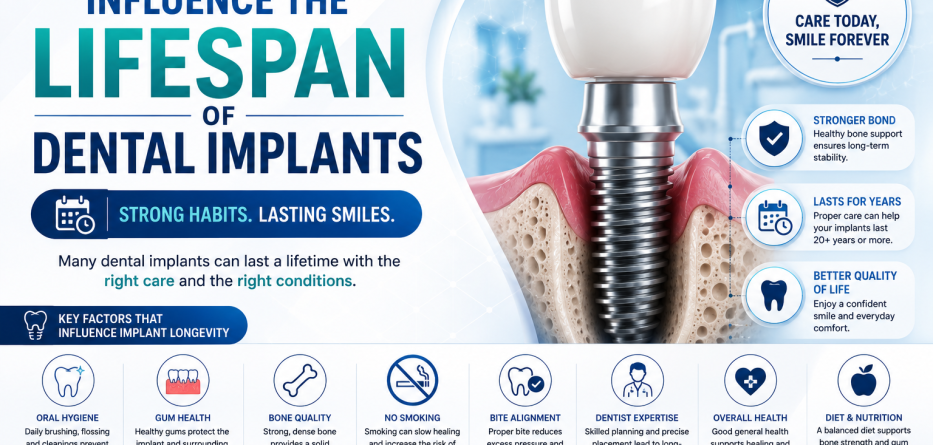
Dental implants are widely regarded as one of the most reliable and long-lasting solutions for replacing missing teeth. With proper care, many dental implants can last 20 years or more, and some even last a lifetime. However, their longevity is not guaranteed. Several factors can influence how long a dental implant remains healthy, functional, and stable.
Understanding these factors can help patients protect their investment and maximize the success of their implant treatment. Whether you’re considering dental implants or already have them, knowing what affects their lifespan is essential for maintaining long-term oral health.
In this article, we’ll explore the most important factors that influence the lifespan of dental implants and provide practical tips for keeping them in excellent condition.
How Long Do Dental Implants Typically Last?
Dental implants consist of three main components:
- Implant post (placed in the jawbone)
- Abutment (connector piece)
- Dental crown (visible tooth restoration)
The titanium implant post can often last a lifetime, while the crown may need replacement after 10 to 15 years due to normal wear and tear.
Average Lifespan
| Component | Average Lifespan |
|---|---|
| Implant Post | 20+ Years to Lifetime |
| Abutment | 15–20 Years |
| Crown | 10–15 Years |
Proper maintenance plays a significant role in achieving these timelines.
1. Oral Hygiene Habits
One of the most important factors affecting implant longevity is daily oral hygiene.
Although implants cannot develop cavities, the surrounding gums and bone remain vulnerable to infection.
Poor oral hygiene can lead to:
- Gum inflammation
- Peri-implant mucositis
- Peri-implantitis
- Bone loss around the implant
Best Practices
- Brush twice daily
- Floss around implants regularly
- Use antibacterial mouthwash if recommended
- Schedule professional cleanings
Consistent oral care significantly increases the chances of long-term implant success.
2. Quality of Osseointegration
Osseointegration is the biological process that allows the implant to fuse with the jawbone.
A strong bond between the implant and bone creates a stable foundation that can withstand years of chewing forces.
Factors affecting osseointegration include:
- Bone density
- Surgical technique
- Healing conditions
- Overall health
Successful osseointegration is one of the strongest predictors of implant longevity.
3. Bone Quality and Jawbone Density
Dental implants rely on healthy bone support.
Patients with strong jawbone density often experience the following:
- Better implant stability
- Faster healing
- Higher success rates
Insufficient bone volume may require procedures such as bone grafting before implant placement.
Bone loss can occur due to:
- Long-term tooth loss
- Periodontal disease
- Trauma
- Certain medical conditions
4. Smoking and Tobacco Use
Smoking is one of the most significant risk factors for implant complications.
Tobacco use reduces blood flow to the gums and impairs healing.
Research has shown that smokers may experience:
- Delayed osseointegration
- Higher infection rates
- Increased implant failure risk
- Greater bone loss
Patients who quit smoking before and after treatment often achieve better outcomes.
5. Gum Health
Healthy gums play a critical role in protecting dental implants.
The gum tissue acts as a barrier against harmful bacteria.
Conditions that threaten implant longevity include:
- Gingivitis
- Periodontitis
- Peri-implantitis
Regular dental examinations help detect and treat gum issues before they compromise the implant.
6. The Skill and Experience of the Dentist
The success of dental implant treatment begins with proper planning and placement.
An experienced implant dentist can:
- Evaluate bone quality accurately
- Use advanced imaging technology
- Position implants precisely
- Reduce surgical complications
Proper implant placement improves force distribution and long-term stability.
7. Bite Alignment and Occlusion
Excessive pressure on an implant can shorten its lifespan.
Poor bite alignment may result in:
- Crown fractures
- Screw loosening
- Bone stress
- Implant failure
Dentists carefully adjust the bite to ensure forces are distributed evenly across the restoration.
8. Teeth Grinding (Bruxism)
Many people unconsciously grind or clench their teeth during sleep.
This habit can place excessive stress on implants.
Potential consequences include the following:
- Crown wear
- Component damage
- Implant overload
- Bone loss
Patients with bruxism may benefit from wearing a custom nightguard.
9. Overall Health and Medical Conditions
General health directly affects healing and implant maintenance.
Certain conditions may increase the risk of complications, including:
- Uncontrolled diabetes
- Autoimmune disorders
- Osteoporosis
- Immune system disorders
Proper medical management can help improve implant outcomes.
10. Diet and Nutrition
Healthy nutrition supports gum health and bone maintenance.
Important nutrients include:
- Calcium
- Vitamin D
- Protein
- Phosphorus
- Magnesium
A balanced diet promotes stronger bone structure and better long-term implant support.
11. Regular Dental Checkups
Routine dental visits allow professionals to monitor implant health.
Benefits include:
- Early detection of problems
- Professional cleaning
- Monitoring bone levels
- Checking crown integrity
Most dentists recommend implant evaluations every six months.
12. Implant Material and Technology
Modern dental implants are manufactured using advanced materials and technologies.
Features that contribute to longevity include:
- Medical-grade titanium
- Surface-treated implants
- Precision engineering
- Improved implant designs
Advancements in implant technology continue to improve long-term success rates.
Common Reasons Dental Implants Fail
Although implant success rates exceed 95% in many cases, failures can occur.
Early Failure
Occurs before complete osseointegration.
Possible causes:
- Infection
- Poor healing
- Surgical complications
Late Failure
Occurs years after placement.
Common reasons include:
- Peri-implantitis
- Smoking
- Excessive bite forces
- Poor oral hygiene
Tips to Make Your Dental Implants Last Longer
Follow these proven strategies:
- Maintain excellent oral hygiene.
- Attend regular dental checkups.
- Avoid smoking and tobacco products.
- Wear a nightguard if you grind your teeth.
- Eat a balanced diet rich in calcium and vitamin D.
- Address gum disease promptly.
- Follow all post-treatment instructions.
These habits can dramatically improve implant longevity.
Dental Implant Longevity Comparison
| Tooth Replacement Option | Average Lifespan |
| Dental Implants | 20+ Years |
| Dental Bridges | 5–15 Years |
| Partial Dentures | 5–10 Years |
| Complete Dentures | 5–10 Years |
This long-term durability is one of the main reasons dental implants are considered the gold standard for tooth replacement.
Frequently Asked Questions
Can dental implants last a lifetime?
Yes. With proper care and maintenance, many dental implant posts last a lifetime.
What is the biggest cause of implant failure?
Peri-implantitis, poor oral hygiene, and smoking are among the leading causes of implant failure.
Do dental implants require special cleaning?
No. Implants should be brushed and flossed similarly to natural teeth, although dentists may recommend specialized cleaning tools.
Does age affect implant lifespan?
Age alone is not typically a limiting factor. Overall health and bone quality are more important.
Can a failed implant be replaced?
In many cases, yes. Additional treatment such as bone grafting may be necessary before replacement.
Conclusion
Dental implants are one of the most durable and successful tooth replacement options available today. However, their longevity depends on several factors, including oral hygiene, bone health, smoking habits, bite alignment, overall health, and professional care.
By understanding the factors that influence the lifespan of dental implants and adopting healthy habits, patients can enjoy a strong, functional, and beautiful smile for decades. Investing in proper maintenance today can help ensure your dental implants continue performing at their best well into the future.

