
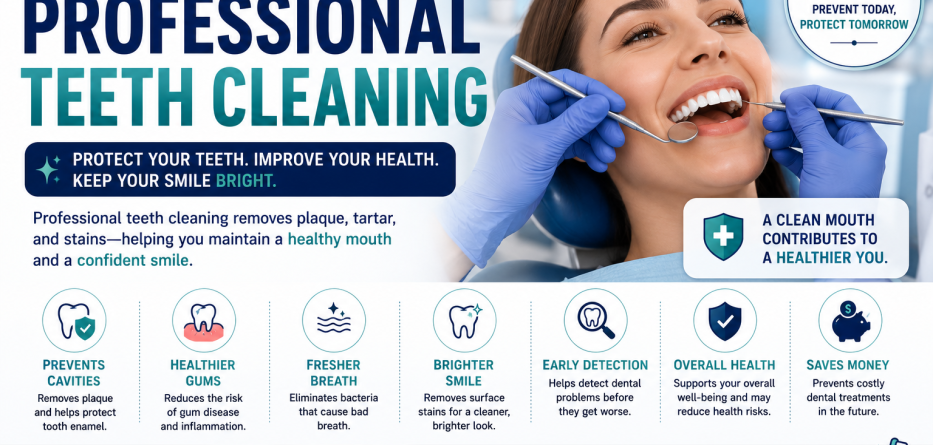
Many people brush and floss daily, believing that’s enough to maintain good oral health. While home care is essential, it cannot completely replace the benefits of professional teeth cleaning. Over time, plaque and tartar can build up in areas that are difficult to reach with regular brushing and flossing, increasing the risk of cavities, gum disease, and bad breath.
Professional teeth cleaning is one of the most effective preventive dental treatments available. It helps keep your teeth and gums healthy while allowing dentists to detect potential oral health issues early.
In this article, we’ll explore the key benefits of professional teeth cleaning, how the procedure works, and why regular dental visits are essential for maintaining a healthy smile.
What Is Professional Teeth Cleaning?
Professional teeth cleaning, also known as dental prophylaxis, is a preventive dental procedure performed by a dentist or dental hygienist to remove plaque, tartar, and stains from the teeth.
Unlike routine brushing at home, professional cleaning uses specialized instruments and techniques to thoroughly clean areas that are difficult to reach.
Professional Cleaning Typically Includes:
- Oral examination
- Plaque removal
- Tartar (calculus) removal
- Teeth polishing
- Flossing
- Fluoride treatment (when recommended)
Regular cleanings help maintain both oral and overall health.
Why Is Professional Teeth Cleaning Important?
Plaque is a sticky film of bacteria that constantly forms on teeth. If not removed properly, it hardens into tartar, which cannot be removed by brushing alone.
Professional cleaning helps:
- Prevent dental problems
- Maintain healthy gums
- Protect natural teeth
- Improve oral hygiene
- Support overall wellness
1. Prevents Cavities
One of the most significant benefits of professional teeth cleaning is cavity prevention.
Plaque contains bacteria that produce acids capable of damaging tooth enamel.
How Cleanings Help
- Remove plaque buildup
- Reduce harmful bacteria
- Protect tooth enamel
- Lower cavity risk
Regular cleanings significantly reduce the likelihood of tooth decay.
2. Reduces the Risk of Gum Disease
Gum disease is one of the leading causes of tooth loss in adults.
When plaque accumulates along the gumline, it can trigger inflammation and infection.
Benefits for Gum Health
- Removes plaque and tartar
- Reduces gum inflammation
- Prevents gingivitis
- Lowers risk of periodontitis
Healthy gums provide the foundation for healthy teeth.
3. Eliminates Tartar Buildup
Tartar forms when plaque hardens on tooth surfaces.
Unlike plaque, tartar cannot be removed with regular brushing.
Why Tartar Removal Matters
Tartar can:
- Irritate gums
- Harbor bacteria
- Increase cavity risk
- Contribute to gum disease
Professional cleaning effectively removes tartar deposits and helps maintain oral health.
4. Freshens Breath
Persistent bad breath (halitosis) is often caused by bacteria trapped in plaque and tartar.
Professional cleaning removes these bacterial deposits and helps improve oral hygiene.
Benefits Include
- Fresher breath
- Reduced bacterial buildup
- Improved oral cleanliness
- Increased confidence
Many patients notice immediate improvement after a cleaning appointment.
5. Brightens Your Smile
Over time, teeth can become stained by:
- Coffee
- Tea
- Wine
- Tobacco
- Certain foods
Professional polishing helps remove many surface stains, leaving teeth cleaner and brighter.
Cosmetic Benefits
- Improved appearance
- Cleaner-looking teeth
- Enhanced confidence
- More attractive smile
While not a whitening treatment, professional cleaning often produces noticeable aesthetic improvements.
6. Detects Oral Health Problems Early
Routine cleaning appointments also serve as preventive examinations.
During the visit, your dentist can identify early signs of:
- Tooth decay
- Gum disease
- Oral infections
- Broken restorations
- Oral cancer
Early detection often leads to simpler and less expensive treatment.
7. Protects Overall Health
Research has shown a strong connection between oral health and overall health.
Poor oral hygiene has been linked to conditions such as the following:
- Heart disease
- Diabetes
- Respiratory infections
- Stroke
Maintaining healthy teeth and gums may contribute to better overall wellness.
8. Helps Prevent Tooth Loss
Advanced gum disease is a major cause of tooth loss.
Regular professional cleanings help protect the supporting structures of the teeth, including:
- Gums
- Bone
- Ligaments
Preventive care can significantly reduce the risk of losing natural teeth.
9. Saves Money on Future Dental Treatments
Preventive dentistry is often more affordable than restorative treatment.
Regular cleanings may help patients avoid the following:
- Fillings
- Root canals
- Gum surgery
- Tooth extractions
- Dental implants
Investing in preventive care today can reduce costly dental procedures later.
10. Supports Long-Term Oral Health
Professional cleanings are an essential part of maintaining lifelong oral health.
Benefits include:
- Healthier gums
- Stronger teeth
- Reduced disease risk
- Better oral hygiene habits
- Improved quality of life
Consistent preventive care helps protect your smile for years to come.
What Happens During a Professional Teeth Cleaning?
Step 1: Oral Examination
The dentist or hygienist examines your teeth and gums.
Step 2: Plaque and Tartar Removal
Special instruments remove hardened deposits from tooth surfaces.
Step 3: Teeth Polishing
A polishing paste removes stains and smooths the teeth.
Step 4: Flossing
Professional flossing removes debris between teeth.
Step 5: Fluoride Treatment (Optional)
Fluoride may be applied to strengthen enamel and reduce cavity risk.
How Often Should You Get Professional Teeth Cleaning?
Most dentists recommend professional cleanings every six months.
However, some individuals may benefit from more frequent visits, including those with:
- Gum disease
- Diabetes
- Smoking habits
- High cavity risk
- Orthodontic appliances
Your dentist can recommend a schedule based on your individual needs.
Professional Teeth Cleaning vs Brushing at Home
| Feature | Home Brushing | Professional Cleaning |
|---|---|---|
| Removes Plaque | Yes | Yes |
| Removes Tartar | No | Yes |
| Detects Dental Problems | No | Yes |
| Removes Surface Stains | Limited | Yes |
| Prevents Gum Disease | Helps | Highly Effective |
| Professional Assessment | No | Yes |
Both are essential for maintaining excellent oral health.
Frequently Asked Questions
Is professional teeth cleaning painful?
Most cleanings are comfortable. Patients with sensitive gums may experience mild discomfort.
Does professional cleaning whiten teeth?
Professional cleaning removes surface stains and can make teeth appear brighter, but it is not a whitening treatment.
How long does a cleaning appointment take?
Most appointments last between 30 and 60 minutes.
Can professional cleaning prevent gum disease?
Yes. Regular cleanings significantly reduce the risk of gingivitis and periodontitis.
Is professional cleaning necessary if I brush every day?
Absolutely. Brushing cannot remove hardened tartar deposits, which require professional removal.
Conclusion
The benefits of professional teeth cleaning extend far beyond having cleaner teeth. Regular cleanings help prevent cavities, reduce the risk of gum disease, eliminate tartar buildup, freshen breath, and support overall health. They also provide an opportunity for early detection of dental problems before they become serious.
By scheduling regular professional teeth cleanings and maintaining good oral hygiene at home, you can enjoy a healthier smile, stronger teeth, and better long-term oral health for years to come.
