
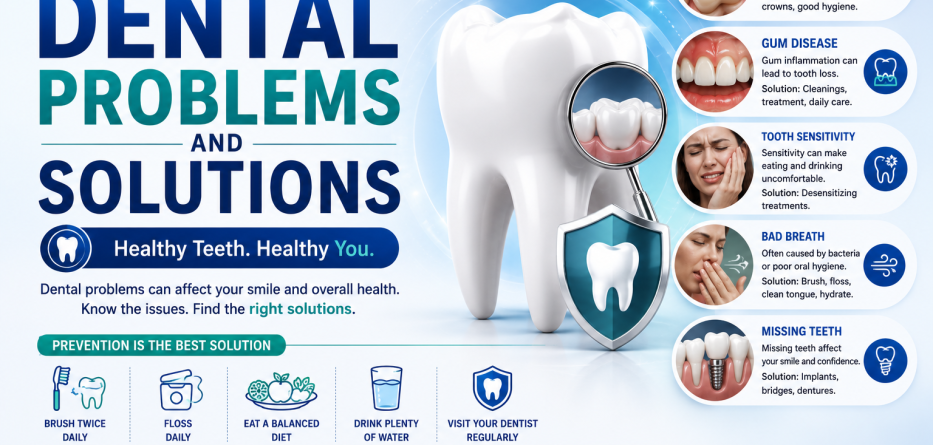
Your oral health plays a vital role in your overall well-being. Healthy teeth and gums help you eat comfortably, speak clearly, and smile confidently. However, millions of people experience dental problems at some point in their lives, ranging from cavities and gum disease to tooth sensitivity and bad breath.
The good news is that most dental issues are preventable and treatable when identified early. Understanding common dental problems and their solutions can help you maintain a healthy smile and avoid costly treatments in the future.
In this guide, we’ll explore the most common dental problems, their causes, symptoms, and effective treatment options.
Why Oral Health Matters
Poor oral health can affect more than just your teeth and gums.
Potential consequences include the following:
- Tooth loss
- Chronic pain
- Difficulty eating
- Speech problems
- Reduced self-confidence
- Increased risk of certain health conditions
Regular dental care is essential for preventing these complications.
1. Tooth Decay (Cavities)
What Is Tooth Decay?
Tooth decay occurs when bacteria in the mouth produce acids that damage the tooth enamel.
Common Symptoms
- Toothache
- Sensitivity to hot or cold foods
- Visible holes in teeth
- Pain when chewing
Solutions
- Professional dental fillings
- Fluoride treatments
- Dental crowns for extensive damage
- Root canal treatment in severe cases
Prevention Tips
- Brush twice daily
- Floss regularly
- Limit sugary foods and drinks
- Visit your dentist regularly
2. Gum Disease
Gum disease is one of the leading causes of tooth loss in adults.
Types of Gum Disease
Gingivitis
The earliest stage of gum disease.
Symptoms include:
- Red gums
- Swollen gums
- Bleeding while brushing
Periodontitis
An advanced form of gum disease that affects the supporting bone.
Symptoms include:
- Gum recession
- Loose teeth
- Persistent bad breath
Solutions
- Professional dental cleanings
- Scaling and root planing
- Improved oral hygiene
- Periodontal treatment
3. Tooth Sensitivity
What Causes Sensitive Teeth?
Sensitivity occurs when the protective enamel wears down or gum recession exposes the tooth roots.
Common triggers include:
- Hot beverages
- Cold foods
- Sweet foods
- Acidic drinks
Solutions
- Desensitizing toothpaste
- Fluoride treatments
- Dental bonding
- Gum grafting in severe cases
4. Bad Breath (Halitosis)
Common Causes
- Poor oral hygiene
- Gum disease
- Dry mouth
- Food particles
- Tobacco use
Solutions
- Daily brushing and flossing
- Tongue cleaning
- Professional dental cleanings
- Staying hydrated
- Treating underlying dental conditions
Persistent bad breath should always be evaluated by a dentist.
5. Tooth Erosion
Tooth erosion occurs when acids gradually wear away tooth enamel.
Causes
- Acidic beverages
- Citrus fruits
- Acid reflux
- Frequent vomiting
Solutions
- Dietary changes
- Fluoride treatments
- Dental bonding
- Crowns for severe erosion
Prevention
- Rinse with water after acidic foods
- Use a straw for acidic drinks
- Avoid excessive soda consumption
6. Cracked or Chipped Teeth
Accidents, sports injuries, and biting hard foods can damage teeth.
Symptoms
- Pain when chewing
- Sharp edges
- Visible cracks
- Temperature sensitivity
Solutions
- Dental bonding
- Veneers
- Crowns
- Root canal treatment if the nerve is affected
Prompt treatment helps prevent further damage.
7. Missing Teeth
Tooth loss can affect oral health, appearance, and confidence.
Causes
- Gum disease
- Trauma
- Severe decay
- Aging
Solutions
Dental Implants
The most durable and natural-looking replacement option.
Dental Bridges
Replace one or more missing teeth.
Dentures
Suitable for multiple missing teeth or full arch replacement.
Replacing missing teeth helps preserve jawbone health and chewing function.
8. Teeth Grinding (Bruxism)
Many people grind or clench their teeth during sleep without realizing it.
Symptoms
- Jaw pain
- Headaches
- Tooth wear
- Tooth fractures
Solutions
- Custom nightguards
- Stress management
- Bite adjustments
- Orthodontic treatment if necessary
9. Impacted Wisdom Teeth
Wisdom teeth often lack sufficient space to erupt properly.
Symptoms
- Pain
- Swelling
- Infection
- Difficulty opening the mouth
Solutions
- Monitoring by a dentist
- Wisdom tooth extraction
Early evaluation helps prevent complications.
10. Oral Infections and Abscesses
Dental infections require immediate attention.
Symptoms
- Severe tooth pain
- Swelling
- Fever
- Bad taste in the mouth
Solutions
- Antibiotics
- Root canal therapy
- Tooth extraction if necessary
Ignoring an abscess can lead to serious health complications.
Common Dental Problems and Their Solutions at a Glance
| Dental Problem | Common Solution |
|---|---|
| Cavities | Fillings, Crowns |
| Gum Disease | Deep Cleaning, Periodontal Therapy |
| Sensitive Teeth | Desensitizing Treatments |
| Bad Breath | Improved Oral Hygiene |
| Tooth Erosion | Fluoride & Restorative Care |
| Cracked Teeth | Bonding, Veneers, Crowns |
| Missing Teeth | Implants, Bridges, Dentures |
| Teeth Grinding | Nightguards |
| Wisdom Teeth Issues | Extraction |
| Dental Abscess | Root Canal or Extraction |
How to Prevent Common Dental Problems
Maintaining good oral hygiene significantly reduces your risk of dental disease.
Daily Habits for Better Oral Health
- Brush twice daily with fluoride toothpaste.
- Floss once per day.
- Limit sugary snacks and beverages.
- Drink plenty of water.
- Avoid tobacco products.
- Wear a mouthguard during sports.
- Schedule regular dental checkups.
Prevention is always easier and less expensive than treatment.
When Should You Visit a Dentist?
Schedule a dental appointment if you experience:
- Tooth pain
- Bleeding gums
- Persistent bad breath
- Loose teeth
- Sensitivity
- Swelling
- Mouth sores that do not heal
Early diagnosis often leads to simpler and more effective treatment.
Frequently Asked Questions
What is the most common dental problem?
Tooth decay (cavities) is one of the most common dental conditions worldwide.
Can gum disease be reversed?
Early-stage gingivitis can often be reversed with professional care and improved oral hygiene.
Why are my teeth sensitive?
Sensitivity is commonly caused by enamel wear or exposed tooth roots.
Are dental implants the best option for missing teeth?
For many patients, dental implants provide the most natural-looking and long-lasting solution.
How often should I visit the dentist?
Most dentists recommend checkups and cleanings every six months.
Can bad breath indicate a dental problem?
Yes. Persistent bad breath may be a sign of gum disease, decay, or infection.
Conclusion
Dental problems can affect your comfort, confidence, and overall health, but most issues can be prevented or treated successfully with proper care. From cavities and gum disease to missing teeth and tooth sensitivity, understanding common dental problems and solutions allows you to take proactive steps toward maintaining a healthy smile.
Regular dental visits, good oral hygiene habits, and early intervention remain the keys to long-term oral health and a confident smile.
