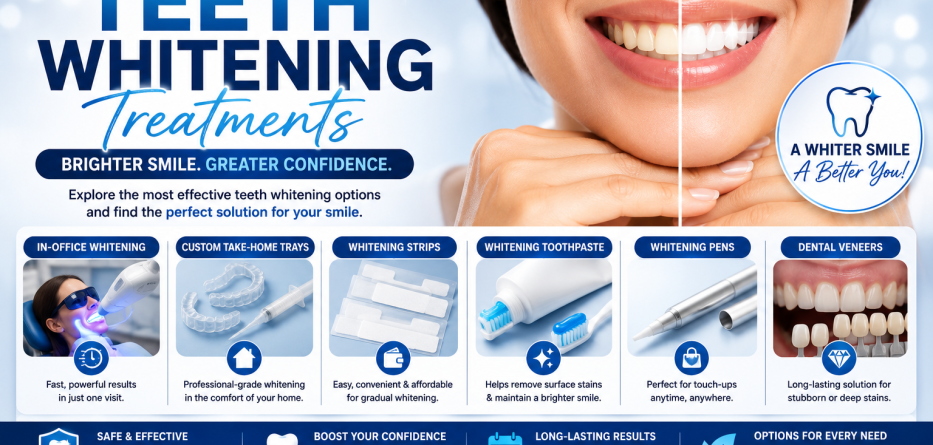
A bright, white smile is often associated with confidence, good oral hygiene, and overall attractiveness. Over time, however, teeth can become stained or discolored due to aging, coffee, tea, wine, tobacco use, certain medications, and poor dietary habits. Fortunately, modern dentistry offers several effective teeth whitening treatments that can dramatically improve the appearance of your smile.
But with so many options available, how do you know which treatment is best?
In this guide, we’ll explore the best teeth whitening treatments, compare their effectiveness, costs, benefits, and limitations, and help you choose the right solution for your whitening goals.
What Causes Tooth Discoloration?
Before choosing a whitening treatment, it’s important to understand why teeth become stained.
Common Causes of Tooth Stains
- Coffee and tea
- Red wine
- Tobacco use
- Aging
- Poor oral hygiene
- Certain medications
- Excess fluoride exposure
- Trauma to teeth
Stains generally fall into two categories:
Extrinsic Stains
Surface stains affecting the outer enamel.
Intrinsic Stains
Deeper stains located inside the tooth structure.
The type of stain often determines which whitening treatment will be most effective.
How Teeth Whitening Works
Most whitening treatments use bleaching agents such as:
- Hydrogen peroxide
- Carbamide peroxide
These ingredients penetrate enamel and break down stain molecules, making teeth appear whiter and brighter.
Professional In-Office Teeth Whitening
What Is It?
Professional whitening performed by a dentist is considered the most effective and fastest whitening option available.
Popular systems include:
- Laser whitening
- LED-activated whitening
- Professional bleaching gels
Benefits
- Immediate results
- Professional supervision
- Strong whitening agents
- Safe and predictable outcomes
Pros
- Fast treatment
- Significant whitening in one visit
- Customized care
Cons
- Higher cost
- Temporary sensitivity in some patients
Best For
Patients seeking dramatic results quickly.
Custom Take-Home Whitening Trays
What Are They?
Dentists provide custom-fitted trays and professional-grade whitening gel for home use.
Patients wear the trays daily for a specified period.
Benefits
- Professional-strength whitening
- Customized fit
- More affordable than in-office treatment
- Gradual whitening process
Pros
- Effective results
- Lower cost
- Convenient at-home use
Cons
- Requires patient compliance
- Results take longer
Best For
Patients who prefer gradual whitening with professional oversight.
Over-the-Counter Whitening Strips
What Are They?
Thin whitening strips coated with peroxide-based gel.
Benefits
- Easily available
- Affordable
- Convenient
Pros
- Budget-friendly
- Simple application
Cons
- Less powerful than professional treatments
- Uneven whitening possible
- Limited effectiveness on deep stains
Best For
Patients with mild discoloration.
Whitening Toothpaste
What Is It?
Special toothpaste designed to remove surface stains.
Benefits
- Easy daily use
- Affordable
- Helps maintain whitening results
Pros
- Convenient
- Widely available
Cons
- Limited whitening ability
- Does not change intrinsic tooth color
Best For
Maintaining professional whitening results.
Whitening Mouthwash
Whitening mouthwashes contain mild whitening agents and stain-removing ingredients.
Benefits
- Fresh breath
- Easy to incorporate into daily routine
Limitations
- Minimal whitening effects
- Requires long-term use
Best For
Supporting other whitening treatments.
Whitening Pens
What Are They?
Portable applicators containing whitening gel.
Benefits
- Convenient
- Travel-friendly
- Easy touch-ups
Limitations
- Temporary results
- Less effective than professional options
Best For
Maintaining whitened teeth between treatments.
Dental Veneers for Severe Discoloration
When Whitening Doesn’t Work
Some stains do not respond well to bleaching.
Examples include:
- Tetracycline stains
- Severe fluorosis
- Deep intrinsic discoloration
In these cases, cosmetic treatments such as veneers may be recommended.
Benefits
- Instant smile transformation
- Long-lasting appearance
- Highly aesthetic results
Teeth Whitening Treatment Comparison
| Treatment | Effectiveness | Speed | Cost | Longevity |
|---|---|---|---|---|
| In-Office Whitening | Excellent | Immediate | High | 1–3 Years |
| Custom Trays | Very Good | Moderate | Moderate | 1–2 Years |
| Whitening Strips | Good | Moderate | Low | Several Months |
| Whitening Toothpaste | Mild | Slow | Low | Ongoing Maintenance |
| Whitening Mouthwash | Mild | Slow | Low | Ongoing Maintenance |
| Veneers | Excellent | Immediate | High | 10–20 Years |
How Long Do Whitening Results Last?
Results vary depending on:
- Diet
- Smoking habits
- Oral hygiene
- Type of whitening treatment
Average longevity:
- Professional whitening: 1–3 years
- Custom trays: 1–2 years
- Whitening strips: Several months
Regular maintenance can extend results.
Tips to Keep Teeth White Longer
Avoid Stain-Causing Foods
Limit:
- Coffee
- Tea
- Red wine
- Dark sodas
Maintain Excellent Oral Hygiene
- Brush twice daily
- Floss regularly
- Visit your dentist routinely
Stop Smoking
Tobacco is one of the leading causes of tooth discoloration.
Use Whitening Maintenance Products
Dentist-approved whitening toothpaste can help maintain results.
Are Teeth Whitening Treatments Safe?
When used properly, most whitening treatments are safe.
Temporary side effects may include:
- Tooth sensitivity
- Mild gum irritation
Professional treatments are generally the safest because they are supervised by trained dental professionals.
Who Is a Good Candidate for Teeth Whitening?
Teeth whitening works best for patients with:
- Healthy teeth
- Healthy gums
- Yellow-toned stains
Whitening may be less effective for:
- Gray discoloration
- Dental restorations
- Severe intrinsic stains
A dental evaluation can determine the best option.
Frequently Asked Questions
What is the most effective teeth whitening treatment?
Professional in-office whitening is generally considered the most effective option.
How much whiter can teeth become?
Many patients achieve teeth that are several shades lighter after treatment.
Does teeth whitening damage enamel?
When performed correctly, whitening treatments do not damage healthy enamel.
How long do whitening results last?
Results typically last between several months and three years depending on lifestyle habits.
Are whitening strips effective?
Yes, whitening strips can improve mild to moderate staining but are less powerful than professional treatments.
Can crowns and veneers be whitened?
No. Whitening treatments only affect natural teeth.
Conclusion
The best teeth whitening treatment depends on your goals, budget, and the type of discoloration you’re trying to correct. For the fastest and most dramatic results, professional in-office whitening remains the gold standard. Custom take-home trays offer excellent results with added convenience, while whitening strips and toothpaste provide affordable maintenance options.
Before starting any whitening treatment, consult your dentist to determine the safest and most effective solution for your smile. With the right approach, you can achieve a brighter, healthier-looking smile that boosts your confidence and enhances your overall appearance.