
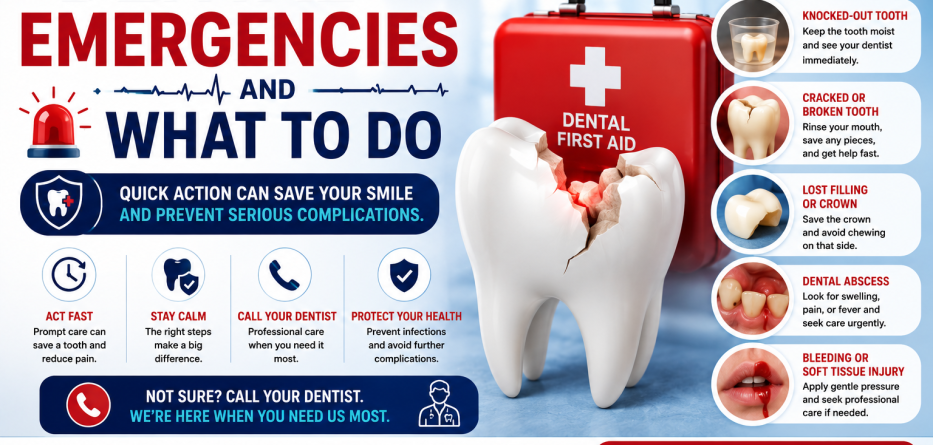
Dental emergencies can happen unexpectedly and often require immediate attention to prevent further complications. Whether it’s a knocked-out tooth, severe toothache, broken crown, or dental abscess, knowing how to respond quickly can make a significant difference in saving a tooth and protecting your oral health.
Many people are unsure whether their dental problem is a true emergency or if it can wait until a regular dental appointment. Understanding the signs of a dental emergency and the appropriate first-aid steps can help reduce pain, minimize damage, and improve treatment outcomes.
In this guide, we’ll explain the most common dental emergencies, what to do in each situation, and when to seek professional dental care.
What Is a Dental Emergency?
A dental emergency is any oral health issue that requires immediate attention to relieve severe pain, stop bleeding, save a tooth, or prevent infection from spreading.
Common Dental Emergencies Include the Following:
- Severe toothache
- Knocked-out tooth
- Cracked or broken tooth
- Lost filling or crown
- Dental abscess
- Soft tissue injuries
- Broken braces or wires
- Jaw injuries
Prompt treatment can often prevent more serious complications.
Signs You Need Emergency Dental Care
Seek immediate dental attention if you experience:
- Severe tooth pain
- Uncontrolled bleeding
- Swelling in the gums, face, or jaw
- A knocked-out permanent tooth
- Signs of infection
- Difficulty breathing or swallowing
- Trauma to the mouth or jaw
Ignoring these symptoms may lead to worsening pain, infection, or tooth loss.
Emergency #1: Severe Toothache
A persistent or severe toothache is often a sign of an underlying problem such as:
- Tooth decay
- Infection
- Cracked tooth
- Gum disease
- Impacted tooth
What to Do
- Rinse your mouth with warm water.
- Gently floss to remove trapped food particles.
- Apply a cold compress to reduce swelling.
- Take over-the-counter pain medication if appropriate.
- Contact your dentist immediately.
Avoid
- Applying aspirin directly to the gums
- Ignoring persistent pain
Emergency #2: Knocked-Out Tooth
A knocked-out tooth is one of the most time-sensitive dental emergencies.
What to Do
- Pick up the tooth by the crown (top portion).
- Avoid touching the root.
- Rinse gently with clean water if dirty.
- Attempt to place the tooth back into the socket.
- If not possible, store it in milk or saliva.
- Seek emergency dental care immediately.
Important
The highest chance of saving the tooth occurs within 30 to 60 minutes after injury.
Emergency #3: Cracked or Broken Tooth
Teeth can crack due to:
- Accidents
- Sports injuries
- Biting hard foods
- Teeth grinding
What to Do
- Rinse with warm water.
- Save any broken fragments.
- Apply a cold compress.
- Avoid chewing on the affected side.
- Schedule an emergency dental appointment.
Prompt treatment may prevent infection and further damage.
Emergency #4: Lost Filling or Crown
A lost filling or crown can expose sensitive tooth structures and increase discomfort.
What to Do
- Keep the crown if possible.
- Avoid chewing on the affected tooth.
- Use temporary dental cement if available.
- Contact your dentist as soon as possible.
Delaying treatment can increase the risk of tooth damage.
Emergency #5: Dental Abscess
A dental abscess is a serious bacterial infection that develops around a tooth or gum.
Symptoms
- Severe throbbing pain
- Facial swelling
- Fever
- Bad taste in the mouth
- Swollen lymph nodes
What to Do
- Rinse with warm saltwater.
- Contact your dentist immediately.
- Follow professional treatment recommendations.
Warning
Untreated abscesses can spread to other parts of the body and become life-threatening.
Emergency #6: Bleeding Gums or Oral Injuries
Injuries to the lips, cheeks, tongue, or gums can cause significant bleeding.
What to Do
- Apply gentle pressure using clean gauze.
- Use a cold compress to reduce swelling.
- Seek emergency care if bleeding does not stop within 15 minutes.
Deep cuts may require stitches.
Emergency #7: Broken Orthodontic Appliances
Braces and orthodontic wires can occasionally break.
What to Do
- Cover sharp wires with orthodontic wax.
- Avoid attempting repairs yourself.
- Contact your orthodontist promptly.
Improper handling can worsen the problem.
Emergency #8: Jaw Injury or Suspected Fracture
A jaw injury requires immediate medical attention.
Symptoms
- Difficulty opening the mouth
- Severe pain
- Swelling
- Misaligned bite
What to Do
- Apply a cold compress.
- Support the jaw with a soft bandage if necessary.
- Visit an emergency room immediately.
Jaw fractures are medical emergencies.
Dental Emergencies in Children
Children often experience dental injuries due to sports, falls, and playtime accidents.
Common Pediatric Dental Emergencies
- Chipped teeth
- Knocked-out permanent teeth
- Soft tissue injuries
- Toothaches
Parents should seek prompt dental evaluation whenever trauma affects a child’s teeth or mouth.
How to Prevent Dental Emergencies
While not all emergencies are avoidable, many can be prevented.
Prevention Tips
- Maintain regular dental checkups.
- Wear a mouthguard during sports.
- Avoid chewing ice and hard objects.
- Treat cavities early.
- Address teeth grinding with a nightguard.
- Follow good oral hygiene practices.
Preventive care significantly reduces the risk of unexpected dental problems.
When to Go to the Emergency Room
Visit the emergency room if you experience:
- Severe facial swelling
- Difficulty breathing
- Difficulty swallowing
- Uncontrolled bleeding
- Serious facial trauma
- Suspected jaw fracture
These situations may require immediate medical intervention beyond routine dental treatment.
Frequently Asked Questions
What is considered a dental emergency?
Any condition involving severe pain, infection, bleeding, trauma, or risk of tooth loss is considered a dental emergency.
Can a knocked-out tooth be saved?
Yes. Quick action within 30–60 minutes significantly improves the chances of successful reimplantation.
Is a chipped tooth an emergency?
Minor chips may not require immediate treatment, but large fractures should be evaluated promptly.
How do I know if a tooth infection is serious?
Signs include severe pain, swelling, fever, and difficulty swallowing. These symptoms require immediate professional care.
Should I go to the ER for a toothache?
Most toothaches are treated by dentists. However, severe swelling, breathing difficulty, or signs of spreading infection require emergency medical attention.
Conclusion
Dental emergencies can be stressful, painful, and sometimes frightening. Knowing how to respond quickly can make a significant difference in preserving teeth, reducing complications, and protecting your oral health.
Whether you’re dealing with a severe toothache, a knocked-out tooth, a broken restoration, or a dental infection, prompt action and professional care are essential. Understanding common dental emergencies and what to do ensures you’re prepared to act confidently when unexpected situations arise.
