
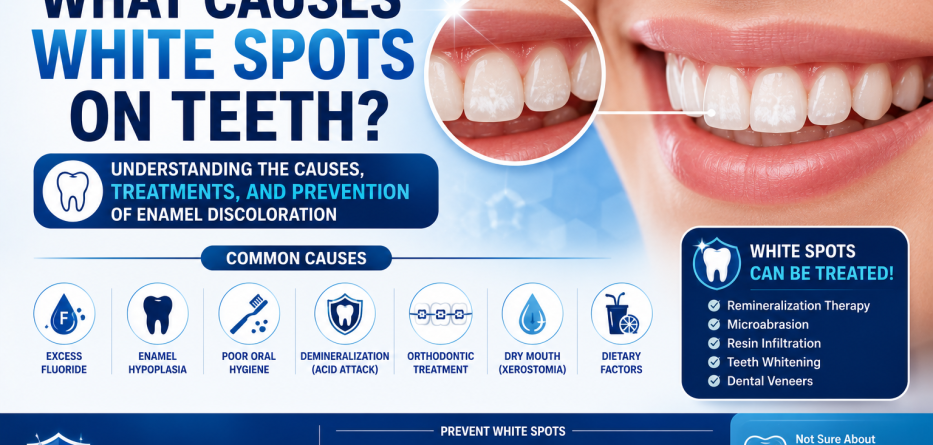
White spots on teeth are a common dental concern that can affect both children and adults. While they are often harmless, these chalky or cloudy patches can impact the appearance of your smile and may sometimes indicate an underlying oral health issue.
White spots can develop for various reasons, ranging from poor oral hygiene and enamel damage to excessive fluoride exposure during childhood. Understanding what causes white spots on teeth is the first step toward determining the most effective treatment and prevention strategies.
In this guide, we’ll explore the common causes of white spots on teeth, available treatment options, and practical tips to keep your smile healthy and bright.
What Are White Spots on Teeth?
White spots are areas of enamel that appear brighter, chalkier, or more opaque than the surrounding tooth surface.
They may appear as:
- Small white patches
- Chalky streaks
- Milky discoloration
- Irregular white marks
These spots can occur on one tooth or multiple teeth and may vary in size and severity.
Common Causes of White Spots on Teeth
1. Dental Fluorosis
One of the most common causes of white spots is dental fluorosis.
Fluorosis occurs when children consume excessive fluoride while their permanent teeth are still developing.
Common Sources of Excess Fluoride
- Swallowing toothpaste
- Fluoridated water
- Fluoride supplements
- Professional fluoride treatments
Symptoms
- White streaks or patches
- Mild enamel discoloration
- Surface irregularities in severe cases
Most cases are cosmetic and do not affect tooth function.
2. Enamel Hypoplasia
Enamel hypoplasia is a developmental condition where the enamel does not form properly.
Possible Causes
- Nutritional deficiencies
- Premature birth
- Childhood illnesses
- Certain medications
- Genetic conditions
Symptoms
- White spots
- Grooves or pits
- Thin enamel
- Increased sensitivity
Because enamel is weaker, affected teeth may be more prone to decay.
3. Poor Oral Hygiene
Inadequate oral hygiene can cause plaque buildup around the teeth.
When plaque remains on the enamel for extended periods, minerals may be lost from the tooth surface, creating white spot lesions.
Common Risk Factors
- Infrequent brushing
- Poor flossing habits
- Orthodontic braces
- High sugar intake
These lesions are often considered early signs of tooth decay.
4. Demineralization of Enamel
Demineralization occurs when acids remove important minerals such as calcium and phosphate from the enamel.
Causes of Demineralization
- Acidic foods and drinks
- Poor oral hygiene
- Frequent snacking
- Acid reflux
Early intervention can often reverse mild enamel demineralization.
5. Orthodontic Treatment
Patients who wear braces sometimes develop white spots around the brackets.
This occurs when plaque accumulates in areas that are difficult to clean.
Why It Happens
- Food particles become trapped
- Plaque buildup increases
- Enamel loses minerals
Maintaining excellent oral hygiene during orthodontic treatment can significantly reduce the risk.
6. Dry Mouth (Xerostomia)
Saliva plays a critical role in protecting tooth enamel.
Reduced saliva flow may increase the risk of:
- Demineralization
- Tooth decay
- White spot formation
Causes of Dry Mouth
- Certain medications
- Medical conditions
- Dehydration
- Radiation therapy
Proper hydration and professional treatment can help manage dry mouth.
7. Dietary Factors
Frequent consumption of sugary or acidic foods can weaken enamel over time.
Foods That May Contribute
- Soft drinks
- Energy drinks
- Candy
- Citrus fruits
- Sports drinks
Acid attacks can gradually create areas of weakened enamel that appear as white spots.
Are White Spots on Teeth Permanent?
Not always.
Some white spots can improve naturally or with professional treatment.
The outcome depends on:
- The underlying cause
- Severity of enamel damage
- Early intervention
Minor demineralization may be reversible, while developmental defects often require cosmetic treatment.
How Dentists Diagnose White Spots
A dentist will typically evaluate the following:
- Medical history
- Fluoride exposure
- Oral hygiene habits
- Dietary patterns
- Tooth development history
Diagnostic tools may include:
- Visual examination
- Dental X-rays
- Photographs
- Enamel assessment
Proper diagnosis helps determine the most effective treatment plan.
Treatment Options for White Spots on Teeth
1. Remineralization Therapy
This treatment helps restore lost minerals to weakened enamel.
Methods may include:
- Fluoride treatments
- Calcium phosphate products
- Prescription toothpaste
Best for early demineralization.
2. Microabrasion
Microabrasion gently removes a thin layer of enamel to improve appearance.
Benefits include:
- Minimally invasive
- Fast results
- Improved tooth aesthetics
Often used for mild fluorosis and superficial white spots.
3. Teeth Whitening
In some cases, whitening can reduce the contrast between white spots and surrounding enamel.
This treatment is often combined with other cosmetic procedures for optimal results.
4. Resin Infiltration
Resin infiltration is a modern cosmetic treatment that fills porous enamel areas with a tooth-colored resin.
Benefits include:
- Immediate improvement
- Minimal tooth removal
- Natural appearance
This technique is becoming increasingly popular for treating white spot lesions.
5. Dental Veneers
For severe discoloration or enamel defects, veneers may provide a complete cosmetic solution.
Veneers can:
- Cover white spots
- Improve tooth shape
- Enhance smile aesthetics
They are typically recommended when other treatments are insufficient.
How to Prevent White Spots on Teeth
Prevention often depends on maintaining healthy enamel.
Prevention Tips
- Brush twice daily with fluoride toothpaste.
- Floss every day.
- Limit sugary and acidic foods.
- Attend regular dental checkups.
- Drink plenty of water.
- Follow proper oral hygiene during orthodontic treatment.
- Avoid excessive fluoride intake in young children.
These habits help protect enamel and reduce the risk of future discoloration.
When Should You See a Dentist?
Schedule a dental examination if you notice:
- New white spots
- Increasing discoloration
- Tooth sensitivity
- Signs of decay
- Changes in enamel texture
Early diagnosis often leads to simpler and more effective treatment.
Frequently Asked Questions
Are white spots on teeth a sign of cavities?
Sometimes. White spots can be an early sign of enamel demineralization, which may eventually lead to cavities if untreated.
Can white spots disappear naturally?
Some minor white spots caused by demineralization may improve with remineralization treatments and good oral hygiene.
Are white spots harmful?
Many white spots are primarily cosmetic, but some indicate weakened enamel that requires professional attention.
Can teeth whitening remove white spots?
Whitening may reduce their visibility in some cases but does not eliminate the underlying cause.
What is the best treatment for white spots?
The best treatment depends on the cause and severity. Options include remineralization, microabrasion, resin infiltration, and veneers.
Conclusion
White spots on teeth can result from several factors, including fluorosis, enamel hypoplasia, poor oral hygiene, demineralization, orthodontic treatment, and dietary habits. While many cases are cosmetic, some may signal underlying enamel damage that requires professional care.
Fortunately, modern dentistry offers a variety of effective treatment options, from remineralization therapy and resin infiltration to veneers and cosmetic procedures. By understanding what causes white spots on teeth and practicing good oral hygiene, you can protect your enamel and maintain a healthy, confident smile for years to come.
