

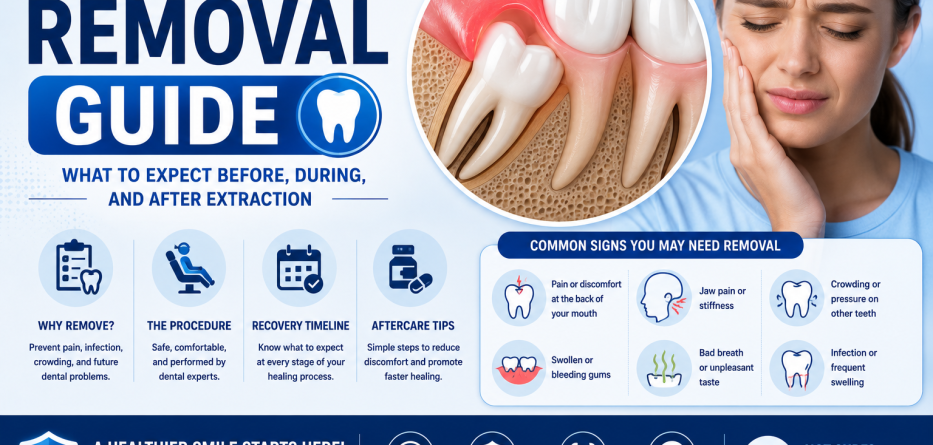
Wisdom teeth are the last set of molars to develop, usually appearing between the ages of 17 and 25. While some people experience no issues when their wisdom teeth erupt, many others face complications such as pain, infection, overcrowding, and impacted teeth. In such cases, wisdom tooth removal becomes necessary to protect oral health and prevent future dental problems.
If you’re preparing for wisdom tooth extraction or wondering whether you need the procedure, this guide will walk you through everything you need to know—from symptoms and treatment options to recovery tips and aftercare instructions.
What Are Wisdom Teeth?
Wisdom teeth, also known as third molars, are located at the very back of your mouth.
Most adults develop:
- Two upper wisdom teeth
- Two lower wisdom teeth
Historically, these teeth helped our ancestors chew coarse foods. However, modern diets and smaller jaw sizes often leave insufficient space for wisdom teeth to erupt properly.
Why Do Wisdom Teeth Need to Be Removed?
Not all wisdom teeth require removal. However, extraction is commonly recommended when they cause problems or are likely to create future complications.
Common Reasons for Removal
- Impacted wisdom teeth
- Crowded teeth
- Jaw pain
- Gum infections
- Tooth decay
- Cyst formation
- Damage to neighboring teeth
Early removal can often prevent more serious dental issues later.
What Is an Impacted Wisdom Tooth?
An impacted wisdom tooth is a tooth that cannot fully emerge through the gums because there is insufficient space.
Types of Impaction
Vertical Impaction
The tooth grows upright but remains trapped beneath the gum.
Horizontal Impaction
The tooth grows sideways and may push against neighboring teeth.
Mesial Impaction
The tooth tilts toward the front of the mouth.
Distal Impaction
The tooth tilts toward the back of the mouth.
Impacted wisdom teeth are one of the most common reasons for surgical extraction.
Signs You May Need Wisdom Tooth Removal
Common symptoms include:
- Pain at the back of the mouth
- Swollen gums
- Jaw stiffness
- Difficulty opening the mouth
- Bad breath
- Recurrent infections
- Headaches
- Facial swelling
Some impacted wisdom teeth may cause no symptoms initially, which is why regular dental examinations are important.
How Dentists Diagnose Wisdom Tooth Problems
Before recommending extraction, your dentist will perform a thorough evaluation.
Diagnostic Tools
- Clinical examination
- Digital X-rays
- Panoramic imaging
- CBCT scans (for complex cases)
These tools help determine the position of the wisdom teeth and identify potential risks.
The Wisdom Tooth Removal Procedure
Step 1: Consultation
Your dentist or oral surgeon evaluates your wisdom teeth and develops a treatment plan.
Step 2: Anesthesia
Depending on the complexity of the procedure, options may include:
- Local anesthesia
- Sedation dentistry
- General anesthesia
Step 3: Tooth Removal
The dentist may:
- Make a small incision in the gum
- Remove bone covering the tooth
- Divide the tooth into smaller sections if necessary
- Carefully extract the tooth
Step 4: Sutures
The extraction site may be closed with dissolvable stitches.
Step 5: Recovery
Patients receive detailed aftercare instructions before going home.
Does Wisdom Tooth Removal Hurt?
Most patients experience little to no pain during the procedure because anesthesia effectively numbs the treatment area.
After surgery, mild to moderate discomfort is common and can usually be managed with:
- Prescribed medications
- Ice packs
- Rest
- Soft foods
Pain typically improves significantly within a few days.
Wisdom Tooth Recovery Timeline
First 24 Hours
- Mild bleeding
- Swelling begins
- Blood clot formation
Days 2–3
- Peak swelling
- Mild discomfort
- Limited jaw movement
Days 4–7
- Symptoms gradually improve
- Soft tissue healing begins
Weeks 2–4
- Significant healing occurs
- Most normal activities resume
Several Months
- Complete bone healing continues beneath the gums
What to Eat After Wisdom Tooth Removal
Choosing the right foods can support healing and reduce discomfort.
Recommended Foods
- Yogurt
- Applesauce
- Smoothies
- Mashed potatoes
- Oatmeal
- Soup
- Scrambled eggs
- Soft pasta
Foods to Avoid
- Chips
- Nuts
- Popcorn
- Spicy foods
- Hard candies
- Carbonated beverages
Avoid using straws during the initial recovery period.
Essential Aftercare Tips
Follow these guidelines to promote healing:
Do
- Rest for 24–48 hours
- Use ice packs
- Take medications as directed
- Keep the mouth clean
- Stay hydrated
Don’t
- Smoke
- Drink through a straw
- Spit forcefully
- Engage in strenuous exercise
- Touch the extraction site
Proper aftercare significantly reduces the risk of complications.
Possible Complications
Wisdom tooth extraction is generally safe, but complications can occasionally occur.
Dry Socket
One of the most common complications.
Occurs when the protective blood clot becomes dislodged.
Symptoms include:
- Severe pain
- Bad taste
- Exposed bone
Infection
Signs may include:
- Fever
- Swelling
- Pus drainage
- Persistent pain
Nerve Injury
Rare but possible, particularly with lower wisdom teeth located near major nerves.
Choosing an experienced oral surgeon helps minimize risks.
Benefits of Wisdom Tooth Removal
Removing problematic wisdom teeth can provide several advantages.
Benefits Include
- Relief from pain
- Reduced infection risk
- Prevention of crowding
- Improved oral hygiene
- Protection of nearby teeth
- Reduced risk of cysts and damage
Many patients experience significant improvements in comfort and oral health after extraction.
Wisdom Tooth Removal Cost
The cost varies depending on the following:
- Number of teeth removed
- Degree of impaction
- Type of anesthesia
- Geographic location
- Surgeon experience
Simple extractions generally cost less than surgical extractions of impacted teeth.
Consult your dental provider for a personalized estimate.
Frequently Asked Questions
At what age should wisdom teeth be removed?
Most dentists evaluate wisdom teeth between ages 16 and 25, although extraction may be recommended at any age when problems occur.
Can wisdom teeth grow back?
No. Once removed, wisdom teeth do not grow back.
How long does wisdom tooth surgery take?
Most procedures take between 30 and 60 minutes.
When can I return to work or school?
Many patients return within 2–3 days, depending on the complexity of the extraction.
What is dry socket?
Dry socket occurs when the blood clot protecting the extraction site becomes dislodged, exposing underlying bone and nerves.
Is wisdom tooth removal always necessary?
No. Healthy wisdom teeth that erupt properly and do not cause problems may not require removal.
Conclusion
Wisdom tooth removal is one of the most common oral surgery procedures and is often recommended to prevent pain, infection, crowding, and long-term dental complications. While the idea of extraction can feel intimidating, modern techniques, advanced imaging, and effective anesthesia make the procedure safe and predictable.
Understanding the extraction process, recovery expectations, and proper aftercare can help ensure a smooth healing experience. If you’re experiencing symptoms related to wisdom teeth, a dental evaluation can determine whether removal is the best option for protecting your long-term oral health.

