
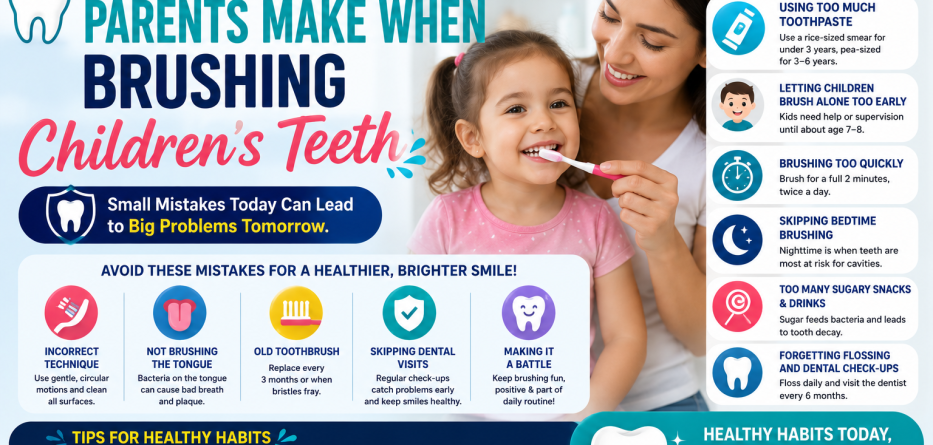
Good oral hygiene habits start in childhood, and parents play a crucial role in protecting their children’s teeth from cavities, gum disease, and other dental problems. While most parents understand the importance of brushing, many unknowingly make mistakes that can affect their child’s oral health.
Children’s teeth are more vulnerable to decay than adult teeth, making proper brushing techniques and routines essential. Unfortunately, common errors such as using too much toothpaste, allowing children to brush unsupervised, or brushing incorrectly can reduce the effectiveness of daily oral care.
In this guide, we’ll explore the most common mistakes parents make when brushing their children’s teeth and provide practical tips to help maintain healthy smiles from infancy through adolescence.
Why Proper Brushing Matters for Children
Baby teeth may be temporary, but they serve important functions.
Healthy primary teeth help with:
- Proper chewing and nutrition
- Speech development
- Guiding permanent teeth into place
- Building confidence through a healthy smile
Poor oral hygiene can lead to cavities, infections, pain, and even problems with adult teeth later in life.
Mistake #1: Waiting Too Long to Start Brushing
Many parents believe they should wait until multiple teeth appear before beginning oral care.
The Right Approach
Oral hygiene should begin as soon as the first tooth erupts.
Before teeth emerge:
- Wipe gums gently with a clean, damp cloth.
After the first tooth appears:
- Use a soft infant toothbrush.
- Brush twice daily.
Early habits help prevent tooth decay from the beginning.
Mistake #2: Using Too Much Toothpaste
One of the most common mistakes is applying excessive toothpaste.
Young children often swallow toothpaste instead of spitting it out.
Recommended Amounts
| Age | Toothpaste Amount |
|---|---|
| Under 3 Years | Rice-sized smear |
| 3–6 Years | Pea-sized amount |
| Over 6 Years | Small pea-sized amount |
Using the correct amount helps protect against excessive fluoride consumption.
Mistake #3: Letting Children Brush Alone Too Early
Many children lack the coordination needed for effective brushing.
Parents often assume their child can brush independently before they are ready.
Expert Recommendation
Parents should assist or supervise brushing until approximately age 7 to 8.
Signs a child may still need help:
- Missed areas
- Inconsistent brushing
- Poor brushing technique
Supervision ensures thorough cleaning.
Mistake #4: Brushing Too Quickly
A quick brush is rarely an effective brush.
Many children brush for less than one minute.
Ideal Brushing Time
Dentists recommend brushing for:
- Two minutes
- Twice daily
Helpful strategies include:
- Using a timer
- Playing a favorite song
- Using brushing apps designed for children
Longer brushing improves plaque removal.
Mistake #5: Not Brushing Before Bed
Nighttime brushing is one of the most important oral hygiene habits.
During sleep:
- Saliva production decreases
- Bacteria multiply more easily
- Tooth decay risk increases
Skipping bedtime brushing leaves food particles and bacteria on teeth overnight.
Parents should make brushing before bed non-negotiable.
Mistake #6: Incorrect Brushing Technique
Brushing aggressively or using improper motions can reduce effectiveness.
Proper Technique
- Hold the brush at a 45-degree angle.
- Use gentle circular motions.
- Brush all surfaces of the teeth.
- Clean along the gumline.
Avoid scrubbing too hard, as it can irritate gums.
Mistake #7: Forgetting to Brush the Tongue
The tongue harbors bacteria that contribute to:
- Bad breath
- Plaque buildup
- Oral health issues
Parents should teach children to gently brush their tongue as part of their daily routine.
Mistake #8: Not Replacing Toothbrushes Regularly
Worn toothbrush bristles become less effective at removing plaque.
Replace Toothbrushes
- Every 3 months
- After illness
- When bristles become frayed
Fresh toothbrushes provide better cleaning performance.
Mistake #9: Allowing Frequent Sugary Drinks
Even excellent brushing habits can be undermined by poor dietary choices.
Common cavity-causing beverages include:
- Soda
- Juice
- Sports drinks
- Sweetened milk drinks
Water remains the best beverage for oral health.
Parents should limit sugary drinks and encourage healthy alternatives.
Mistake #10: Ignoring Flossing
Brushing alone cannot clean between teeth effectively.
Once two teeth touch, flossing becomes important.
Benefits of Flossing
- Removes trapped food particles
- Reduces plaque buildup
- Helps prevent cavities between teeth
- Supports gum health
Parents should help children floss until they can do it properly themselves.
Mistake #11: Skipping Regular Dental Visits
Some parents wait until problems develop before scheduling dental appointments.
Dental Visit Recommendations
Children should visit the dentist:
- By their first birthday
- Every six months thereafter
Regular checkups allow early detection of dental problems and reinforce healthy habits.
Mistake #12: Using the Wrong Toothbrush
Not all toothbrushes are suitable for children.
Choose a Toothbrush That Is:
- Age-appropriate
- Soft-bristled
- Small-headed
- Comfortable to hold
Properly sized brushes make cleaning easier and more effective.
Mistake #13: Turning Brushing Into a Battle
Forcing children to brush can create negative associations with oral hygiene.
Make Brushing Fun
Try:
- Reward charts
- Music
- Educational videos
- Character toothbrushes
- Family brushing routines
Positive experiences encourage lifelong habits.
Signs Your Child May Need Better Oral Hygiene
Watch for:
- White spots on teeth
- Cavities
- Bad breath
- Swollen gums
- Tooth sensitivity
- Plaque buildup
If you notice these symptoms, consult a pediatric dentist.
Tips for Building Healthy Brushing Habits
Daily Oral Care Checklist
✓ Brush twice daily
✓ Use fluoride toothpaste
✓ Brush for two minutes
✓ Floss daily
✓ Limit sugary snacks
✓ Drink plenty of water
✓ Visit the dentist regularly
Consistency is key to maintaining healthy teeth and gums.
Frequently Asked Questions
When should I start brushing my baby’s teeth?
Begin brushing as soon as the first tooth appears.
How much toothpaste should my child use?
Children under 3 should use a rice-sized smear, while children aged 3–6 should use a pea-sized amount.
At what age can children brush alone?
Most children need supervision until age 7 or 8.
How often should children brush their teeth?
Twice daily for two minutes each time.
Is flossing necessary for children?
Yes. Flossing should begin when teeth start touching each other.
How often should my child visit the dentist?
Every six months, or as recommended by your dentist.
Conclusion
Brushing your child’s teeth may seem simple, but small mistakes can have a lasting impact on their oral health. From using too much toothpaste to allowing independent brushing too early, many common habits can increase the risk of cavities and gum problems.
By understanding the most common mistakes parents make when brushing children’s teeth and following proper oral care practices, you can help your child develop healthy habits that last a lifetime. Consistent brushing, flossing, healthy eating, and regular dental visits are the foundation of a bright and healthy smile.
