
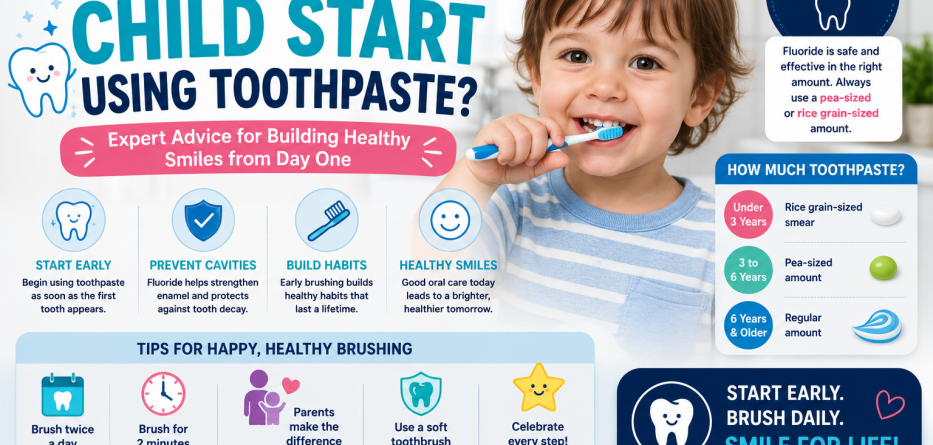
Good oral hygiene habits begin early in life, and one of the most common questions parents ask is When should a child start using toothpaste?
Many parents worry about using toothpaste too early because young children often swallow it instead of spitting it out. At the same time, delaying toothpaste use may increase the risk of tooth decay. Understanding when and how to introduce toothpaste can help protect your child’s developing teeth and establish healthy habits that last a lifetime.
In this guide, we’ll explain when children should start using toothpaste, how much toothpaste to use at different ages, the role of fluoride, and tips for making brushing a positive experience.
When Should a Child Start Using Toothpaste?
Quick Answer
A child should start using toothpaste as soon as their first tooth appears.
Dental experts recommend using a small amount of fluoride toothpaste from the eruption of the first tooth, typically around 6 months of age.
Starting early helps:
- Protect developing teeth
- Prevent cavities
- Establish healthy brushing habits
- Support long-term oral health
Why Baby Teeth Matter
Some parents assume baby teeth are not important because they eventually fall out. However, primary teeth play a crucial role in a child’s development.
Functions of Baby Teeth
- Help children chew food properly
- Support speech development
- Maintain space for permanent teeth
- Guide adult teeth into position
- Contribute to facial development
Healthy baby teeth set the foundation for a healthy adult smile.
How Much Toothpaste Should Children Use?
The amount of toothpaste depends on a child’s age.
Recommended Toothpaste Amounts
| Age | Amount of Fluoride Toothpaste |
|---|---|
| Under 3 Years | Rice grain-sized smear |
| 3 to 6 Years | Pea-sized amount |
| 6 Years and Older | Normal brushing amount |
Using the correct amount helps maximize protection while minimizing excessive fluoride ingestion.
Should Children Use Fluoride Toothpaste?
Yes.
Most pediatric dentists recommend fluoride toothpaste because fluoride strengthens tooth enamel and helps prevent cavities.
Benefits of Fluoride
- Strengthens enamel
- Repairs early tooth damage
- Reduces cavity risk
- Protects developing teeth
Fluoride has been extensively studied and is considered safe when used in recommended amounts.
When Should a Child Start Brushing?
Oral care should begin before teeth appear.
Before Teeth Erupt
Parents can gently clean the baby’s gums using:
- A clean, damp cloth
- Soft infant gum wipes
After the First Tooth Appears
Begin brushing twice daily using:
- A soft-bristled infant toothbrush
- A tiny smear of fluoride toothpaste
Consistency is key to developing good oral hygiene habits.
How to Brush a Child’s Teeth Properly
Step-by-Step Guide
- Use a soft-bristled toothbrush.
- Apply the recommended amount of toothpaste.
- Brush gently in small circular motions.
- Clean all tooth surfaces.
- Brush for two minutes.
- Supervise brushing to ensure proper technique.
Parents should assist with brushing until children develop sufficient dexterity.
When Can Children Brush Their Teeth Alone?
Although children may want to brush independently, they often lack the motor skills needed for effective cleaning.
Most dentists recommend parental supervision until around ages 7 to 8.
Signs your child may be ready include:
- Good hand coordination
- Ability to tie shoes
- Consistent brushing habits
Even after independence develops, periodic supervision remains beneficial.
Common Mistakes Parents Make
Using Too Much Toothpaste
Excess toothpaste increases the chance of swallowing large amounts of fluoride.
Letting Children Brush Alone Too Early
Children may miss important areas, leading to plaque buildup.
Skipping Nighttime Brushing
Brushing before bed is especially important because saliva production decreases during sleep.
Waiting Too Long to Start
Early brushing helps prevent cavities from the beginning.
Choosing the Right Toothpaste for Children
When selecting toothpaste, look for:
Important Features
- Contains fluoride
- Age-appropriate formulation
- ADA acceptance (if available)
- Pleasant flavor without excessive sweetness
Popular Child-Friendly Flavors
- Mild mint
- Bubble gum
- Fruit flavors
Choosing a flavor your child enjoys may encourage regular brushing.
What If My Child Swallows Toothpaste?
Swallowing small amounts of toothpaste is common among young children.
Generally Safe
The recommended rice-sized or pea-sized amounts are designed with this in mind.
When to Contact a Professional
Seek guidance if:
- Large amounts are swallowed
- Symptoms such as nausea occur
- A child repeatedly consumes toothpaste intentionally
Supervision helps reduce this risk.
When Should a Child First Visit the Dentist?
The first dental visit should occur:
By Age One
Or
Within Six Months of the First Tooth Erupting
Early dental visits help
- Detect problems early
- Educate parents
- Establish preventive care
- Reduce dental anxiety
Regular checkups contribute significantly to lifelong oral health.
Tips for Making Brushing Fun
Children are more likely to brush consistently when the experience is enjoyable.
Ideas Include
- Playing a two-minute brushing song
- Using colorful toothbrushes
- Reward charts
- Brushing together as a family
- Story-based brushing routines
Positive reinforcement often works better than pressure or punishment.
Signs Your Child May Have Tooth Decay
Watch for:
- White spots on teeth
- Brown discoloration
- Tooth sensitivity
- Visible holes
- Complaints of pain
Early intervention can prevent more serious dental problems.
Frequently Asked Questions
At what age should a child start using toothpaste?
A child should begin using a small amount of fluoride toothpaste when their first tooth appears.
Is fluoride toothpaste safe for toddlers?
Yes. Fluoride toothpaste is safe when used in the recommended rice-sized amount.
Can babies use toothpaste before age one?
Yes. Dental professionals recommend introducing toothpaste as soon as the first tooth erupts.
How often should children brush their teeth?
Children should brush twice daily, especially after breakfast and before bedtime.
What type of toothbrush should a toddler use?
A soft-bristled toothbrush with a small head designed for infants or toddlers is ideal.
Conclusion
Knowing when a child should start using toothpaste is an important part of protecting their oral health from an early age. Dental experts recommend introducing a small amount of fluoride toothpaste as soon as the first tooth appears. Combined with proper brushing techniques, regular dental visits, and parental supervision, early oral care can significantly reduce the risk of cavities and help establish healthy habits that last a lifetime.
By starting early and making brushing a positive experience, parents can give their children the foundation for strong, healthy smiles for years to come.
