
Many people assume that brushing their teeth twice a day is enough to keep them bright white forever. So when teeth begin to appear yellow despite maintaining good oral hygiene, it can be frustrating and confusing.
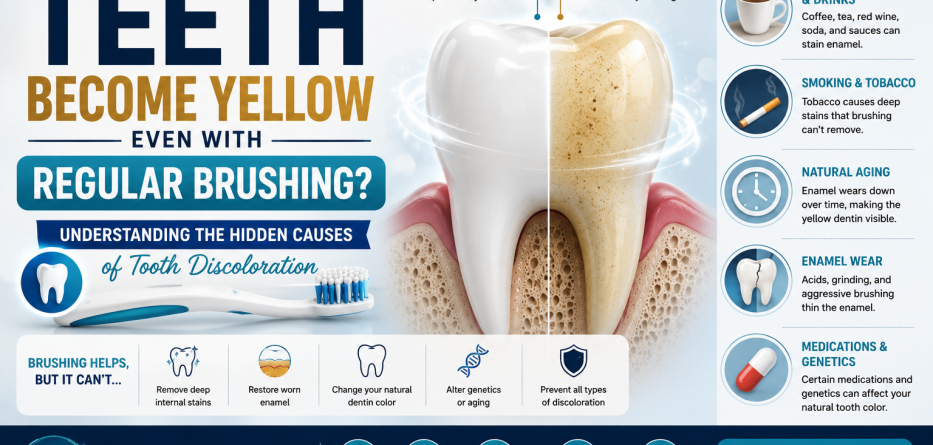
The truth is that regular brushing is essential for oral health, but it cannot prevent every cause of tooth discoloration. Factors such as aging, genetics, diet, lifestyle habits, medications, and enamel wear can all contribute to yellow teeth, even in people who brush diligently.
Understanding why teeth become yellow despite regular brushing can help you take the right steps to maintain a healthier, brighter smile.
In this article, we’ll explore the most common causes of yellow teeth, what brushing can and cannot do, and the best ways to prevent and treat tooth discoloration.
Why Are Teeth Naturally Not Pure White?
Many people are surprised to learn that healthy teeth are not naturally bright white.
A tooth consists of two main layers:
Enamel
The outer protective layer.
- Hard and translucent
- Naturally white to off-white
Dentin
The layer beneath enamel.
- Yellowish in color
- More visible as enamel thins
Because enamel is slightly transparent, the color of dentin can influence the overall appearance of your teeth.
What Causes Teeth to Become Yellow?
Several factors can contribute to tooth discoloration, even if you brush regularly.
1. Natural Aging
One of the most common causes of yellow teeth is aging.
As we get older:
- Enamel gradually wears down
- Dentin becomes more visible
- Teeth naturally appear darker or yellower
This process is completely normal and occurs in most adults.
Signs of Age-Related Discoloration
- Gradual yellowing
- Uniform color changes
- No associated pain or sensitivity
2. Consumption of Staining Foods and Drinks
Certain foods and beverages contain pigments that can stain enamel over time.
Common Culprits
- Coffee
- Tea
- Red wine
- Cola
- Berries
- Tomato-based sauces
- Curry
Even excellent brushing habits may not completely remove these stains.
Prevention Tips
- Rinse with water after consumption
- Use a straw when possible
- Schedule regular professional cleanings
3. Smoking and Tobacco Use
Tobacco products contain substances that easily stain teeth.
How Tobacco Causes Yellow Teeth
- Nicotine turns yellow when exposed to oxygen
- Tar accumulates on enamel
- Stains penetrate tooth surfaces
Long-term smokers often develop significant discoloration that cannot be removed by brushing alone.
4. Plaque and Tartar Buildup
Brushing helps remove plaque, but it may not eliminate all deposits.
When plaque remains on teeth:
- It hardens into tartar.
- Tartar develops a yellow or brown appearance.
- Stains accumulate more easily.
Professional dental cleanings are necessary to remove tartar.
5. Enamel Erosion
Enamel protects the tooth from discoloration.
When enamel wears away, the yellow dentin beneath becomes more visible.
Causes of Enamel Erosion
- Acidic foods
- Soft drinks
- Acid reflux
- Aggressive brushing
- Teeth grinding
Thinner enamel often makes teeth appear darker and yellower.
6. Genetics
Some people naturally have the following:
- Thicker enamel
- Whiter enamel
- Less visible dentin
Others inherit teeth that naturally appear darker or more yellow.
Genetics plays a significant role in tooth color and whitening potential.
7. Certain Medications
Some medications can affect tooth color.
Common Examples
- Tetracycline antibiotics
- Antihistamines
- Blood pressure medications
- Chemotherapy drugs
These medications may cause internal discoloration that brushing cannot remove.
8. Poor Oral Hygiene Habits
Although regular brushing is important, brushing incorrectly may reduce its effectiveness.
Common Mistakes
- Brushing too quickly
- Missing difficult-to-reach areas
- Not flossing
- Using an old toothbrush
Proper brushing technique is just as important as brushing frequency.
9. Fluorosis
Excessive fluoride exposure during childhood can affect tooth development.
Symptoms
- White streaks
- Yellow spots
- Brown discoloration in severe cases
Fluorosis occurs during tooth formation and cannot be prevented through brushing.
10. Dental Trauma
Injury to a tooth can affect its internal structure.
Following trauma, a tooth may appear
- Yellow
- Gray
- Brown
This occurs when the tooth’s nerve and blood supply are damaged.
Professional dental evaluation is recommended after dental injuries.
Why Brushing Alone Cannot Remove All Yellowing
Brushing is effective at removing:
- Food debris
- Plaque
- Surface stains
However, brushing cannot:
- Reverse aging
- Restore lost enamel
- Change dentin color
- Remove deep internal stains
- Eliminate genetic discoloration
This is why some people experience yellow teeth despite excellent oral hygiene.
How to Prevent Teeth from Turning Yellow
Daily Prevention Tips
- Brush twice daily.
- Floss every day.
- Use fluoride toothpaste.
- Limit staining foods and drinks.
- Avoid tobacco products.
- Drink plenty of water.
- Visit your dentist regularly.
Consistency is key to maintaining a brighter smile.
Professional Treatments for Yellow Teeth
Professional Dental Cleaning
Removes:
- Plaque
- Tartar
- Surface stains
Teeth Whitening
Professional whitening treatments can significantly improve tooth color.
Benefits include:
- Faster results
- Greater whitening effectiveness
- Safer application
Veneers
For severe discoloration, veneers can create a permanently brighter appearance.
At-Home Whitening Options
Some patients choose:
- Whitening toothpaste
- Whitening strips
- Whitening trays
While these products may improve mild staining, professional treatments typically provide more noticeable results.
When Should You See a Dentist?
Schedule a dental evaluation if:
- Yellowing appears suddenly
- One tooth changes color
- Discoloration is accompanied by pain
- Home treatments are ineffective
A dentist can determine the underlying cause and recommend appropriate treatment.
Frequently Asked Questions
Why are my teeth yellow even though I brush every day?
Brushing removes plaque and surface stains, but aging, genetics, enamel thinning, and dietary habits can still cause yellow teeth.
Can yellow teeth become white again?
Yes. Professional cleaning and whitening treatments can often significantly improve tooth color.
Does brushing harder make teeth whiter?
No. Aggressive brushing can actually wear down enamel and make teeth appear more yellow.
Is yellowing always a sign of poor oral hygiene?
No. Many people with excellent oral hygiene naturally develop yellow teeth due to aging or genetics.
What is the fastest way to whiten teeth?
Professional teeth whitening performed by a dentist typically provides the fastest and most effective results.
Conclusion
If you’ve ever wondered why your teeth become yellow even with regular brushing, you’re not alone. While brushing is essential for maintaining oral health, it cannot prevent every cause of tooth discoloration.
Factors such as aging, enamel erosion, genetics, dietary habits, smoking, and certain medications all play a role in tooth color. Understanding these causes can help you make informed decisions about prevention and treatment.
With proper oral care, regular dental visits, and professional whitening options when necessary, you can maintain a healthy, confident, and brighter smile for years to come.
