
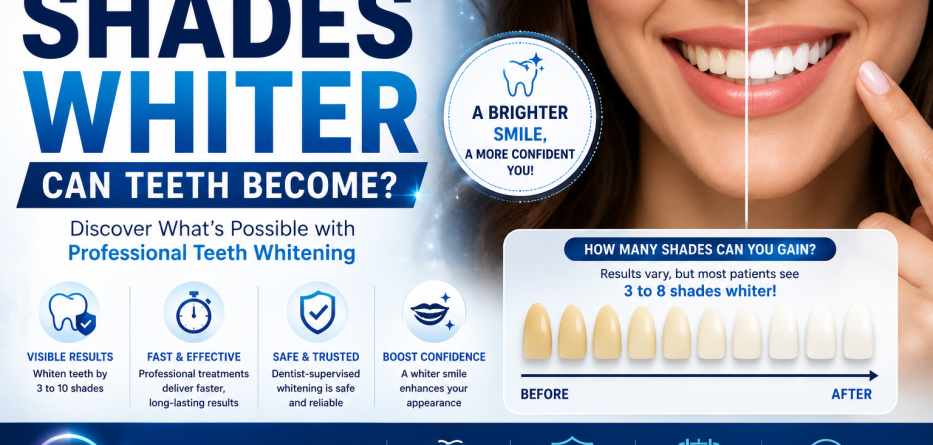
A brighter smile is one of the most popular cosmetic goals among dental patients. Teeth whitening treatments have become increasingly common because they offer a quick and effective way to enhance appearance and boost confidence. However, one of the most frequently asked questions is, “How many shades whiter can teeth become?”
The answer depends on several factors, including the whitening method used, the type of stains present, the natural color of your teeth, and your oral health. While some people achieve dramatic improvements, others may see more subtle changes.
In this article, we’ll explore how teeth whitening works, how many shades of improvement are possible, and what factors influence your results.
Understanding Tooth Shade Levels
Dentists use a shade guide to measure the color of teeth before and after whitening treatments.
Common shade guides include:
- A1 (brightest natural shade)
- A2
- A3
- A3.5
- B1
- C1
- D2
These shade scales help dentists accurately track whitening progress.
What Is a Tooth Shade?
A tooth shade refers to the color and brightness of a tooth. Professional whitening treatments are often measured by the number of shade improvements achieved.
How Many Shades Whiter Can Teeth Become?
Quick Answer
Most professional teeth whitening treatments can lighten teeth by 3 to 8 shades, while some patients may achieve improvements of up to 10 shades or more depending on their starting tooth color and stain type.
Typical Whitening Results
| Whitening Method | Average Shade Improvement |
|---|---|
| Whitening Toothpaste | 1–2 Shades |
| Over-the-Counter Whitening Kits | 2–4 Shades |
| Dentist-Supervised Home Whitening | 4–6 Shades |
| Professional In-Office Whitening | 5–10 Shades |
Professional treatments generally produce the most noticeable results.
Factors That Affect Whitening Results
Not everyone achieves the same level of whitening.
1. Natural Tooth Color
Some people naturally have lighter teeth than others.
Individuals with:
- Yellow-toned teeth often respond better.
- Gray-toned teeth may be more resistant.
Natural enamel thickness also affects brightness.
2. Type of Stains
Different stains respond differently to whitening treatments.
Extrinsic Stains
These stains affect the outer surface of the tooth.
Common causes include:
- Coffee
- Tea
- Red wine
- Tobacco
- Dark-colored foods
Extrinsic stains typically respond very well to whitening.
Intrinsic Stains
These stains occur inside the tooth structure.
Causes include:
- Aging
- Trauma
- Certain medications
- Excess fluoride exposure
Intrinsic stains may require more advanced cosmetic treatments.
3. Age
As we age, enamel naturally becomes thinner.
This allows the darker dentin beneath the enamel to become more visible.
Younger patients often experience:
- Faster whitening
- More dramatic shade improvements
However, adults of all ages can still achieve noticeable results.
4. Whitening Method Used
The whitening system chosen significantly impacts outcomes.
Professional In-Office Whitening
Benefits include:
- Stronger whitening agents
- Faster results
- Greater shade improvement
Many patients notice significant changes after a single appointment.
At-Home Professional Whitening
Custom trays provided by a dentist can produce excellent results over several weeks.
Store-Bought Products
These products may improve brightness but generally provide less dramatic results.
How Does Teeth Whitening Work?
Teeth-whitening products typically contain the following:
- Hydrogen peroxide
- Carbamide peroxide
These ingredients penetrate enamel and break down stain molecules.
The whitening process:
- Penetrates the enamel.
- Breaks apart discoloration particles.
- Lightens the overall tooth color.
- Creates a brighter appearance.
The science behind whitening allows improvements beyond simple surface cleaning.
Can Teeth Become Pure White?
Many patients hope for extremely bright, celebrity-style smiles.
However, natural teeth have limits.
Important Facts
- Teeth whitening does not change the natural structure of teeth.
- Most dentists aim for a healthy, natural-looking white shade.
- Extremely bright results may require veneers or cosmetic restorations.
The goal is usually enhancement rather than unnatural whiteness.
How Long Do Whitening Results Last?
Results vary depending on lifestyle habits.
Average Longevity
| Whitening Type | Typical Duration |
|---|---|
| Professional Whitening | 1–3 Years |
| Home Whitening Kits | 6–12 Months |
| Whitening Toothpaste | Temporary Maintenance |
Good oral care helps maintain results longer.
Tips to Maintain a Whiter Smile
After whitening, consider the following:
Avoid Stain-Causing Foods and Drinks
Limit:
- Coffee
- Tea
- Red wine
- Cola
- Dark berries
Practice Excellent Oral Hygiene
- Brush twice daily
- Floss regularly
- Use whitening toothpaste when appropriate
Schedule Regular Dental Cleanings
Professional cleanings help remove surface stains before they become permanent.
Avoid Tobacco Products
Smoking is one of the leading causes of tooth discoloration.
Who Is a Good Candidate for Teeth Whitening?
Teeth whitening works best for individuals with:
- Healthy teeth and gums
- Yellow-toned staining
- Good oral hygiene habits
Patients with:
- Crowns
- Veneers
- Extensive restorations
should discuss cosmetic options with their dentist because restorations do not respond to whitening agents.
When Whitening May Not Work
Whitening treatments may be less effective for:
- Severe intrinsic stains
- Tetracycline staining
- Fluorosis
- Dental restorations
In these cases, cosmetic treatments such as veneers or bonding may provide better results.
Professional Whitening vs Over-the-Counter Products
| Feature | Professional Whitening | OTC Products |
|---|---|---|
| Speed | Fast | Slower |
| Shade Improvement | 5–10 Shades | 2–4 Shades |
| Customization | High | Limited |
| Supervision | Dentist Guided | Self-Guided |
| Longevity | Longer | Shorter |
Professional treatment generally provides safer and more predictable results.
Frequently Asked Questions
How many shades can teeth whiten in one session?
Professional in-office whitening can often improve tooth color by 5 to 8 shades during a single appointment.
Is professional whitening better than whitening strips?
Yes. Professional treatments typically use stronger whitening agents and produce more dramatic results.
Can yellow teeth become white again?
In many cases, yes. Yellow discoloration often responds very well to whitening treatments.
Are whitening results permanent?
No. Whitening results gradually fade over time, especially with exposure to staining foods and beverages.
Can whitening damage teeth?
When performed correctly under professional supervision, teeth whitening is generally safe and effective.
Conclusion
So, how many shades whiter can teeth become?
Most people can expect an improvement of 3 to 8 shades, while professional whitening treatments may achieve even more dramatic results. The exact outcome depends on factors such as stain type, natural tooth color, age, and the whitening method used.
For the safest, fastest, and most noticeable results, professional teeth whitening remains the preferred option. By combining treatment with good oral hygiene and healthy habits, you can enjoy a brighter, more confident smile for years to come.
