
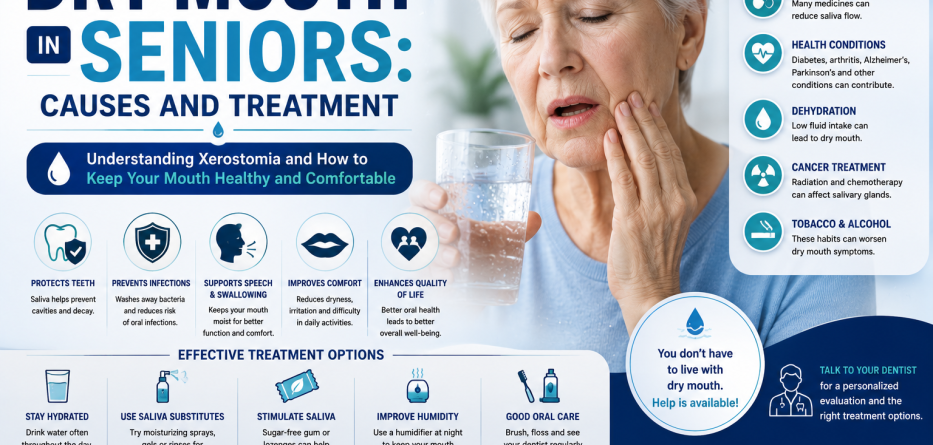
Dry mouth, medically known as xerostomia, is a common condition among older adults. While it may seem like a minor inconvenience, chronic dry mouth can significantly affect oral health, comfort, nutrition, and overall quality of life.
Saliva plays a crucial role in maintaining a healthy mouth. It helps wash away food particles, neutralize acids, prevent tooth decay, and support chewing and swallowing. When saliva production decreases, seniors may experience discomfort, difficulty eating, speaking problems, and an increased risk of dental disease.
Understanding the causes of dry mouth in seniors and available treatment options can help improve oral health and daily comfort.
What Is Dry Mouth?
Dry mouth occurs when the salivary glands do not produce enough saliva to keep the mouth adequately moist.
Common Symptoms
- Persistent thirst
- Sticky or dry feeling in the mouth
- Difficulty chewing or swallowing
- Cracked lips
- Sore throat
- Bad breath
- Burning sensation in the mouth
- Difficulty wearing dentures
- Changes in taste
These symptoms can range from mild discomfort to significant oral health complications.
Why Is Saliva Important?
Saliva does much more than keep the mouth moist.
Functions of Saliva
- Protects teeth from decay
- Neutralizes harmful acids
- Helps digest food
- Washes away bacteria and food particles
- Supports speech and swallowing
- Maintains healthy oral tissues
Without adequate saliva, oral health problems can develop rapidly.
Why Is Dry Mouth Common in Seniors?
Aging itself does not directly cause dry mouth. However, seniors are more likely to experience factors that reduce saliva production.
These include:
- Multiple medications
- Chronic health conditions
- Cancer treatments
- Dehydration
- Lifestyle factors
As a result, dry mouth becomes increasingly common with age.
Common Causes of Dry Mouth in Seniors
1. Medications
The most common cause of dry mouth in older adults is medication use.
Hundreds of medications list dry mouth as a side effect.
Common Medication Categories
- Blood pressure medications
- Antidepressants
- Antihistamines
- Pain medications
- Diuretics
- Parkinson’s disease medications
- Anxiety medications
The risk increases when seniors take multiple medications simultaneously.
2. Chronic Medical Conditions
Several health conditions can affect saliva production.
Examples Include
- Diabetes
- Alzheimer’s disease
- Parkinson’s disease
- Stroke
- Rheumatoid arthritis
- Sjögren’s syndrome
Proper management of these conditions may help reduce symptoms.
3. Dehydration
Older adults may be more susceptible to dehydration due to:
- Reduced thirst sensation
- Certain medications
- Chronic illness
- Limited fluid intake
Even mild dehydration can contribute to dry mouth.
4. Cancer Treatment
Radiation therapy directed at the head or neck can damage salivary glands.
Chemotherapy may also temporarily alter saliva production.
Cancer-related dry mouth often requires specialized management.
5. Tobacco and Alcohol Use
Smoking and chewing tobacco can worsen dry mouth symptoms.
Alcohol may also contribute by drying oral tissues and reducing moisture levels.
Health Risks Associated with Dry Mouth
Untreated dry mouth can lead to serious oral health problems.
Increased Risk of Tooth Decay
Saliva naturally protects teeth by neutralizing acids and removing bacteria.
Reduced saliva can accelerate cavity formation.
Gum Disease
Dry mouth creates an environment where harmful bacteria can thrive.
Oral Infections
Fungal infections such as oral thrush become more common.
Difficulty Eating and Speaking
Dry oral tissues can make chewing, swallowing, and communication uncomfortable.
Denture Problems
Insufficient saliva may cause dentures to become uncomfortable or unstable.
How Dry Mouth Affects Quality of Life
For many seniors, dry mouth extends beyond oral discomfort.
It may affect:
- Eating enjoyment
- Nutritional intake
- Sleep quality
- Social interactions
- Speech confidence
- Overall well-being
Early treatment can significantly improve daily comfort.
Treatment Options for Dry Mouth
Stay Hydrated
Drinking water regularly is one of the simplest ways to manage dry mouth.
Tips include:
- Sip water throughout the day
- Keep a water bottle nearby
- Increase fluid intake during hot weather
Hydration helps maintain oral moisture.
Use Saliva Substitutes
Artificial saliva products are available in several forms.
Examples include:
- Oral sprays
- Moisturizing gels
- Mouth rinses
- Saliva replacement solutions
These products provide temporary relief from symptoms.
Stimulate Saliva Production
When salivary glands remain functional, stimulation may increase saliva flow.
Options include:
- Sugar-free chewing gum
- Sugar-free lozenges
- Xylitol-containing products
These methods encourage natural saliva production.
Review Medications
Patients should discuss dry mouth symptoms with their physician.
Sometimes medication adjustments can help reduce side effects.
Never stop prescribed medications without medical supervision.
Improve Indoor Humidity
Using a humidifier, especially at night, can reduce oral dryness and improve comfort during sleep.
Oral Care Tips for Seniors with Dry Mouth
Maintaining excellent oral hygiene is essential.
Recommended Practices
- Brush twice daily with fluoride toothpaste.
- Floss every day.
- Schedule regular dental visits.
- Use alcohol-free mouthwash.
- Limit sugary foods and beverages.
- Avoid tobacco products.
These habits help prevent complications associated with dry mouth.
Foods and Drinks That May Help
Certain foods can support oral comfort.
Recommended Choices
- Water-rich fruits
- Cucumbers
- Melons
- Sugar-free beverages
- Soups and broths
Foods to Limit
- Salty snacks
- Spicy foods
- Alcohol
- Caffeinated beverages
- Sugary drinks
Dietary adjustments can reduce irritation and improve moisture levels.
When to See a Dentist
Seniors should seek professional evaluation if dry mouth symptoms:
- Persist for several weeks
- Interfere with eating or speaking
- Cause frequent cavities
- Lead to mouth sores
- Affect denture comfort
A dentist can identify contributing factors and recommend personalized treatment.
Preventing Dry Mouth in Older Adults
Although not all cases can be prevented, healthy habits may reduce risk.
Prevention Strategies
- Stay hydrated.
- Attend regular dental checkups.
- Avoid tobacco products.
- Limit alcohol consumption.
- Manage chronic health conditions.
- Review medications regularly with healthcare providers.
Preventive care helps protect long-term oral health.
Frequently Asked Questions
Is dry mouth a normal part of aging?
No. Aging itself does not cause dry mouth, but conditions and medications associated with aging often contribute.
Can dry mouth damage teeth?
Yes. Reduced saliva increases the risk of tooth decay and gum disease.
What is the best treatment for dry mouth?
Treatment depends on the cause but often includes hydration, saliva substitutes, and addressing underlying medical factors.
Can medications cause dry mouth?
Yes. Many common medications used by seniors list dry mouth as a side effect.
Should I see a dentist for dry mouth?
Absolutely. A dentist can identify oral complications and recommend appropriate treatment options.
Conclusion
Dry mouth is a common but often overlooked issue among seniors. While it may begin as a mild annoyance, untreated dry mouth can increase the risk of tooth decay, gum disease, oral infections, and difficulties with eating and speaking.
Fortunately, effective treatment options are available. By staying hydrated, maintaining good oral hygiene, addressing underlying causes, and seeking professional care when needed, seniors can successfully manage dry mouth and maintain a healthier, more comfortable smile.
