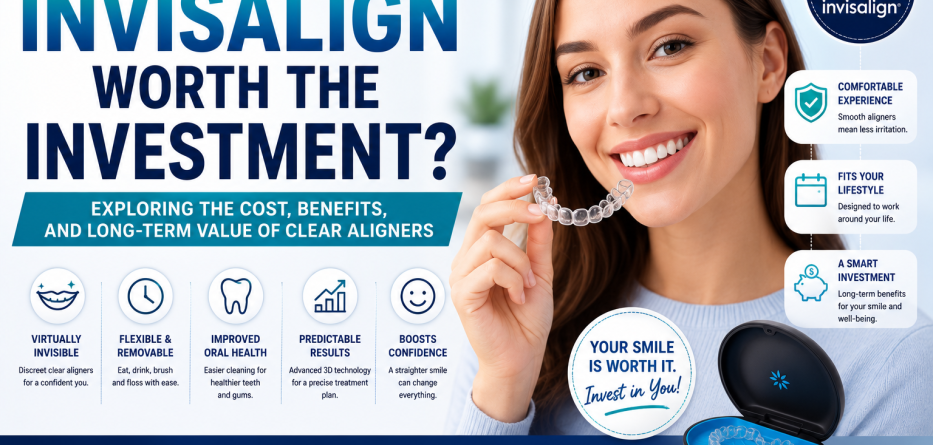
A straighter smile can improve more than just your appearance—it can also enhance your oral health, confidence, and overall quality of life. For many people seeking orthodontic treatment, Invisalign has become a popular alternative to traditional braces due to its discreet appearance and convenience. However, one question often arises before starting treatment: Is Invisalign worth the investment?
While Invisalign typically costs more than some traditional orthodontic options, many patients believe the benefits justify the expense. From improved aesthetics to greater comfort and flexibility, Invisalign offers advantages that can make treatment easier and more enjoyable.
In this guide, we’ll explore Invisalign’s costs, benefits, potential drawbacks, and whether it’s truly worth the investment for your smile.
What Is Invisalign?
Invisalign is an orthodontic treatment system that uses a series of custom-made clear aligners to gradually move teeth into their desired positions.
Unlike traditional braces, Invisalign aligners are:
- Nearly invisible
- Removable
- Custom-fitted
- Comfortable to wear
Each set of aligners is worn for approximately one to two weeks before progressing to the next stage of treatment.
How Does Invisalign Work?
The treatment process typically includes:
Step 1: Consultation
Your dentist or orthodontist evaluates your smile and determines whether Invisalign is suitable for your needs.
Step 2: Digital Treatment Planning
Advanced 3D scanning technology creates a customized treatment plan.
Step 3: Custom Aligner Fabrication
A series of clear aligners is manufactured specifically for your teeth.
Step 4: Progressive Tooth Movement
Each aligner gradually shifts teeth toward their ideal positions.
Step 5: Retention Phase
After treatment, retainers help maintain your new smile.
How Much Does Invisalign Cost?
The cost of Invisalign varies depending on treatment complexity, location, and provider experience.
Average Cost Range
| Treatment Type | Estimated Cost |
|---|---|
| Mild Cases | $3,000–$5,000 |
| Moderate Cases | $4,000–$7,000 |
| Complex Cases | $6,000–$9,000+ |
Many dental practices offer financing options and monthly payment plans.
Why Is Invisalign More Expensive?
Several factors contribute to Invisalign’s cost:
- Advanced technology
- Customized aligners
- Digital treatment planning
- Ongoing monitoring
- Precision manufacturing
These features help create a personalized and predictable treatment experience.
Benefits of Invisalign
1. Virtually Invisible Appearance
One of Invisalign’s biggest advantages is its discreet design.
Many adults and professionals prefer Invisalign because the clear aligners are difficult to notice during:
- Work meetings
- Social events
- Presentations
- Photographs
This makes treatment far less noticeable than traditional braces.
2. Improved Comfort
Traditional braces use brackets and wires that may cause irritation.
Invisalign aligners are made from smooth plastic and generally provide:
- Less irritation
- Fewer mouth sores
- Improved comfort
- Easier adaptation
Most patients find Invisalign more comfortable than conventional braces.
3. Removable Convenience
Unlike fixed braces, Invisalign aligners can be removed when:
- Eating
- Drinking (except water)
- Brushing
- Flossing
This flexibility allows patients to maintain their normal lifestyle with fewer restrictions.
4. Better Oral Hygiene
Maintaining oral hygiene is often easier with Invisalign.
Patients can:
- Brush normally
- Floss effectively
- Reduce plaque buildup
- Lower the risk of cavities
Good oral hygiene contributes to healthier teeth and gums throughout treatment.
5. Predictable Results
Invisalign uses advanced digital technology to map tooth movement.
Benefits include:
- Detailed treatment planning
- Progress tracking
- Improved predictability
- Visual treatment previews
Patients can often see a digital simulation of their future smile before treatment begins.
Are Invisalign Results Comparable to Braces?
For many cases, Invisalign can achieve results similar to traditional braces.
Invisalign Works Well For:
- Mild crowding
- Moderate crowding
- Gaps between teeth
- Minor bite issues
- Relapse after previous orthodontic treatment
Braces May Be Better For:
- Severe bite problems
- Complex tooth movements
- Significant jaw discrepancies
An orthodontic evaluation helps determine the best option.
Potential Drawbacks of Invisalign
Although Invisalign offers many benefits, it’s not perfect.
Requires Discipline
Aligners must be worn:
- 20–22 hours per day
- Consistently throughout treatment
Poor compliance can delay results.
Higher Upfront Cost
Invisalign may cost more than some traditional orthodontic treatments.
Risk of Losing Aligners
Because aligners are removable, they can be misplaced or damaged.
Not Ideal for Every Case
Some complex orthodontic conditions may still require traditional braces.
Long-Term Value of Invisalign
When evaluating whether Invisalign is worth the investment, it’s important to consider the long-term benefits.
Improved Confidence
A straighter smile often leads to the following:
- Greater self-esteem
- Increased confidence
- More willingness to smile
Better Oral Health
Straight teeth are generally easier to clean and maintain.
Benefits may include:
- Reduced plaque accumulation
- Lower cavity risk
- Healthier gums
Enhanced Professional Appearance
Many adults appreciate the subtle appearance of Invisalign during treatment.
Invisalign vs Traditional Braces
| Feature | Invisalign | Traditional Braces |
|---|---|---|
| Appearance | Nearly Invisible | Visible |
| Removable | Yes | No |
| Comfort | High | Moderate |
| Food Restrictions | Minimal | Significant |
| Oral Hygiene | Easier | More Challenging |
| Complex Cases | Some Limitations | Excellent |
| Compliance Required | High | Low |
Both treatments can produce excellent results when used appropriately.
Who Is Invisalign Best For?
Invisalign may be ideal for:
Adults
Professionals often prefer Invisalign’s discreet appearance.
Teenagers
Responsible teens can benefit from removable aligners and modern treatment technology.
Patients Seeking Convenience
Those who value flexibility and aesthetics often choose Invisalign.
What Dentists and Orthodontists Say
Many dental professionals recommend Invisalign because it:
- Delivers predictable results
- Improves patient comfort
- Supports oral hygiene
- Provides excellent aesthetics
However, successful outcomes depend heavily on patient compliance.
The best treatment option varies from person to person.
Tips to Maximize Invisalign Value
To get the most from your investment:
- Wear aligners as instructed.
- Keep aligners clean.
- Attend scheduled appointments.
- Use retainers after treatment.
- Maintain excellent oral hygiene.
- Follow your provider’s recommendations.
These habits help ensure successful and lasting results.
Frequently Asked Questions
Is Invisalign worth the money?
For many patients, yes. Invisalign offers aesthetic, comfort, and lifestyle advantages that many find valuable.
Does Invisalign work as well as braces?
For many orthodontic cases, Invisalign can achieve results comparable to traditional braces.
How long does Invisalign treatment take?
Most treatments range from 6 to 24 months depending on complexity.
Is Invisalign painful?
Patients may experience mild pressure when changing aligners, but discomfort is generally minimal.
Can Invisalign fix severe crowding?
Some severe cases may require braces or additional orthodontic treatment.
Does insurance cover Invisalign?
Many dental insurance plans offer partial orthodontic coverage, including Invisalign treatment.
Conclusion
So, is Invisalign worth the investment?
For many patients, the answer is yes. Invisalign combines advanced technology, comfort, convenience, and discreet aesthetics to provide an effective orthodontic solution. While the cost may be higher than some alternatives, the benefits of improved confidence, better oral health, and a more comfortable treatment experience often make the investment worthwhile.
Ultimately, the value of Invisalign depends on your personal goals, orthodontic needs, and commitment to treatment. Consulting with an experienced dental professional can help determine whether Invisalign is the right choice for achieving your ideal smile.