

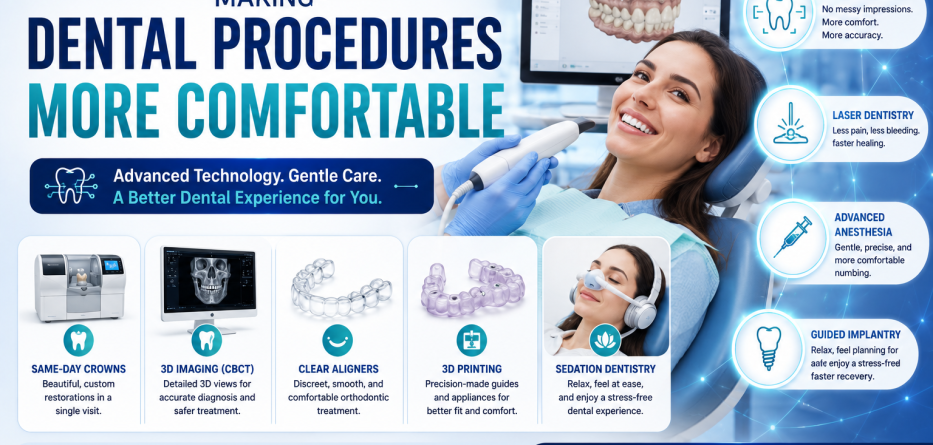
For many people, visiting the dentist can cause anxiety, fear, or concerns about pain and discomfort. Fortunately, modern dentistry has evolved dramatically over the past decade. Today, innovative technologies are transforming the patient experience, making dental treatments faster, safer, more precise, and significantly more comfortable than ever before.
From digital scanning and laser dentistry to computer-guided implant placement and painless anesthesia systems, advanced dental technologies are helping patients receive better care with less stress. These innovations not only improve comfort during procedures but also reduce treatment times, speed up recovery, and enhance overall outcomes.
In this article, we’ll explore the latest technologies making dental procedures more comfortable and how they are reshaping modern dental care.
Why Comfort Matters in Modern Dentistry
Patient comfort is no longer considered a luxury—it’s an essential part of quality dental care.
Comfort-focused dentistry helps:
- Reduce dental anxiety
- Improve treatment experiences
- Encourage regular dental visits
- Increase treatment acceptance
- Promote better oral health outcomes
Modern technology plays a major role in achieving these goals.
Digital Intraoral Scanners: Goodbye Messy Impressions
Traditional dental impressions often involve uncomfortable trays filled with impression material that can trigger gagging.
How Digital Scanners Improve Comfort
Digital intraoral scanners create highly accurate 3D images of the teeth and gums without messy molds.
Benefits include:
- Faster appointments
- Improved accuracy
- No gag reflex issues
- Enhanced patient comfort
- Better communication with patients
Digital impressions are now commonly used for crowns, bridges, veneers, aligners, and dental implants.
Laser Dentistry: Less Pain, Faster Healing
Laser technology has revolutionized many dental procedures.
Instead of using traditional drills or scalpels, dentists can use concentrated light energy to perform precise treatments.
Common Laser Applications
- Gum reshaping
- Cavity treatment
- Periodontal therapy
- Soft tissue surgery
- Teeth whitening
Patient Benefits
- Reduced discomfort
- Less bleeding
- Minimal swelling
- Faster healing
- Reduced need for sutures
Many laser procedures require little or no anesthesia.
Computer-Guided Dental Implant Placement
Dental implants have become even more comfortable thanks to digital planning systems.
How It Works
Using Cone Beam CT (CBCT) scans and specialized software, dentists can create a virtual treatment plan before surgery begins.
Benefits include:
- Greater precision
- Smaller incisions
- Reduced surgical time
- Less trauma to tissues
- Faster recovery
Patients often experience less post-operative discomfort compared to traditional implant techniques.
Cone Beam CT (CBCT) Imaging
Traditional dental X-rays provide only two-dimensional images.
CBCT technology creates detailed three-dimensional views of:
- Teeth
- Jawbone
- Nerves
- Sinuses
- Surrounding structures
Advantages for Patients
- Improved diagnosis
- Safer treatment planning
- More predictable outcomes
- Reduced risk of complications
This technology is especially valuable for implant dentistry, oral surgery, and orthodontics.
Needle-Free and Computer-Controlled Anesthesia
One of the biggest fears patients have is receiving dental injections.
Modern anesthesia delivery systems have significantly improved the experience.
Computer-Controlled Local Anesthetic Delivery (CCLAD)
These devices deliver anesthesia slowly and precisely.
Benefits include:
- Reduced injection discomfort
- More effective numbing
- Less tissue trauma
- Greater patient confidence
Some technologies can even provide needle-free anesthesia in selected situations.
CAD/CAM Same-Day Restorations
Traditionally, crowns and restorations required multiple appointments.
Today, CAD/CAM (Computer-Aided Design and Computer-Aided Manufacturing) systems allow dentists to create custom restorations in a single visit.
Benefits
- No temporary crowns
- Fewer appointments
- Faster treatment
- Highly accurate restorations
- Improved convenience
Patients can often receive permanent crowns on the same day.
3D Printing in Dentistry
3D printing technology is transforming how dental devices are produced.
Applications Include
- Surgical guides
- Dental models
- Clear aligners
- Dentures
- Temporary restorations
Patient Advantages
- Faster turnaround times
- Greater accuracy
- Better-fitting appliances
- Reduced appointment delays
Clear Aligner Technology
Traditional metal braces can cause discomfort and irritation.
Clear aligners provide a more comfortable alternative.
Benefits of Clear Aligners
- Smooth plastic material
- Removable design
- Easier oral hygiene
- Fewer emergency visits
- Improved aesthetics
Patients often experience a more convenient orthodontic treatment process.
Digital Smile Design (DSD)
Digital Smile Design allows patients to preview treatment results before procedures begin.
Using digital photographs and software simulations, dentists can create virtual smile transformations.
Advantages
- Better treatment planning
- Increased confidence
- Improved communication
- Personalized results
Patients gain a clearer understanding of expected outcomes.
Sedation Dentistry for Anxiety-Free Care
For patients with severe dental anxiety, sedation dentistry can make treatment much more comfortable.
Common Sedation Options
- Nitrous oxide (laughing gas)
- Oral sedation
- IV sedation
Benefits include:
- Reduced anxiety
- Increased relaxation
- Better treatment experiences
- Ability to complete complex procedures comfortably
Many patients remember little or none of the procedure afterward.
Artificial Intelligence in Dentistry
Artificial intelligence (AI) is beginning to improve patient care and treatment planning.
AI can assist dentists by:
- Identifying abnormalities
- Improving diagnostics
- Enhancing treatment accuracy
- Reducing human error
These advancements contribute to more predictable and comfortable dental experiences.
The Future of Comfortable Dentistry
Emerging technologies continue to improve patient comfort.
Innovations currently shaping the future include:
- Robotic-assisted implant placement
- Regenerative dentistry
- Smart dental materials
- Enhanced digital workflows
- AI-powered treatment planning
As technology advances, dental visits are expected to become even more efficient, precise, and stress-free.
Benefits of Modern Dental Technology
| Technology | Comfort Benefit |
|---|---|
| Digital Scanners | No messy impressions |
| Laser Dentistry | Less pain and faster healing |
| CBCT Imaging | Safer planning |
| Computer-Guided Implants | Reduced surgical discomfort |
| Same-Day Crowns | Fewer visits |
| Clear Aligners | More comfortable orthodontics |
| Sedation Dentistry | Reduced anxiety |
| 3D Printing | Better fit and faster delivery |
Frequently Asked Questions
Are modern dental procedures less painful than before?
Yes. Advances in technology, anesthesia, and treatment planning have significantly reduced discomfort during many dental procedures.
What is the most comfortable alternative to traditional impressions?
Digital intraoral scanners provide fast, accurate impressions without trays or impression material.
Does laser dentistry hurt?
Most laser procedures involve minimal discomfort and often require little or no anesthesia.
Are dental implants more comfortable with modern technology?
Yes. Computer-guided implant placement improves precision and reduces surgical trauma.
Can technology help with dental anxiety?
Absolutely. Sedation dentistry, digital planning, and minimally invasive procedures help create a more relaxed patient experience.
Conclusion
Modern dental technology is transforming the patient experience by making procedures safer, faster, and far more comfortable than ever before. From digital scanners and laser dentistry to computer-guided implants and AI-powered diagnostics, these innovations are helping patients receive high-quality care with less discomfort and anxiety.
As technology continues to evolve, dentistry will become increasingly patient-centered, offering treatments that are not only effective but also remarkably comfortable. For individuals who have delayed dental care due to fear or discomfort, today’s advanced technologies provide more reasons than ever to smile confidently.

