
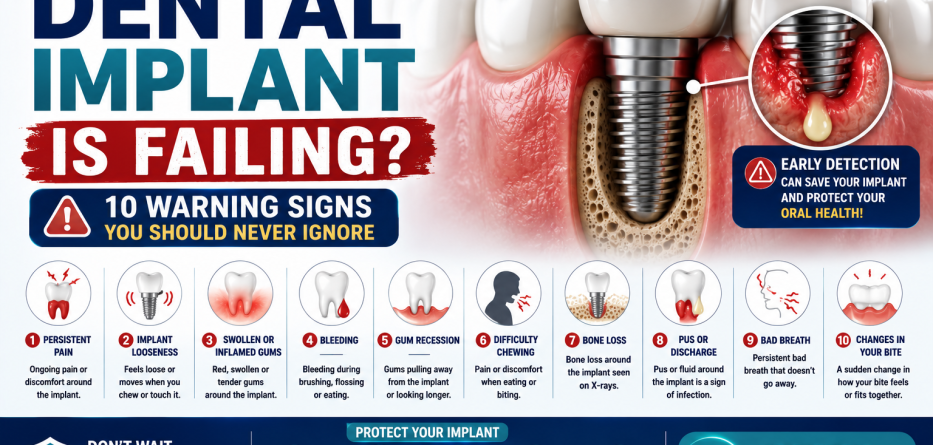
Dental implants are one of the most successful and reliable tooth replacement options available today. With success rates often exceeding 95%, they can provide decades of comfortable function and natural-looking results. However, like any medical or dental procedure, complications can occasionally occur.
Although dental implant failure is relatively rare, recognizing the early warning signs is crucial. Early intervention can often prevent minor issues from becoming major problems and may even save the implant.
In this article, we’ll discuss the most common signs of dental implant failure, what causes implants to fail, and when you should seek professional dental care.
Can Dental Implants Fail?
Quick Answer
Yes, dental implants can fail, although failure is uncommon when implants are properly placed and maintained.
Implant failure generally falls into two categories:
Early Failure
Occurs before the implant fully integrates with the jawbone.
Common causes include:
- Infection
- Poor osseointegration
- Surgical complications
- Insufficient bone support
Late Failure
Occurs months or years after successful placement.
Possible causes include the following:
- Peri-implantitis
- Smoking
- Excessive bite pressure
- Poor oral hygiene
- Bone loss
Recognizing symptoms early improves the chances of successful treatment.
Sign #1: Persistent Pain Around the Implant
Some discomfort after implant surgery is normal.
However, pain that
- Persists for weeks
- Returns after healing
- Increases over time
may indicate a problem.
Possible Causes
- Infection
- Implant movement
- Nerve irritation
- Bone loss
Persistent pain should never be ignored.
Sign #2: Implant Mobility or Looseness
A healthy dental implant should feel as stable as a natural tooth.
If the implant feels loose or moves when you chew, this is one of the most serious warning signs.
Potential Causes
- Failed osseointegration
- Bone loss
- Implant fracture
- Excessive bite forces
Any movement requires immediate professional evaluation.
Sign #3: Swollen or Inflamed Gums
Healthy implant gums should appear
- Pink
- Firm
- Non-tender
Warning signs include:
- Redness
- Swelling
- Tenderness
- Bleeding
These symptoms may indicate peri-implant disease.
What Is Peri-Implantitis?
Peri-implantitis is an inflammatory infection affecting the tissues surrounding a dental implant.
If untreated, it can lead to bone loss and implant failure.
Sign #4: Bleeding Around the Implant
Occasional minor irritation may occur.
However, persistent bleeding during:
- Brushing
- Flossing
- Eating
can signal gum inflammation or infection.
Healthy implants generally should not bleed.
Sign #5: Gum Recession Around the Implant
Gum recession exposes more of the implant surface over time.
Signs include:
- Longer-looking implant tooth
- Visible implant threads
- Increased sensitivity
- Changes in appearance
Gum recession may indicate underlying bone or tissue loss.
Sign #6: Difficulty Chewing
Dental implants are designed to restore normal chewing ability.
Pain or discomfort while eating may suggest the following:
- Implant instability
- Bite misalignment
- Infection
- Bone loss
Difficulty chewing should be evaluated promptly.
Sign #7: Bone Loss Around the Implant
Bone support is essential for implant stability.
Excessive bone loss may cause:
- Implant mobility
- Gum recession
- Changes in bite function
Dentists often detect bone loss through routine X-rays before symptoms become severe.
Sign #8: Pus or Discharge Around the Implant
Pus is a clear sign of infection.
Symptoms may include:
- Unpleasant taste
- Bad breath
- Swelling
- Drainage around the implant
An untreated infection can quickly compromise implant stability.
Immediate treatment is essential.
Sign #9: Bad Breath That Doesn’t Go Away
Persistent bad breath can be a sign of:
- Infection
- Bacterial buildup
- Peri-implantitis
- Gum disease
If brushing and flossing do not improve the odor, consult your dentist.
Sign #10: Changes in Your Bite
A sudden change in how your teeth fit together may indicate the following:
- Implant movement
- Bone loss
- Crown damage
Even subtle bite changes should be professionally evaluated.
Common Causes of Dental Implant Failure
Poor Oral Hygiene
Inadequate plaque control increases the risk of infection and peri-implant disease.
Smoking
Smoking reduces blood flow and impairs healing.
Gum Disease
Untreated periodontal disease can affect implant health.
Medical Conditions
Certain conditions may increase risk:
- Uncontrolled diabetes
- Autoimmune disorders
- Osteoporosis
Teeth Grinding (Bruxism)
Excessive grinding places significant stress on implants.
Poor Bone Quality
Insufficient bone support can compromise long-term stability.
How Dentists Diagnose Implant Failure
Dentists use several methods to evaluate implant health.
Clinical Examination
Checks for:
- Mobility
- Gum inflammation
- Bleeding
- Discomfort
Digital X-Rays
Reveal:
- Bone loss
- Implant positioning
- Structural concerns
CBCT Imaging
Provides detailed 3D views of bone and implant structures.
Can a Failing Implant Be Saved?
In many cases, yes.
Treatment depends on the underlying cause.
Possible Solutions
- Deep cleaning
- Antibiotic therapy
- Bite adjustments
- Gum treatment
- Bone grafting
- Surgical intervention
Early detection significantly improves treatment outcomes.
How to Prevent Dental Implant Failure
Maintain Excellent Oral Hygiene
- Brush twice daily
- Floss regularly
- Use recommended oral care products
Attend Regular Dental Checkups
Routine examinations help detect issues early.
Avoid Smoking
Smoking is one of the leading risk factors for implant complications.
Wear a nightguard.
If you grind your teeth, a custom nightguard can protect your implant.
Follow Professional Recommendations
Consistent follow-up care helps maximize implant longevity.
Dental Implant Success Rates
Modern dental implants remain highly successful.
Average Success Rates
| Implant Type | Success Rate |
|---|---|
| Single Tooth Implant | 95–98% |
| Multiple Implants | 95%+ |
| Full Arch Implants | 90–98% |
Most implant failures occur because warning signs are overlooked or treatment is delayed.
Frequently Asked Questions
How do I know if my dental implant is failing?
Common warning signs include pain, swelling, bleeding, mobility, gum recession, and difficulty chewing.
Can a loose dental implant be fixed?
Sometimes. Treatment depends on the cause and severity of the problem.
Is pain around an implant normal?
Mild discomfort after surgery is normal, but persistent or worsening pain requires evaluation.
Can gum disease affect implants?
Yes. Peri-implantitis is a major cause of implant failure.
What is the most common cause of implant failure?
Peri-implantitis, poor oral hygiene, smoking, and excessive bite forces are among the leading causes.
Conclusion
Dental implants are one of the most successful treatments in modern dentistry, but complications can occasionally occur. Understanding the signs your dental implant is failing can help you seek treatment before serious damage develops.
Warning signs such as persistent pain, swelling, bleeding, implant mobility, gum recession, and difficulty chewing should never be ignored. Regular dental checkups, excellent oral hygiene, and prompt attention to any unusual symptoms are the best ways to protect your investment and maintain a healthy, confident smile for years to come.
