
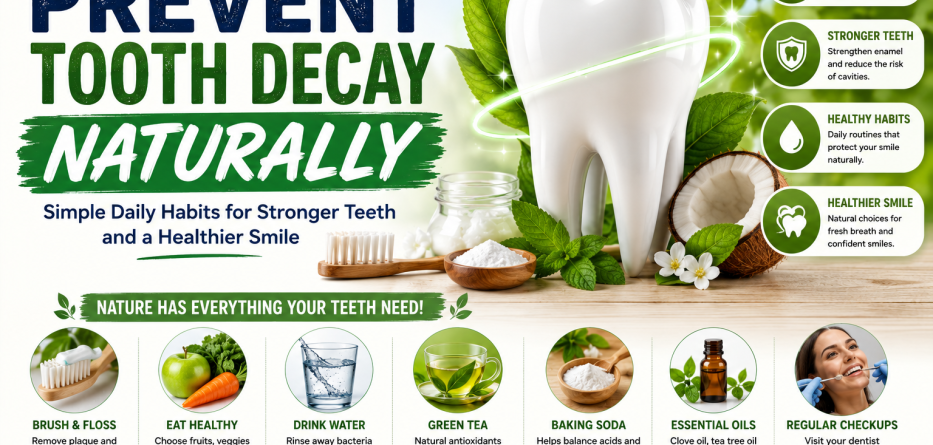
Tooth decay is one of the most common oral health problems worldwide, affecting people of all ages. While modern dentistry offers effective treatments for cavities, prevention is always better than cure. The good news is that many natural habits and lifestyle choices can help protect your teeth from decay and support long-term oral health.
Tooth decay occurs when bacteria in the mouth produce acids that attack tooth enamel. Over time, these acid attacks can lead to cavities, sensitivity, pain, and even tooth loss if left untreated. Fortunately, by adopting healthy daily habits, you can significantly reduce your risk of developing cavities naturally.
In this guide, we’ll explore the causes of tooth decay and practical natural strategies to keep your teeth strong and healthy.
What Is Tooth Decay?
Tooth decay, also known as dental caries or cavities, occurs when the protective enamel on your teeth is damaged by acid-producing bacteria.
The process typically follows these stages:
- Plaque formation
- Acid production
- Enamel erosion
- Cavity development
- Deeper tooth damage
Without intervention, tooth decay can eventually affect the inner layers of the tooth.
What Causes Tooth Decay?
Several factors contribute to tooth decay.
Common Causes
- Poor oral hygiene
- Frequent sugary foods and drinks
- Acidic beverages
- Dry mouth
- Plaque buildup
- Poor nutrition
- Infrequent dental visits
Understanding these causes is the first step toward prevention.
1. Brush Your Teeth Properly Twice Daily
One of the simplest and most effective ways to prevent tooth decay naturally is regular brushing.
Best Practices
- Brush at least twice daily
- Use a soft-bristled toothbrush
- Brush for two minutes
- Clean all tooth surfaces
- Replace your toothbrush every three months
Proper brushing helps remove plaque before it can damage enamel.
2. Floss Every Day
Brushing alone cannot reach every area between the teeth.
Daily flossing helps remove:
- Food particles
- Plaque
- Bacteria
Benefits include:
- Reduced cavity risk
- Healthier gums
- Fresher breath
Consistent flossing is essential for complete oral hygiene.
3. Limit Sugar Consumption
Sugar is one of the biggest contributors to tooth decay.
When bacteria feed on sugar, they produce acids that attack enamel.
Foods to Limit
- Candy
- Soft drinks
- Sweetened coffee
- Energy drinks
- Cakes and pastries
- Sticky snacks
Reducing sugar intake helps decrease acid production in the mouth.
4. Eat Tooth-Friendly Foods
A healthy diet supports strong teeth and gums.
Foods That Help Prevent Decay
Dairy Products
- Milk
- Cheese
- Yogurt
These foods provide calcium and phosphorus that strengthen enamel.
Crunchy Fruits and Vegetables
- Apples
- Carrots
- Celery
They stimulate saliva production and help clean tooth surfaces naturally.
Leafy Greens
- Spinach
- Kale
- Lettuce
Rich in vitamins and minerals essential for oral health.
5. Stay Hydrated
Water plays a critical role in oral health.
Benefits include:
- Washing away food debris
- Neutralizing acids
- Supporting saliva production
- Reducing bacterial growth
Drinking water after meals can help protect enamel.
6. Encourage Natural Saliva Production
Saliva is the body’s natural defense against tooth decay.
It helps:
- Neutralize acids
- Wash away bacteria
- Deliver minerals to enamel
Ways to Increase Saliva
- Drink plenty of water
- Chew sugar-free gum
- Eat fibrous foods
- Avoid tobacco products
A healthy saliva flow supports stronger teeth.
7. Choose Foods Rich in Calcium
Calcium is essential for maintaining strong teeth.
Excellent Sources
- Milk
- Cheese
- Yogurt
- Almonds
- Tofu
- Sardines
Adequate calcium intake helps strengthen enamel and support overall oral health.
8. Get Enough Vitamin D
Vitamin D helps the body absorb calcium effectively.
Natural Sources
- Sunlight exposure
- Fatty fish
- Egg yolks
- Fortified foods
Vitamin D deficiency may increase the risk of dental problems.
9. Avoid Frequent Snacking
Frequent snacking exposes teeth to repeated acid attacks.
Each time you eat, bacteria begin producing acids.
Better Approach
- Eat balanced meals
- Limit grazing throughout the day
- Drink water between meals
Reducing the number of acid attacks helps protect enamel.
10. Use Natural Antibacterial Foods
Certain foods possess natural antibacterial properties.
Examples include:
Green Tea
Contains antioxidants that may help reduce harmful oral bacteria.
Cranberries
May help prevent bacteria from sticking to teeth.
Garlic
Contains compounds with antibacterial effects.
These foods can complement a healthy oral hygiene routine.
11. Avoid Tobacco Products
Smoking and tobacco use increase the risk of:
- Tooth decay
- Gum disease
- Dry mouth
- Tooth loss
Avoiding tobacco supports healthier teeth and gums.
12. Maintain Regular Dental Checkups
Natural prevention works best when combined with professional care.
Regular dental visits allow dentists to:
- Detect early decay
- Remove hardened plaque
- Provide preventive treatments
- Monitor oral health
Most experts recommend checkups every six months.
Can Early Tooth Decay Be Reversed Naturally?
In some cases, very early enamel damage can be remineralized before a cavity forms.
Remineralization Supports
- Healthy saliva production
- Calcium-rich foods
- Phosphorus-rich foods
- Fluoride exposure
- Reduced sugar intake
Once a cavity forms, professional treatment is usually required.
Natural Habits That Protect Your Teeth Daily
Morning Routine
- Brush teeth
- Drink water
- Eat a healthy breakfast
Throughout the Day
- Limit sugary snacks
- Stay hydrated
- Chew sugar-free gum if needed
Evening Routine
- Brush thoroughly
- Floss
- Avoid late-night sugary foods
Consistency is the key to long-term cavity prevention.
Frequently Asked Questions
Can tooth decay be prevented naturally?
Yes. Good oral hygiene, a healthy diet, adequate hydration, and regular dental visits can significantly reduce the risk of tooth decay.
What foods help strengthen teeth?
Dairy products, leafy greens, nuts, fish, and crunchy vegetables support stronger teeth.
Is sugar the main cause of cavities?
Sugar itself does not damage teeth directly, but bacteria feed on sugar and produce acids that cause decay.
Can drinking water prevent cavities?
Water helps wash away food particles, supports saliva production, and reduces acid levels in the mouth.
Is flossing really necessary?
Yes. Flossing removes plaque and debris from areas that brushing cannot reach.
Conclusion
Preventing tooth decay naturally involves a combination of healthy habits, proper nutrition, and consistent oral hygiene. By brushing and flossing daily, limiting sugar, staying hydrated, eating tooth-friendly foods, and maintaining regular dental checkups, you can significantly reduce your risk of cavities and enjoy stronger, healthier teeth.
While natural prevention strategies are highly effective, they work best when practiced consistently. Small daily actions can make a big difference in protecting your smile and maintaining excellent oral health for years to come.
